




Precision care: The Deccan Hospital unveils advanced knee replacement technology
In Short
Computer assisted navigation systems enhance surgical accuracy and personalized implant positioning to relieve chronic osteoarthritis pain

Share :
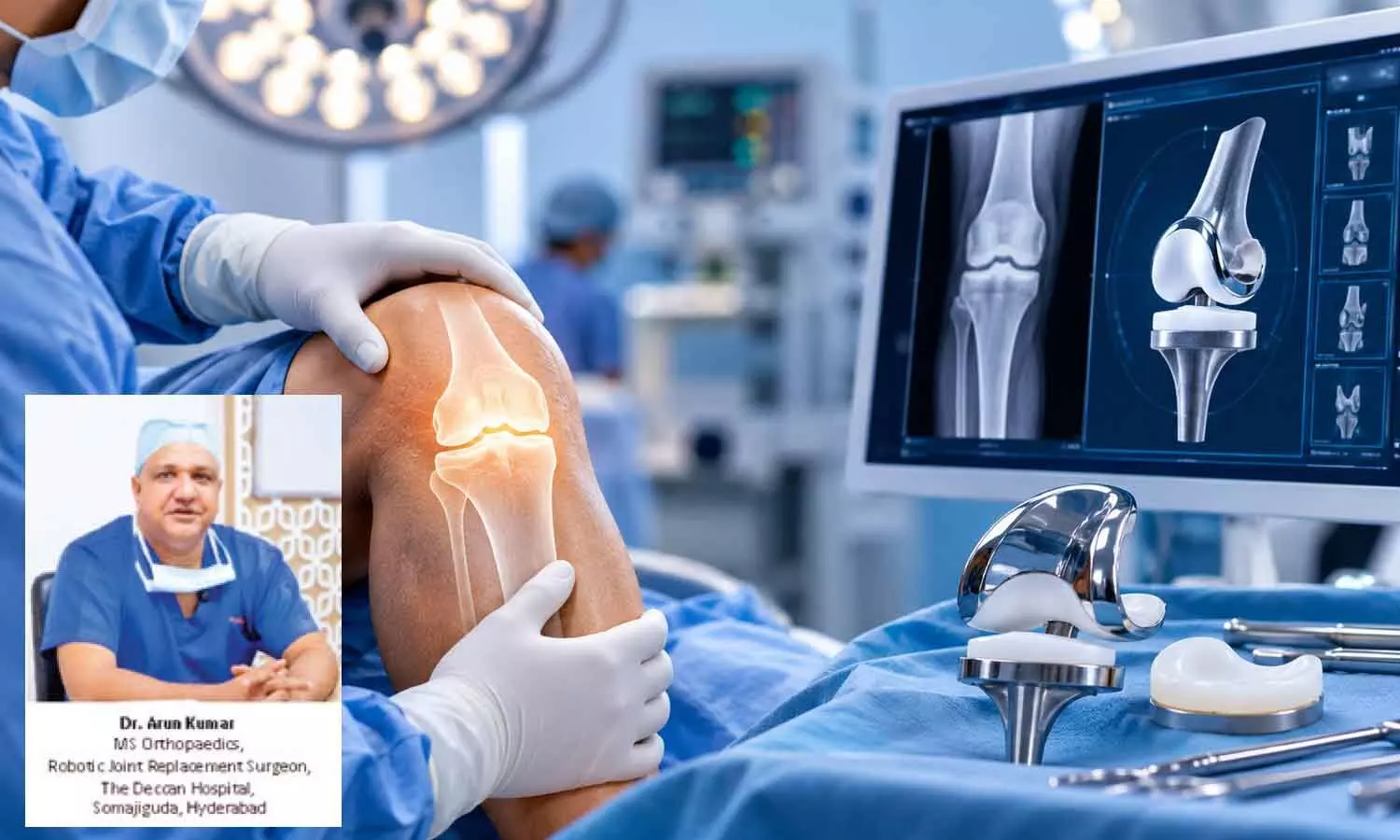
Precision care: The Deccan Hospital unveils advanced knee replacement technology
Knee pain is no longer a problem that people should simply learn to live with. Osteoarthritis is one of the most common causes of long-term knee pain, stiffness and difficulty in walking. Although it becomes more common with age, knee arthritis can also affect younger and middle-aged adults, particularly those with previous injuries, excess body weight or repetitive stress on the joints.
When arthritis becomes advanced, patients may experience difficulty walking, climbing stairs, getting up from a chair or performing routine activities. For patients whose symptoms remain significant despite appropriate non-surgical treatment, knee replacement surgery can provide an important treatment option.
One of the major technological developments in modern joint replacement is robotic-assisted knee replacement.
What is robotic knee replacement?
Robotic-assisted knee replacement does not mean that a robot independently performs the operation.
The orthopaedic surgeon remains in control throughout the procedure. A computer-assisted robotic system provides detailed information about the patient's knee anatomy and helps the surgeon with surgical planning, alignment and precise execution of selected steps.
The objective is to help achieve accurate implant positioning and appropriate balance of the knee according to the individual patient's anatomy.
Modern robotic systems continue to evolve, with improvements in planning software, navigation and intraoperative information.
Why is precision important?
Every knee is different.
Patients may have different degrees of deformity, bone anatomy, ligament balance and alignment. Robotic technology can provide the surgeon with real-time information that can assist in making accurate bone cuts and positioning the implant according to the pre-operative plan.
Research has demonstrated improved accuracy in certain alignment measures with robotic-assisted knee replacement. However, patients should understand that greater technical precision does not automatically guarantee a superior outcome for every individual.
The expertise of the surgeon, appropriate patient selection, implant choice, surgical technique and post-operative rehabilitation all remain important.
5 key takeaways for patients
1 Robotic does not mean “robot operates you”
The surgeon performs the operation. Robotic technology is a sophisticated tool that assists the surgeon with planning, navigation and precision.
2️ Every knee is different
Robotic systems can help the surgical team analyse individual anatomy and plan the procedure according to the patient's specific knee.
3 Robotic surgery is not for everyone
Not every person with knee pain needs a knee replacement, and not every knee replacement requires robotic assistance. The decision should be based on symptoms, examination, imaging and overall health.
4 Rehabilitation is just as important as surgery
Surgery is only one part of recovery. Physiotherapy, exercises, muscle strengthening and following the rehabilitation programme are essential for regaining mobility and function.
5️ Technology should support experience—not replace it
Robotic assistance is a surgical tool. The final treatment plan should be determined by an experienced orthopaedic surgeon after assessing the individual patient.
When should you consult an orthopaedic surgeon?
Persistent knee pain should not always be dismissed as “normal ageing.”
Consult an orthopaedic specialist if you experience:
l Persistent or worsening knee pain
l Difficulty walking or climbing stairs
l Pain while getting up from a chair
l Knee stiffness or reduced movement
l Recurrent swelling
l Difficulty performing everyday activities
l Knee pain that affects sleep or quality of life
Early evaluation can help determine whether lifestyle modification, physiotherapy, medication or another treatment may be appropriate—or whether joint replacement should be considered.
Why choose the deccan hospital?
At The Deccan Hospital, Somajiguda, Hyderabad, orthopaedic care combines experienced specialists, modern surgical facilities and a patient-centred approach.
Our orthopaedic team focuses on accurate diagnosis, personalised treatment planning, advanced joint-replacement techniques and structured rehabilitation, helping patients make informed decisions about their mobility and quality of life.
Move Better. Live Better.
Advanced Orthopaedic Care with Precision & Personalised Treatment
Dr. Arun Kumar, MS Orthopaedics Robotic Joint Replacement Surgeon The Deccan Hospital, Somajiguda, Hyderabad. For consultations and appointments, contact The Deccan Hospital.


