






- India and Nepal to discuss development cooperation and energy ties during Shah's visit to New Delhi
- No one discriminated against on religious grounds in India: Kiren Rijiju on Siraj selection row
- Google Taps Jeff Bezos’ Blue Origin for Space AI Data Centres
- Prabhadevi anti-encroachment demolition drive halted after Maha Dy CM Shinde talks with Railway Minister Vaishnaw
- Man sentenced to double life for Murder in Nalgonda
- Indian Railways Removes Fixed Berth Limit For Group Bookings Under New Rules
- CM Yogi's mother Savitri Devi passes away
- Jr NTR And Rajamouli Shower Praises On Dulquer Salmaan’s ‘Aakasamlo Oka Tara’
Ksheerabdi Dwadashi 2026: Significance, Rituals And The Spiritual Importance Of Lighting Amla Lamps
In Short
As Ksheerabdi Dwadashi falls on Saturday, November 21, 2026, the occasion is associated with several Puranic legends and spiritual beliefs.

Share :
Ksheerabdi Dwadashi 2026
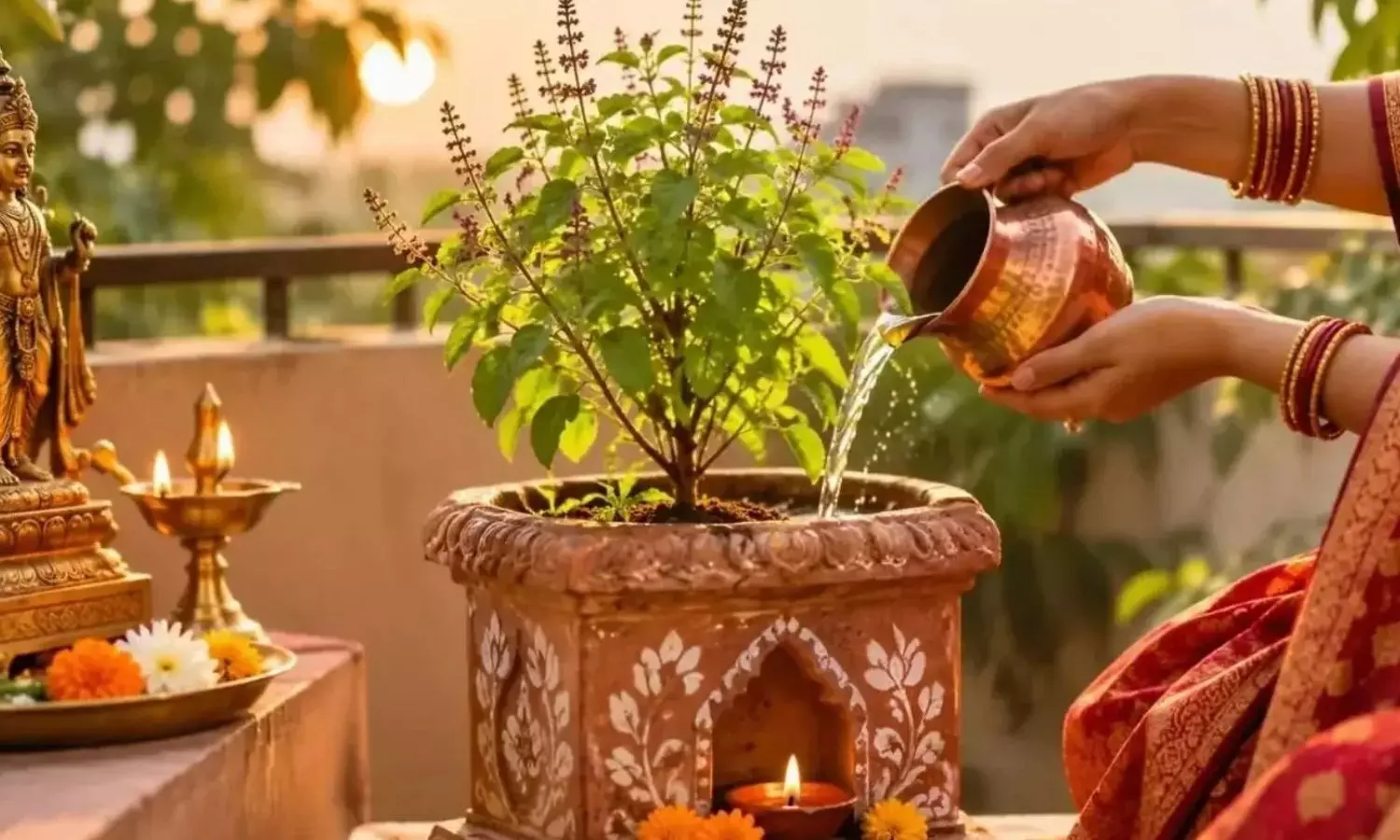
It is well known that Ksheerabdi Dwadashi is one of the most auspicious days celebrated in the holy month of Karthika Masam. On this day, devotees worship Maa Tulsi and also perform Tulsi Vivaham with Amla tree. Sacred Tulsi (holy basil) plant is represented as Goddess Lakshmi while Amla tree is represented as Lord Vishnu.
As Ksheerabdi Dwadashi falls on Saturday, November 21, 2026, the occasion is associated with several Puranic legends and spiritual beliefs. Famous Panchangam scholar Brahmashri Chilakamarthi Prabhakara Chakravarti Sharma explains the significance of this sacred day, its rituals and the importance of lighting lamps with different wicks.
What Is Ksheerabdi Dwadashi?
According to Hindu mythology, Lord Vishnu rests on Adishesha in the divine ocean of milk, known as Ksheera Sagaram or Ksheerabdi. After observing his four-month-long Yoga Nidra, Lord Vishnu awakens on Kartika Shukla Ekadashi, also known as Prabodhini or Devutthana Ekadashi. The following Dwadashi is celebrated as Ksheerabdi Dwadashi.
Devotees worship Lord Vishnu, Goddess Lakshmi and Tulsi Devi on this day. In several regions, the occasion is also marked by the ceremonial marriage of Tulsi Devi and Lord Damodara.
Mythological Significance:
Three important legends are associated with this festival: the churning of the ocean of milk, the emergence of Tulsi Devi and the divine wedding of Tulsi and Damodara.
During the Samudra Manthan, gods and demons churned the ocean of milk in search of Amrit. Lord Vishnu appeared as Kurma, the divine tortoise, and supported Mount Mandara on his back. Several divine treasures emerged during this process, including Goddess Mahalakshmi, who chose Lord Vishnu as her consort. This story teaches us that patience and perseverance can help us overcome difficulties and achieve positive results.
Puja Rituals And Special Offerings:
Devotees begin the day with an early morning bath and wear clean clothes before offering prayers to Lord Vishnu. Chanting the Ashtakshari Mantra, 'Om Namo Narayana', reciting Vishnu Sahasranamam and reading the Bhagavad Gita are considered auspicious.
In the evening, the Tulsi Kota is decorated with flowers, turmeric, kumkum and beautiful rangoli. An amla branch is placed near the Tulsi plant, and special prayers are offered to Goddess Lakshmi and Lord Narayana. Devotees also perform Tulsi-Damodara Kalyanam by offering traditional items such as a saree, turmeric, kumkum and a mangalsutra. Lighting lamps, reading the Vratakatha and performing Mangala Aarti complete the rituals.
Importance Of Amla Lamps And Donations:
The amla tree, known as Dhatri Vriksha in Sanskrit, holds a special place in Vaishnava tradition. On Ksheerabdi Dwadashi, devotees’ light lamps using amla fruits or place lamps near an amla branch, seeking divine blessings and spiritual wisdom.
Donating food, clothes, grains, fruits, ghee and lamps is also considered auspicious. According to Chilakamarthi Prabhakara Chakravarti Sharma, charity should be performed with humility and compassion, without expecting anything in return.
World Hindu Congress Seeks Fadnavis’ Help Over Meta Video Removals
National Pharmacy Week, World Pharmacists Day Celebrated at VRK College
Mumbai-Ahmedabad Bullet Train project moves at full pace, 1st service targeted for late 2027: Vaishnaw
BJP slams Imran Masood for dragging politics into cricket, mixed reaction from NCP-SP
Telangana CM Revanth Reddy Aligned with Modi’s Vision of Viksit Bharat: BJP Spokesperson Pradeep Bhandari
Basava Mantapa book row: Legal action against everyone behind it, copies to be seized, says K'taka CM Shivakumar
LS Speaker Om Birla calls for using AI to strengthen defence land management
Pursue your dreams, help build Viksit Bharat 2047: Piyush Goyal
Political slugfest in Maha after PM Modi questions Corporate India over job creation, wage growth
Bihar CM Choudhary meets Nitish Kumar ahead of PM Modi’s visit, discusses six-lane bridge inauguration


