




- 'Paper Leak Mafia' being run in Punjab under Kejriwal, CM Mann's directions, alleges BJP
- CM Adhikari approves compensation for farmers with homes damaged in recent floods
- From 'gun' bullets to bullet trains; Assam's unstoppable journey of progress, says CM Sarma
- Union Minister Pemmasani Chandrasekhar casts his Vote at Burripalem
- Bengal BJP plans to retain over 50 pc of old faces in Kolkata, Howrah civic polls
- Indian-Origin Nithya Raman Wins Los Angeles Mayoral Election, Defeats Incumbent Karen Bass
- Don't Destroy Traders' Livelihoods for Political Gains: Live and Let Live
- Canva lays off 1,271 employees, offers 6 months' salary and free MacBooks
Rewrite Early Menopause Before 40: Warning Signs Women Often Overlook
In Short
Menopause is the natural biological transition marking the permanent end of a woman's menstrual cycles, officially diagnosed after 12 consecutive months without a period

Share :
Early Menopause Before 40
Dr. Satwika Dey, Gynecologist (Obstetrics and Gynaecology), Rama Hospital & Research Centre, Noida; Dr. Sai Manasa Darla, Clinical Head & Fertility Specialist, Oasis Fertility, Dilsukhnagar, Hyderabad; and Dr. Sindhuri Gorantla, Senior Consultant Obstetrician & Gynaecologist, Robotic & Advanced Laparoscopic Surgeon and Urogynaecologist, CARE Hospitals, Hitech City, Hyderabad, shared insights on Early Menopause Before 40: Warning Signs Women Often Overlook
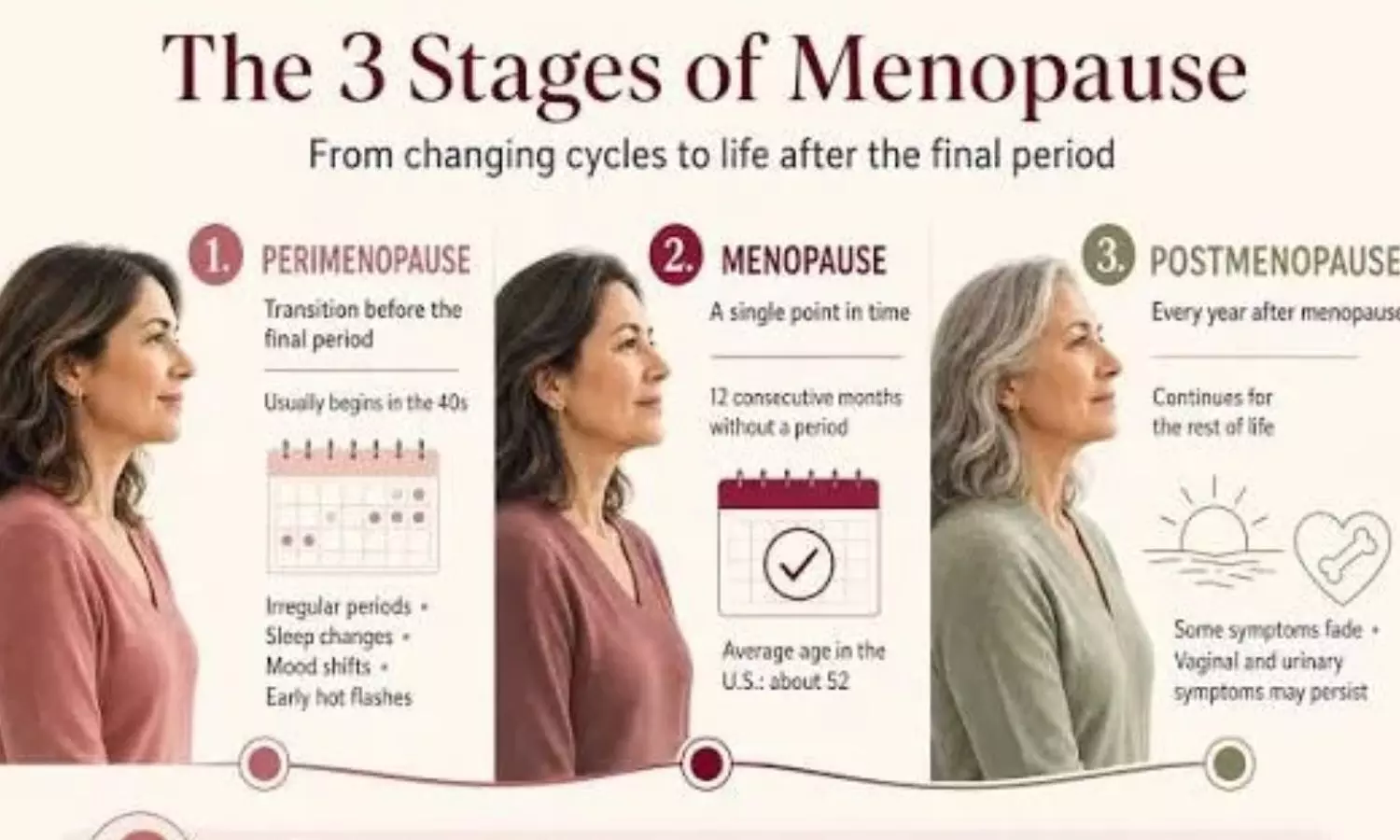
Menopause is generally associated with women in their late 40s or early 50s.
However, when menstrual and hormonal changes begin much earlier, particularly before the age of 40, they may indicate an underlying condition that requires medical attention. While menopause occurring before 45 is termed early menopause, menopause before 40 is classified as premature menopause. One important condition associated with the latter is premature ovarian insufficiency (POI), in which the ovaries do not function as expected, leading to reduced oestrogen production and changes in menstrual patterns.
One of the earliest warning signs women should watch for is a persistent change in their menstrual cycle. Periods may become irregular, increasingly infrequent, lighter or heavier than usual, or stop altogether. Women in their late 30s often attribute these changes to stress, work pressure, lifestyle changes or ageing. However, persistent menstrual irregularities should not be ignored, as they may indicate altered ovulation or declining ovarian function.
Other commonly overlooked symptoms include hot flashes, night sweats, disturbed sleep, unexpected fatigue and mood swings. Some women may also experience anxiety, difficulty concentrating, reduced sexual desire and vaginal dryness. Since these symptoms can develop gradually, they are often mistaken for routine stress or temporary hormonal fluctuations.
From a fertility perspective, changes in menstrual patterns are particularly significant. Altered ovarian function can affect ovulation and potentially reduce fertility. Women planning a pregnancy should seek timely medical advice if they experience persistent irregular periods or other symptoms associated with hormonal changes. Although POI can affect fertility, spontaneous pregnancy may still be possible in some cases.
Early menopause and POI can have several possible causes, including genetic factors, autoimmune conditions, certain medical treatments, chemotherapy, radiation therapy and ovarian surgery. In some women, however, no specific cause can be identified. It is also important to remember that irregular periods are not always related to menopause. Thyroid disorders, significant weight changes, stress and other medical conditions can produce similar symptoms.
A gynaecological evaluation can help identify the underlying cause. Depending on the symptoms and medical history, a specialist may recommend blood tests and hormonal investigations to assess ovarian function and rule out other conditions. Women younger than 40 with persistent menstrual changes should be evaluated for possible POI, while women below 45 experiencing significant menopause-related symptoms should also seek medical guidance.
The impact of premature ovarian insufficiency extends beyond reproductive health. Reduced oestrogen levels over time can affect bone strength and increase the risk of osteoporosis and other long-term health concerns. Depending on the diagnosis, age and individual medical history, treatment may include hormone therapy where appropriate, alongside lifestyle guidance focusing on nutrition, regular physical activity and bone health.
Women should also seek medical attention for heavy bleeding, bleeding between periods, bleeding after intercourse or any bleeding after menopause, rather than assuming these changes are part of the menopausal transition.
Recognising the warning signs of early menopause and premature ovarian insufficiency is essential for protecting reproductive and overall health. Persistent menstrual irregularities, unexplained hormonal symptoms and changes in sleep or mood deserve attention, particularly when they occur before 40. Timely diagnosis and appropriate management can help women make informed decisions about fertility, treatment and their long-term well-being.
Alia Bhatt shares Ranbir's precious BTS moments with Raha during 'Ramayana'
'PM Modi's decisions are always in national interest': Uttarakhand CM Dhami on Agniveer move
Bengal’s shifting alliances expose limits of 'united opposition' politics
'Paper Leak Mafia' being run in Punjab under Kejriwal, CM Mann's directions, alleges BJP
AP MPTC ZPTC election Live Updates: Polling Under Way for parishad elections
India's green energy success offers model for Global South: V-P Radhakrishnan
Congress attempting to undermine credibility of world's biggest democracy: UP CM
Happy Dhanteras 2026: Best Wishes, Quotes And Messages To Share
JP Nadda reviews J&K's AIIMS Awantipora project, directs fast-tracking remaining construction
EAM Jaishankar meets Antigua and Barbuda Governor-General, interacts with Indian community


