




AP set national example in disaster management: CM Chandrababu Naidu
In Short
Addressing a press conference at the Real-Time Governance Society (RTGS) centre in the Secretariat, the Chief Minister said the administration had prioritised protection, relief and rehabilitation.

Share :
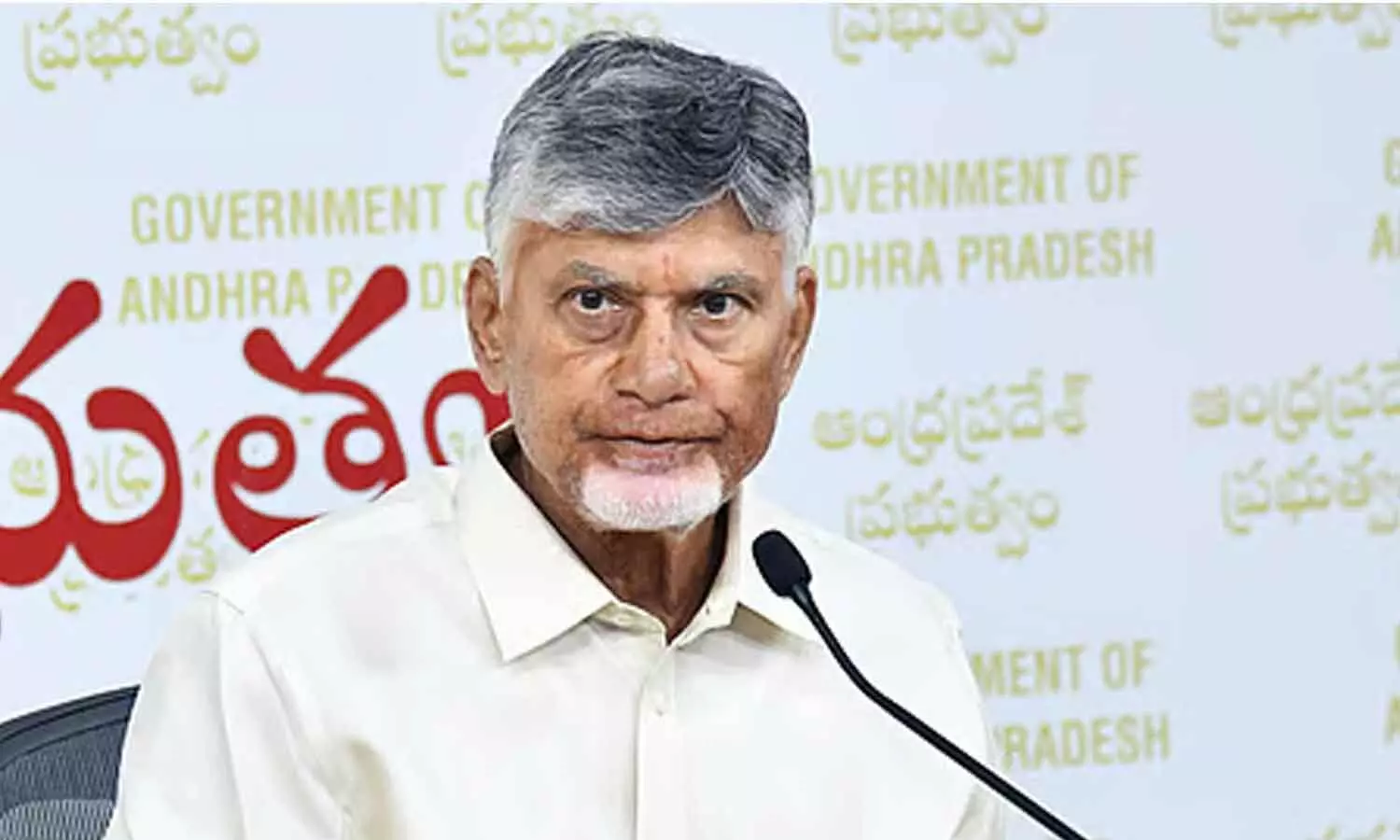
Chief Minister N Chandrababu Naidu
Amaravati: Chief Minister N Chandrababu Naidu on Tuesday said Andhra Pradesh had emerged as a model for the country in disaster management by responding effectively to successive cyclones Arnab and Murasu, preventing loss of life and restoring essential services in record time. He said tasks that would normally take around 20 days were completed in just four to five days through advance planning and coordinated action by government departments.
Addressing a press conference at the Real-Time Governance Society (RTGS) centre in the Secretariat, the Chief Minister said the administration had prioritised protection, relief and rehabilitation. Officials from the state to the village and ward levels worked round the clock, with collectors leading operations in affected areas. He credited the outcome to coordination between the government machinery and the public.
Naidu said RTGS and the AWARE system enabled officials to transmit real-time information and take decisions based on cyclone movement, wind speeds, rainfall forecasts, flooding and water diversion. Predictions were up to 90 per cent accurate, helping the government identify vulnerable villages in advance and position rescue teams and equipment before the impact.
The cyclones brought down around 31,000 electricity poles, disrupted supply in 4,095 villages and affected operations at 548 substations. Naidu said electricity personnel worked through heavy rain, clearing fallen trees and erecting replacement poles with drilling machines. He said power supply was largely restored within four to five days, against the estimated 20 days normally required for damage on such a scale and praised staff for risking their lives during restoration.
The government also identified around 5,000 pregnant women in vulnerable areas and shifted them to hospitals. As many as 1,029 deliveries took place during the week, with medical facilities arranged for mothers and newborns. Medical camps, ambulances, emergency medicines and anti-snake venom were made available. Officials were also directed to ensure sanitation and safe drinking water and prevent disease outbreaks. Essential commodities sufficient for two months were stocked in 19,265 ration shops across 17 districts.
Naidu said he had sought additional personnel from Tamil Nadu and Karnataka Chief Ministers and Telangana Deputy Chief Minister Bhatti Vikramarka to speed up restoration. Union Home Minister Amit Shah had assured Central assistance, he added. A Central team had assessed the damage, and an interim report estimating losses at Rs 4,526 crore had been submitted. A comprehensive assessment would follow.
The cyclones damaged agricultural crops across 3.52 lakh hectares and horticultural crops across 23,211 hectares, according to the preliminary assessment.
The Chief Minister said the government had taken steps to conserve rainwater despite the state continuing to face a 28 per cent rainfall deficit. Around 11 TMC of water brought by the two cyclones was diverted into reservoirs and another 25 TMC stored in minor irrigation tanks. While coastal districts faced cyclone damage, Rayalaseema continued to experience drought-like conditions, he said, stressing the need to complete priority irrigation projects, including Polavaram. Naidu announced that the government would prepare a dedicated cyclone-management manual, drawing on lessons from the recent disasters and earlier disaster-management plans. It would also examine stronger electricity-pole designs and alternative technologies to withstand high-velocity winds. He said consultations with agricultural experts would be held on changing crop seasons and promoting disaster-resistant varieties. All farmers had been covered by crop insurance this time, and the government would examine providing input subsidies in addition to insurance to protect them from future losses. Describing the simultaneous challenges posed by cyclones and El Nino as unprecedented in
his experience, Naidu said
the government would develop a comprehensive
action plan to reduce future damage and protect farmers and the public.


