




Auto taxi unions move supreme court against Karnataka bike taxi ruling
In Short
Five Karnataka auto and taxi drivers’ organisations have moved the Supreme Court challenging the High Court ruling permitting bike taxis, citing regulatory parity, safety concerns and livelihood implications for existing operators.

Share :
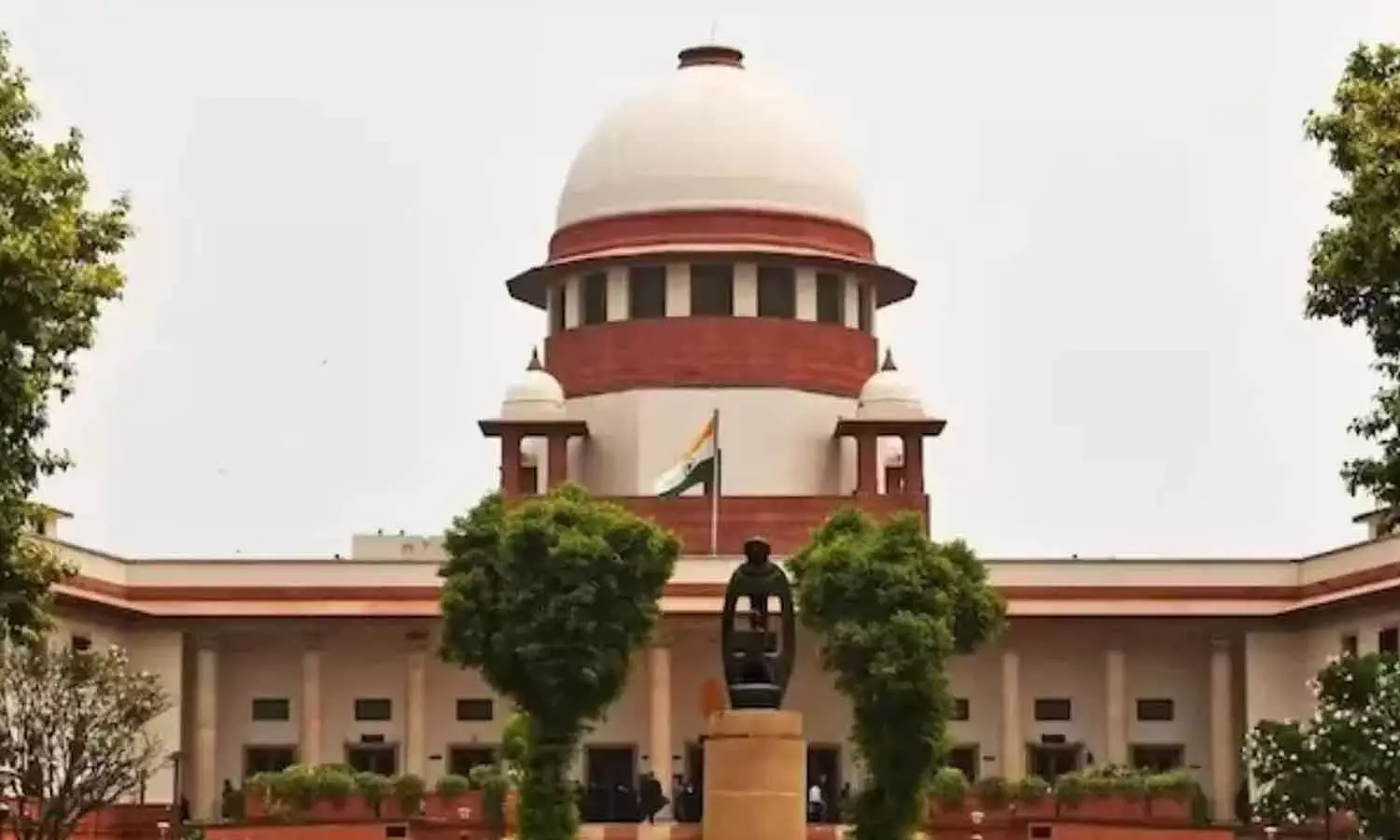
Supreme Court
Bengaluru : Five auto-rickshaw and taxi drivers’ organisations in Karnataka have approached the Supreme Court challenging the Karnataka High Court’s January 23 order that paved the way for bike taxis to operate as contract carriages in the state.
The petitioners include Nadaprabhu Kempegowda Auto Drivers’ Organisation, Karnataka Venkategowda Auto and Taxi Drivers’ Association, Greater Bengaluru Drivers’ Association, Karnataka Sarathigala Mahasangha and Jai Karnataka Sarathi Sena Trust.
The unions have questioned the High Court’s direction to the state government to consider applications seeking registration of motorcycles as transport vehicles and permits to operate them as contract carriages. They have argued that decisions relating to transport policy and regulation fall within the domain of the government and statutory transport authorities.
According to the petition, the High Court’s order effectively creates a regulatory pathway for bike taxis and could have consequences for thousands of existing auto-rickshaw and taxi operators who are already functioning under a detailed regulatory framework.
The petitioners have highlighted the livelihood concerns of conventional transport operators in Bengaluru. They have claimed that around 1.5 lakh auto drivers, taxi permit holders and other regulated transport operators could be affected if bike taxis are allowed to compete without being subjected to comparable regulatory requirements.
Existing auto-rickshaws and taxis are required to comply with conditions relating to permits, vehicle fitness, insurance, taxation, fare regulation and driver licensing. The unions have argued that allowing another category of passenger transport without equivalent obligations could raise questions about regulatory parity and passenger safety.
The petition also refers to a 2019 expert committee report, which, according to the unions, had raised concerns about permitting bike taxis in Bengaluru. Issues cited included road safety, traffic congestion, efficient use of road space and pollution.
The High Court’s January ruling had held that bike taxis could constitute a legitimate form of transportation and directed authorities to consider applications from vehicle owners and aggregators for registration and permits. The court’s decision followed a prolonged legal dispute over the operation of app-based bike taxis in Karnataka.
The Karnataka government has also challenged the High Court ruling before the Supreme Court. In its appeal, the state has questioned the legal and regulatory framework for allowing motorcycles to operate as passenger transport vehicles and has cited concerns including passenger safety, congestion, pollution and insurance.
The government has maintained that commercial passenger transport is a regulated activity and that permitting bike taxis requires compliance with the applicable statutory framework. The state has also argued that motorcycle owners can pursue other commercial activities such as delivery and logistics services.
The issue has remained contentious in Bengaluru, where auto and taxi unions have opposed bike-taxi operations while app-based aggregators and riders have sought regulatory recognition. Recent enforcement action by the state transport department has included seizure of vehicles allegedly operating as bike taxis without the required approvals.
The Supreme Court will now have to consider the challenges to the High Court’s directions and the competing arguments concerning transport regulation, livelihoods, passenger safety and urban mobility.
The petitions have brought the long-running bike-taxi dispute back into focus, with the final legal position likely to have implications for aggregators, two-wheeler riders, auto-rickshaw and taxi operators and commuters across Karnataka.


