






- 2027 UP polls: SP to release manifesto today; PDA to remain focus
- US clears SpaceX plan for 1 million AI satellites
- ECI releases draft graduate voter rolls
- Wow! India’s AI-powered police stn to make debut at Panjagutta
- TGiCCC organises cancer screening camp for police personnel
- Hyd police take pledge to protect women’s rights
- HERIF launched to boost funding for Telangana universities
- TVK govt defied SC order on Deepam, alleges Tamilisai
Bengaluru plans 30,000 more percolation wells to tackle groundwater crisis
In Short
Bengaluru plans to construct 30,000 additional percolation wells to tackle groundwater depletion, expand rainwater harvesting and recharge underground aquifers, building on encouraging results from existing projects.

Share :
Bengaluru plans 30,000 more percolation wells to tackle groundwater crisis
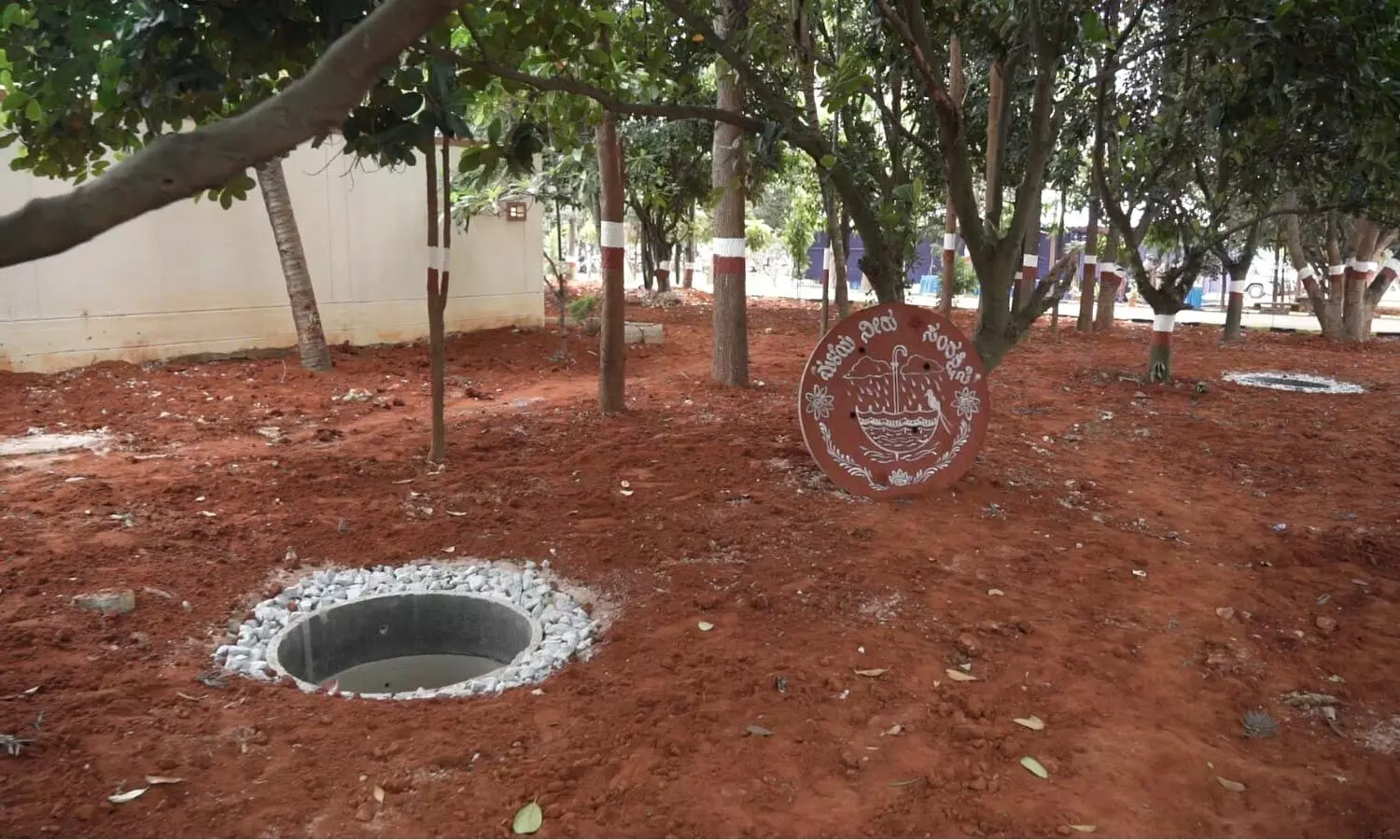
Bengaluru : With groundwater reserves under increasing pressure, Bengaluru is planning to add 30,000 percolation wells to the more than 10,000 already constructed across the city as part of efforts to strengthen rainwater harvesting and recharge underground aquifers.
The initiative, being implemented by United Way Bengaluru in collaboration with the Department of Horticulture and the Bengaluru Water Supply and Sewerage Board (BWSSB), aims to make localised rainwater harvesting an important component of the city's long-term water management strategy.
Percolation wells are designed to capture rainwater runoff and allow it to gradually seep into the ground, replenishing underground water reserves. Public parks and other suitable locations are being identified in different parts of Bengaluru for constructing these recharge structures.
An assessment of the Lalbagh micro-watershed, where 440 percolation wells have been built, has indicated encouraging results. The network, which also extends to Cubbon Park, Indira Gandhi Musical Fountain Park on Raj Bhavan Road and nearly 400 other locations, is estimated to have captured around 5.64 crore litres of rainwater.
The assessment recorded an estimated 3.98-metre rise in the groundwater table in the shallow aquifer of the Lalbagh micro-watershed. The Stage of Groundwater Extraction (SOE), which measures extraction against available groundwater resources, reportedly declined from 103%, categorised as over-exploited, to below 70%.
The volume of rainwater captured through the wells is equivalent to the estimated daily water requirement of about 4.17 lakh people, highlighting the potential of decentralised recharge systems to retain rainwater within urban areas rather than allowing it to flow away as surface runoff.
Similar results have been reported in the Bommanahalli zone, where assessments indicated an average groundwater-level increase of one to two metres in the sub-watershed. The improvement has been attributed to percolation wells developed in the surrounding areas.
The proposed expansion comes amid concerns over Bengaluru's dependence on groundwater and growing pressure on conventional sources, including the Cauvery water supply network. The additional 30,000 wells are expected to extend recharge infrastructure to more neighbourhoods and public spaces.
However, the effectiveness of such structures depends on geological conditions, soil permeability, groundwater depth and the quality of water entering the wells. Scientific selection of locations, regular maintenance and continuous monitoring of groundwater levels and water quality will be essential to establish their long-term impact.
Percolation wells alone cannot resolve Bengaluru's water crisis or replace large-scale supply systems. Their contribution would be more significant when combined with rooftop rainwater harvesting, lake rejuvenation, protection of natural drainage channels and responsible groundwater use.
The proposed expansion is expected to strengthen the city's decentralised water conservation efforts, though its success will depend on sustained implementation and monitoring across different micro-watersheds.
Jo Bachay Hain Sang Samait Lo: Netflix Asked To Follow Government Advisory In India
AP sees 53.86% polling in Panchayat elections by 11 am
NLMC considers asset monetisation proposals worth Rs 1,300 crore for BSNL, MTNL
SMAT 2026: Mumbai maintain unbeaten run; Haryana, Puducherry, Karnataka register wins
AP Panchayat and ULBs elections live updates: Polling begins for first phase
AP sees 53.86% polling in Panchayat elections by 11 am
Apple Kukatpally: First store In Hyderabad to open on 10 Dec at 5pm
Karthigai Deepam Row: Priests Contradict Trust, Govt Cornered; Will ‘Samvidhan Savers’ Speak Up?
18 Years After 26/11 Verdict, Ajmal Kasab's Lawyers Still Await Payment For Defending Terrorist
Look Out Circular Issued Against CJP's Saurav Das, Centre Tells Delhi High Court; Passport Discrepancies Cited


