






PM flags B’luru traffic, proposes six-point fix
In Short
Following the inauguration of Namma Metro’s Pink Line, Modi held an informal discussion with Chief Minister DK Shivakumar and Bengaluru Development Minister Krishna Byre Gowda about the city’s traffic problems.

Share :
PM flags B’luru traffic, proposes six-point fix
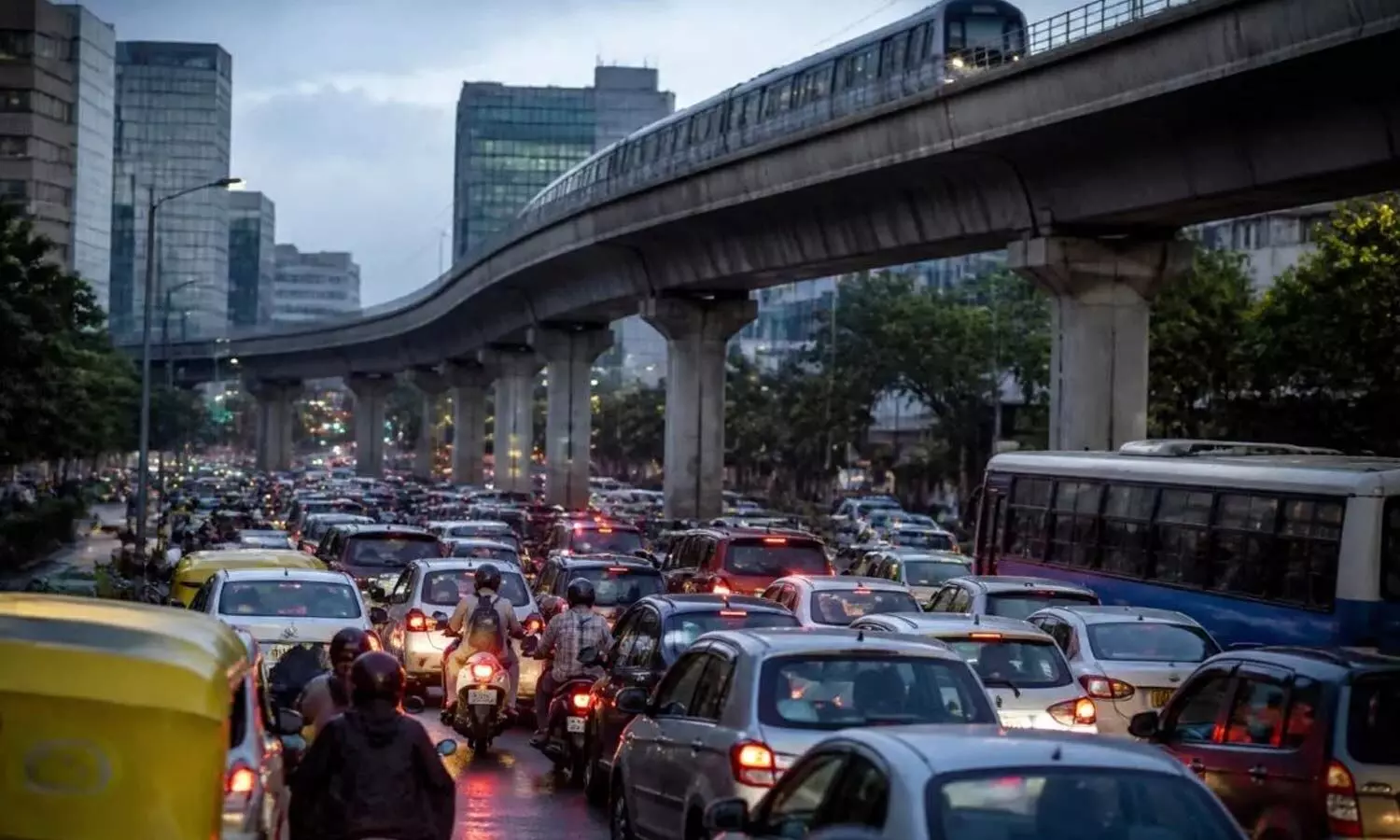
Bengaluru: Prime Minister Narendra Modi suggested six measures to address Bengaluru’s growing traffic congestion, including extending shopping and commercial activities late into the night and introducing staggered timings for schools, colleges and offices.
Following the inauguration of Namma Metro’s Pink Line, Modi held an informal discussion with Chief Minister DK Shivakumar and Bengaluru Development Minister Krishna Byre Gowda about the city’s traffic problems. During the interaction, he shared several suggestions to ease congestion on Bengaluru’s roads.
Expressing concern over increasing traffic, the Prime Minister recalled the measures implemented to address congestion when he was the Chief Minister of Gujarat. He suggested that allowing shopping malls, hotels, restaurants and commercial establishments to remain open until late at night could help distribute traffic throughout the day and reduce peak-hour congestion. Modi reportedly observed that Bengaluru did not experience such severe traffic congestion when he visited the city earlier for party-related work. However, the situation has changed considerably over the years.
He pointed out that schools, government offices and private companies generally begin and end operations around the same time, resulting in a large number of vehicles entering the roads simultaneously during morning and evening peak hours.
He suggested introducing staggered opening and closing timings for different institutions and prioritising office timings to ensure a more even distribution of traffic.
Bengaluru has more than 1.5 crore registered vehicles, apart from thousands of vehicles entering and leaving the city every day from neighbouring districts and other states.
As a result, several major roads experience severe congestion during peak hours. Traffic movement on certain stretches reportedly slows to an average speed of just 9 kmph, forcing commuters to spend a considerable part of their day on the roads.
Extending business hours and promoting nightlife activities could help distribute vehicle movement across different time slots and potentially ease congestion to some extent.
Late-night food streets support Bengaluru’s workforce
Several parts of Bengaluru already have food streets and roadside eateries operating until late at night, providing a livelihood for vendors while catering to people working late shifts. Areas such as V.V. Puram, Basavanagudi’s National College area, Dodd Ganapathi Temple Road, Vijayanagar, Jayanagar, Malleshwaram, K.R. Puram, Raghuvanahalli, Uttarahalli, Kengeri and Marathahalli have late-night food outlets selling idli, vada, rice bath, dosa and non-vegetarian dishes.
These establishments serve people working late hours and contribute to the city’s night-time economy. Expanding such activities to more commercial areas could encourage businesses to operate beyond conventional hours while helping distribute traffic more evenly throughout the day.
Six suggestions to ease traffic congestion
The Prime Minister’s suggestions included:
Extend business hours: Allow shopping malls, hotels, restaurants and commercial establishments to operate until late at night to reduce the concentration of vehicles during peak hours.
Stagger school timings: Introduce different starting and closing times for schools and colleges to avoid simultaneous traffic movement.
Reschedule office hours: Introduce staggered working hours for government offices and private companies to distribute traffic throughout the day.
Scientific parking system: Implement a planned parking system across the city, prevent haphazard parking of two-wheelers, autorickshaws and cars, and increase the availability of designated parking spaces.
Promote public transport: Encourage more commuters to use public transportation to reduce dependence on private vehicles.
Expand the Metro network: Accelerate the expansion of the Namma Metro network to provide better connectivity and offer commuters an alternative to road transport.


