






- Bengal govt ends system of appointing private agencies as ‘knowledge partners’
- Telangana Minister Sridhar Babu invites Mumbai industry to " Global Summit" 2026 at Future City in Hyderabad
- Prince William, Princess Kate to meet PM Modi in Delhi today
- Congress Party’s New Poll Slogan: "Bahut hui mehengaai ki maar, ab Jawaab de Modi Sarkaar,"
- Naga Chaitanya’s Vrushakarma Second Single ‘Chalo Padhave’ Will Be Out Tomorrow
- Zepto Co-founder Recalls Near Shutdown Scare After Major Technical Failure
- Most-Wanted LeT Terrorist Lateef Bhat Killed After Standoff Inside Kulgam Mosque
- AI Could Be Behind Global Tech Outages, US Official and CEOs Suggest
Barrier-free society with equal opportunities for persons with disabilities is the true goal of Viksit Bharat: Adluri Lakshman Kumar
In Short
Sugamya Bharat must evolve into a national movement; dedicated nodal officers and earmarked budgets essential for ensuring accessibility

Share :
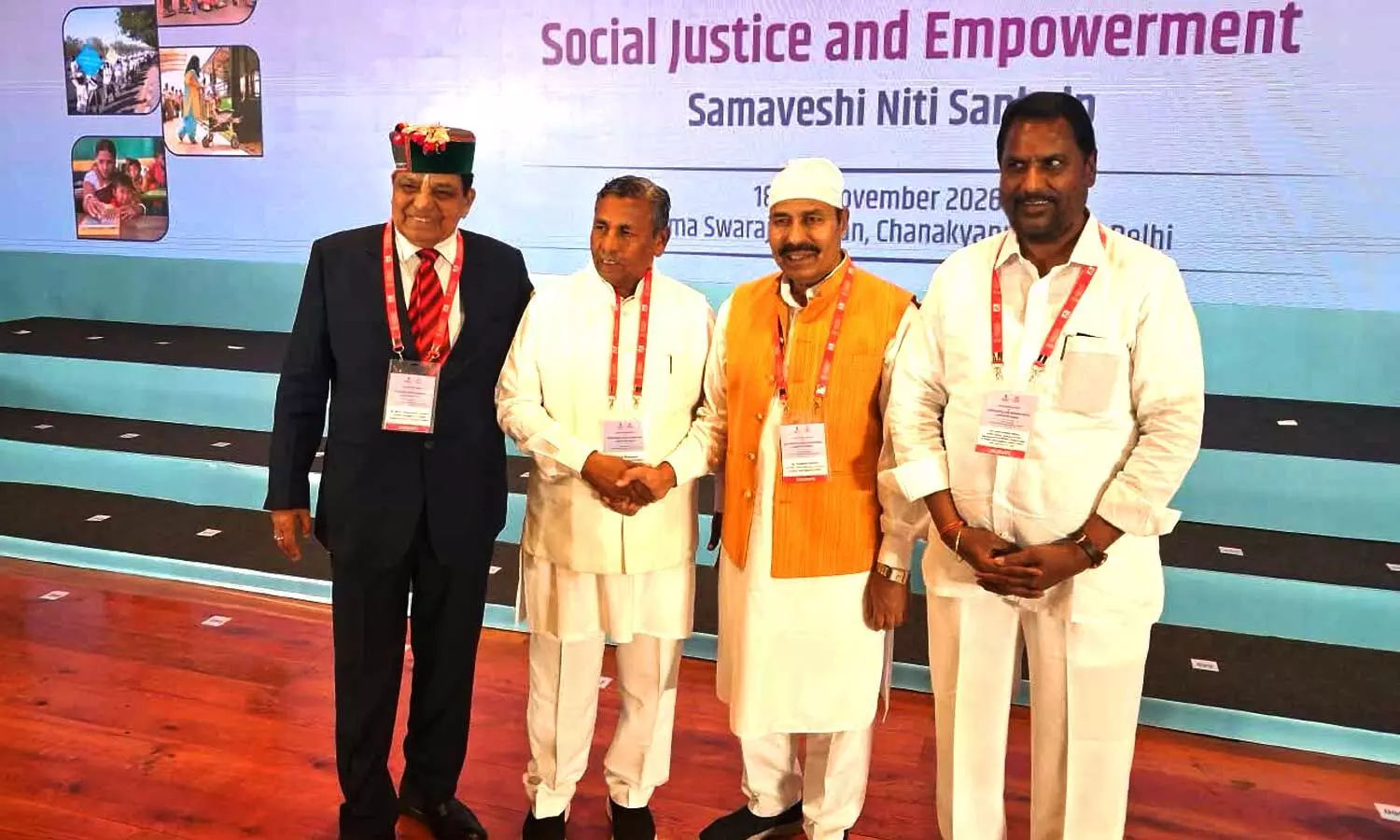
Barrier-free society with equal opportunities for persons with disabilities is the true goal of Viksit Bharat: Adluri Lakshman Kumar
NEW DELHI: Telangana Minister for Scheduled Castes Development, Tribal Welfare, Empowerment of Persons with Disabilities, Senior Citizens and Transgender Persons, Sri Adluri Lakshman Kumar, has emphasised that the vision of Viksit Bharat can be realised only by creating an inclusive, barrier-free society in which persons with disabilities can lead independent and dignified lives with equal opportunities in every sphere.
He called for transforming the Sugamya Bharat Abhiyan from a mere infrastructure development initiative into a nationwide movement dedicated to safeguarding the rights, dignity and independence of persons with disabilities.
The Minister participated in a two-day national-level departmental summit organised by the Union Ministry of Social Justice and Empowerment in New Delhi on Wednesday. Prime Minister Narendra Modi and Union Minister for Social Justice and Empowerment Dr Virendra Kumar also participated in the summit. Representing Telangana, Mr Lakshman Kumar presented the State's perspectives, highlighted ground-level challenges and offered a series of practical policy recommendations on the theme 'Sugamya Bharat for Viksit Bharat'. Ministers and senior officials from various States also attended the deliberations.
Speaking at the summit, the Minister stressed that the empowerment of persons with disabilities must remain a key priority in achieving the vision of Viksit Bharat–2047. He observed that accessibility initiatives should not remain confined to metropolitan cities, airports and major railway stations, but must be extended to rural areas, smaller towns, gram panchayat offices and government establishments.
He called for mandatory accessibility and facilities, including ramps, lifts, tactile pathways and accessible toilets, in government buildings, hospitals, educational institutions, commercial complexes and public transport systems. He also stressed the need for regular maintenance and monitoring to ensure that these facilities remain functional and accessible at all times.
Dedicated nodal officers and earmarked budgets
Mr Lakshman Kumar proposed the appointment of a dedicated nodal officer in every government department to oversee the provision, maintenance and monitoring of accessibility infrastructure. He suggested that departments earmark specific funds in their annual budgets and prepare time-bound action plans to address accessibility gaps. He also called for the involvement of organisations representing persons with disabilities and technical experts in accessibility audits.
Emphasising the effective implementation of the Rights of Persons with Disabilities Act, 2016, he said that prescribed accessibility standards must be made mandatory at the approval stage itself for all new buildings. He further advocated making government websites, mobile applications and online services accessible to persons with visual and hearing impairments through appropriate technological interventions. Architects, engineers, contractors and government personnel should also receive specialised training on inclusive design and the accessibility needs of persons with disabilities, he said.
National digital monitoring platform proposed
The Minister proposed the creation of a comprehensive national digital platform to monitor accessibility facilities in government buildings and public spaces across the country. Every department should upload details of buildings under its jurisdiction, the status of accessibility facilities and the progress of improvement works, supported by photographic evidence.
He also recommended an online grievance redressal mechanism through which persons with disabilities could directly report accessibility barriers and track the resolution of their complaints within stipulated timelines.
Calling for greater private-sector participation, he urged the promotion of accessibility facilities in private hospitals, hotels, educational institutions and commercial establishments, along with expanded employment opportunities for persons with disabilities.
He further stressed the importance of stronger coordination between the Centre and the States, including the exchange of best practices and the formulation of a coordinated national action plan.
The Minister pointed out that accessibility measures designed for persons with disabilities would also benefit senior citizens, pregnant women, children and individuals with temporary mobility limitations.
Reaffirming the Telangana Government's commitment to ensuring equal opportunities and dignified living conditions for all sections of society, he assured that the State would extend its full cooperation in implementing the policies and guidelines formulated by the Union Government.
“Sugamya Bharat is not merely about constructing ramps and installing lifts. It is about creating a society in which persons with disabilities can live independently, with dignity and freedom, without having to depend on others. Inclusive development becomes meaningful only when persons with disabilities are equal participants in every sphere of life. That must be the true foundation of Viksit Bharat–2047,” the Minister said.
PM Modi to inaugurate FICCI Annual General Meeting and Annual Convention on Nov 19
Indian envoy calls on Nepal PM Shah ahead of his India visit
Cyclone Akvan: Odisha orders suspension of beach tourism, tightens transport safety measures
Telangana Minister Seethakka Announces Pensions for 4.63 Lakh People
Telangana Minister Seethakka Announces Pensions for 4.63 Lakh People
Andhra Pradesh Offers 80% Support for Silicon Fabs
EC extends deadline for ASDD voters for re-enrolment in Telangana
"Tomorrow's Keralam will be more beautiful than today; let's walk together," Kerala CM
PM Modi to inaugurate FICCI Annual General Meeting and Annual Convention on Nov 19
Cyclone Akvan: Odisha orders suspension of beach tourism, tightens transport safety measures


