




- Rubio to hold talks with EAM Jaishankar, honour 26/11 victims during Mumbai visit
- Contingency plan to tackle El Nino in Telangana
- Aprilia expands portfolio with the launch of SXR GT range
- Post-Navaratri detox for women: How to recover after fasting without harming your health
- Are Indian pros ‘indentured servants’ of the US ?
- Gujarat CM calls for social harmony and unity in 'Vijayadashami' message
- YSRCP demands fresh nomination process in 22 urban local bodies
- Rakhigarhi a legacy of craftsmanship, advanced civilisation: Haryana CM
Food bloggers taking customers for a ride
In Short
The murky ‘menu’ of food marketing

Share :
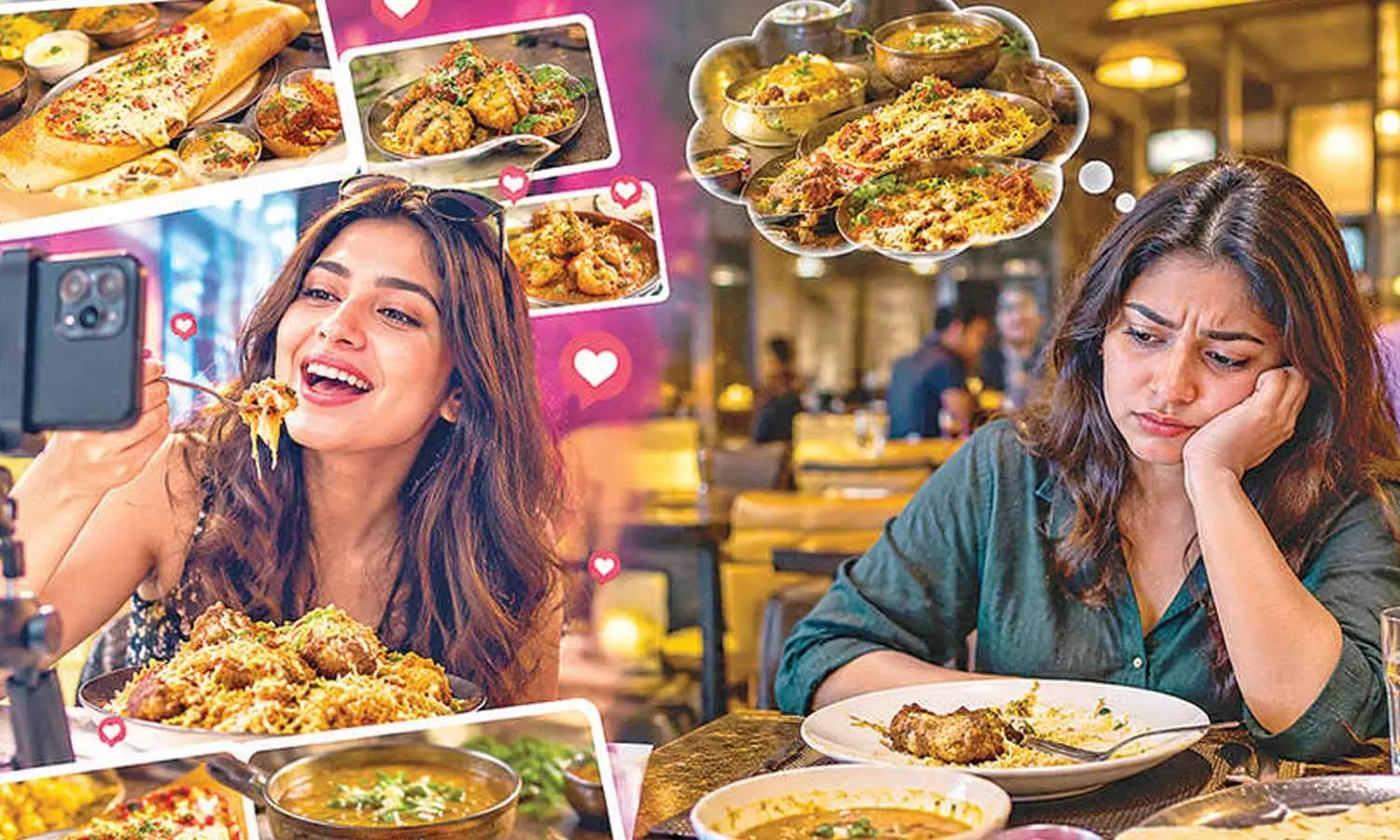
Food bloggers taking customers for a ride
Hyderabad: Hyderabad’sdining scene, touted as a global culinary paradise, has long been defined by rich flavours and authenticity, thanks to good old Hyderabadi food, famous for its rich Nizami heritage and a blend of Arabic, Persian, Turkish, and Mughal flavours, with native Telugu and Marathwada traditions thrown in. Over the years, the fusion of cuisines (think of chicken pakoda, chicken/mutton/seafood dosas; dosa batter layered with Italian pizza toppings, cheese, and herbs; khatti dal, talawa gosht and loose prawns) heralded a spree of creative combinations of dishes that became a passing fad or a trendy item sustained long-term by word-of-mouth. Today, however, the average dining experience for a citizen spending Rs 1,500 – Rs 2,000 per meal, especially at high-end establishments, has become diluted by algorithmic hype created by food bloggers’ reels and influencers’ social media posts.
Things have come to such a pass that distrustful comments against food bloggers have become as viral as their reels. Why is it so?
A high-profile food blogger, speaking on condition of anonymity, reveals, “I've been in group (review) settings where I've seen them not liking something but hyping it up later. I don't want to sound condescending, but very few people review authentically. Yes, buying followers also happens.” “Food bloggers losing credibility is old news,” observes Naineni Hanumanth Rao, founder and owner of Roast Café. “They use the same words, same vocabulary, and same hype method for every reel.”
Deeper enquiries, however, bared another side of the story. Food bloggers claim that establishments serve them larger portions and present dishes more elaborately than they would for regular customers.
Macro food bloggers Dr Ayesha Fatima, Aayush Puri, and others confirm that the practice is rampant especially during shoots.
Speaking on condition of anonymity, a few food bloggers reveal that restaurants, including Palm Arabiana and Aazebo, among others, indulge in these practices, which bloggers claim affects their credibility.
‘Debutant Café of the Year’ awardee and CEO of marketing agency Creative Sin, Syed Saif shares from his 25 years of experience. “Presenting food elaborately may be a marketing gimmick; it’s not necessarily an attempt to deceive consumers,” he says. Pointing to the optics of establishments failing when consumer demand goes up based on a viral reel, he shares, “We’d done a campaign for Karachi Bakery’s kunafa product. The videos went so viral that Karachi, which has so much machinery and manpower, couldn’t handle it. They shut that product down.”
President of National Restaurant Association of India (NRAI), Hyderabad Chapter Sandeep Balasubramanian weighs in, “The association has had dialogues with influencers and establishments on how to approach promotions. Our official stance is that when restaurateurs engage with paid reviews, they must balance it with genuine operational experience.”
Establishments, on their part, state that digital hype is short-lived. Once the reel is pushed down on a page, it’s all back to square one. Regardless of these realities, the algorithm swims in food reeds.
“When we’re going for a new launch, we keep a hype budget of about Rs 40 lakhs to 60 lakhs. For monthly marketing, it’s between 1.5 lakhs and 2 lakhs for exclusive launches,” shares Roast owner Rao.
“Normally, a big establishment would bring in about 30 influencers pre-launch. That’s an expenditure of about Rs 3 lakh for micro influencers. If followers are over 10,000, a single post can be priced anywhere between Rs 25,000 and Rs 1 lakh,” adds Saif, owner of Café HYD.
Dr Ahmed Ashfaq, a food blogger, points out, “The whole scene is overly saturated. Even if one tries to maintain a standard, there are 300 people waiting in line to do it at any rate. Establishments cut costs on this basis.”
A high-profile establishment owner with branches in Jubilee Hills and HI-TEC City, requesting anonymity, says, “This is why we’re now using food bloggers for spam marketing.”
Of course, India has laws to prevent misleading promotions. “The Central Consumer Protection Authority’s Guidelines for Prevention of Misleading Advertisements and Endorsements, issued on June 9, 2022, under Section 18 of the Consumer Protection Act, 2019 and the 2023 Influencer Norms require paid content to be labelled, and the CPA 2019 holds endorsers legally liable,” informs advocate Sai Dev Royhan Yasala. Offering hope, he adds, “If you are misled, keep screenshots, bills, and call National Consumer Helpline (1915) (or via WhatsApp at 8800001915); or file a complaint on e-Jagriti. Both the endorser and advertiser are liable as per law.” All told, it may seem like the food blogger is on a double-edged sword facing public criticism, but the reviewer and restaurateur both walk away with their share. The customer is left paying full price for an experience that doesn’t match even half of what was promoted for him to envision and taste.
Kota Police’s Dramatic 15-Minute Operation Leads to Arrest of Shroff Shooting Suspects
BJP Chief Slams Rahul for Repeated ‘Vote Chori’ Claims; Rahul Dares Govt to Act Against Him
Telangana asks govt offices to use electricity economically
President Murmu extends greetings on the eve of Vijayadashami
No one from Bihar will be forced to migrate for manual labour by 2030: Samrat Choudhary
SP neglects Dalits, backwards: UP ministers on Akhilesh Yadav's manifesto release announcement on Constitution Day


