




- Everyone must participate in the mission to make Wanaparthy a TB-free district: District Collector Adarsh Surabhi
- Battle between two ideologies in country, Oppn wants to spread anarchy: Gaurav Bhatia
- HDFC Bank CEO Anup Bagchi’s Rs 35.89 Crore Pay Package Explained
- ‘Do-or-die fight to protect democracy’: Congress as Kharge hosting lunch for INDIA bloc
- Uttarakhand Man Missing In UAE: Family Seeks Help To Trace 28-Year-Old Yuvraj
- Nana Patekar’s Demise: Chiranjeevi, Kamal Haasan, Hrithik Roshan Pay Emotional Tributes
- Amazon Layoffs: Fresh Job Cuts Hit India as Great Indian Festival Sale Begins
- Congress Intensifies Protests Against CEC: Dharnas in Hyderabad, Delhi and Patna
Hyderabad Reeling Under Severe Water Shortage
In Short
Among the worst-hit areas in the city are Sainikpuri, Yapral, Kukatpally, Quthbullapur, Uppal, Shankarpalle, Hayathnagar and others.

Share :
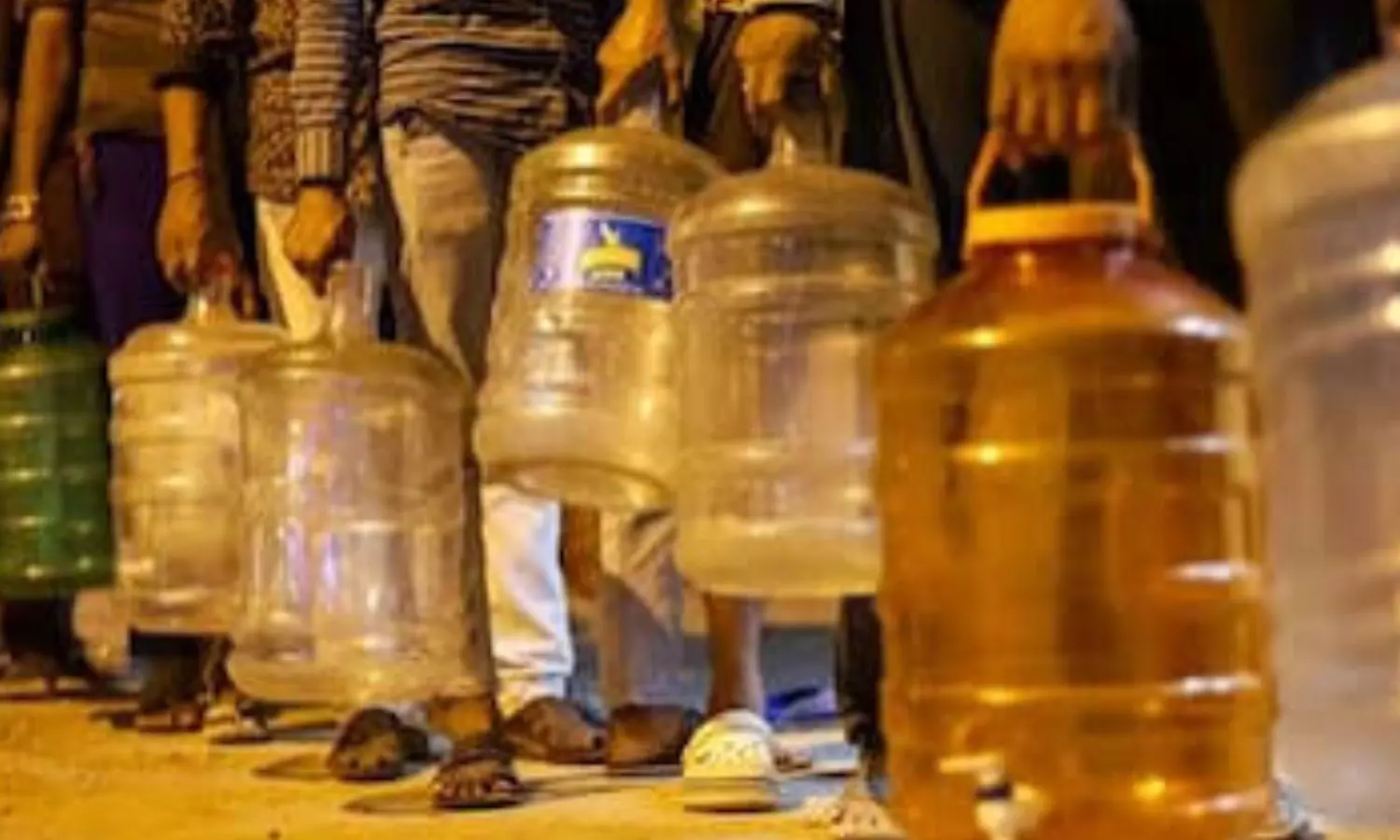
Hyderabad is facing an acute water shortage
The southwest monsoon has withdrawn. Hyderabad is facing an acute water shortage, and tankers are back on the roads, minting money. Groundwater levels have plummeted in the CURE mandals due to a rainfall deficit, partly attributed to the El Niño effect, as well as a lack of advance planning by the government.
Among the worst-hit areas in the city are Sainikpuri, Yapral, Kukatpally, Quthbullapur, Uppal, Shankarpalle, Hayathnagar and others. Though rainfall is said to be normal on paper this season, it has not been sufficient to recharge groundwater levels. The mild rains received have helped recharge groundwater levels by only a little over 1 per cent.
Official data says that the CURE region received 26 per cent less rainfall this season. About 50 per cent of the mandals in the state are facing a drought-like situation.
Experts say it is not correct to put the entire blame on the El Niño effect. Doing so would amount to the government washing its hands of responsibility and hiding behind an excuse. The city has been doing badly when it comes to rainwater harvesting and groundwater recharge. Much of the rainwater simply goes to waste.
Political parties and successive governments have invested more time in vote polarisation and political battles than in taking measures that can help the city deal with drought-like as well as flood-like situations.
These issues remain mere poll slogans, and once in power, little is done to change the situation. Some even allege that not enough attention is being paid to the issue because many public representatives are, directly or indirectly, involved in the water business.
It is time the Opposition and the ruling party stopped the ‘Tu Tu Mein Mein’ and street dramas and focused on serious issues so that the problem can be properly addressed.
For Hyderabad, the concern is even more immediate because the city depends heavily on a network of reservoirs and river systems outside its boundaries. Singur, one of the important sources of drinking water for Hyderabad, is now a major warning signal. The reservoir has a full capacity of 29.9 TMC, but was reported on October 6 to have only about 3.9 TMC. Officials fear that, at the present rate of depletion, it could run out in around 60 days.
The 2026 experience offers a simple message: Telangana cannot control El Niño, but it can control how prepared it is to deal with its impact. The government should gear up to face the real test in the months ahead. El Niño should be treated as a warning, not an excuse. Today’s rainfall deficit should not become tomorrow’s drinking-water crisis.
The city needs a diversified water-security strategy combining surface water, treated wastewater, rainwater harvesting, groundwater recharge and strict conservation. It needs the government of the day to walk the talk, not merely indulge in political sloganeering.
Telangana has invested heavily in major irrigation and drinking-water projects, but a water-rich infrastructure network is useful only when the natural systems feeding it receive adequate rainfall. The government would do well to study the Gujarat model and examine how some of its successful water-management practices can be replicated in Telangana.


