




- N-10 nursery to add green cover to Amaravati
- SRM signs MoU with University of Rome Tor Vergata
- 86,250 SIR cases cleared in East Godavari
- Hamalis’ strike cripples activity at Nunna vegetable market
- Vikas students take up community service at GGH
- AP tops country in patient safety
- Naidu hails Modi’s development record, urges stronger NDA unity
- Tech-enhanced spiritual experience along Tirumala queues
Seventh Nizam remembered on Hyd Integration Day
In Short
Tehreek Muslim Shabban holds a public meeting in Hyderabad to commemorate the legacy of the Seventh Nizam, highlighting his contributions to infrastructure, education, and communal harmony.

Share :
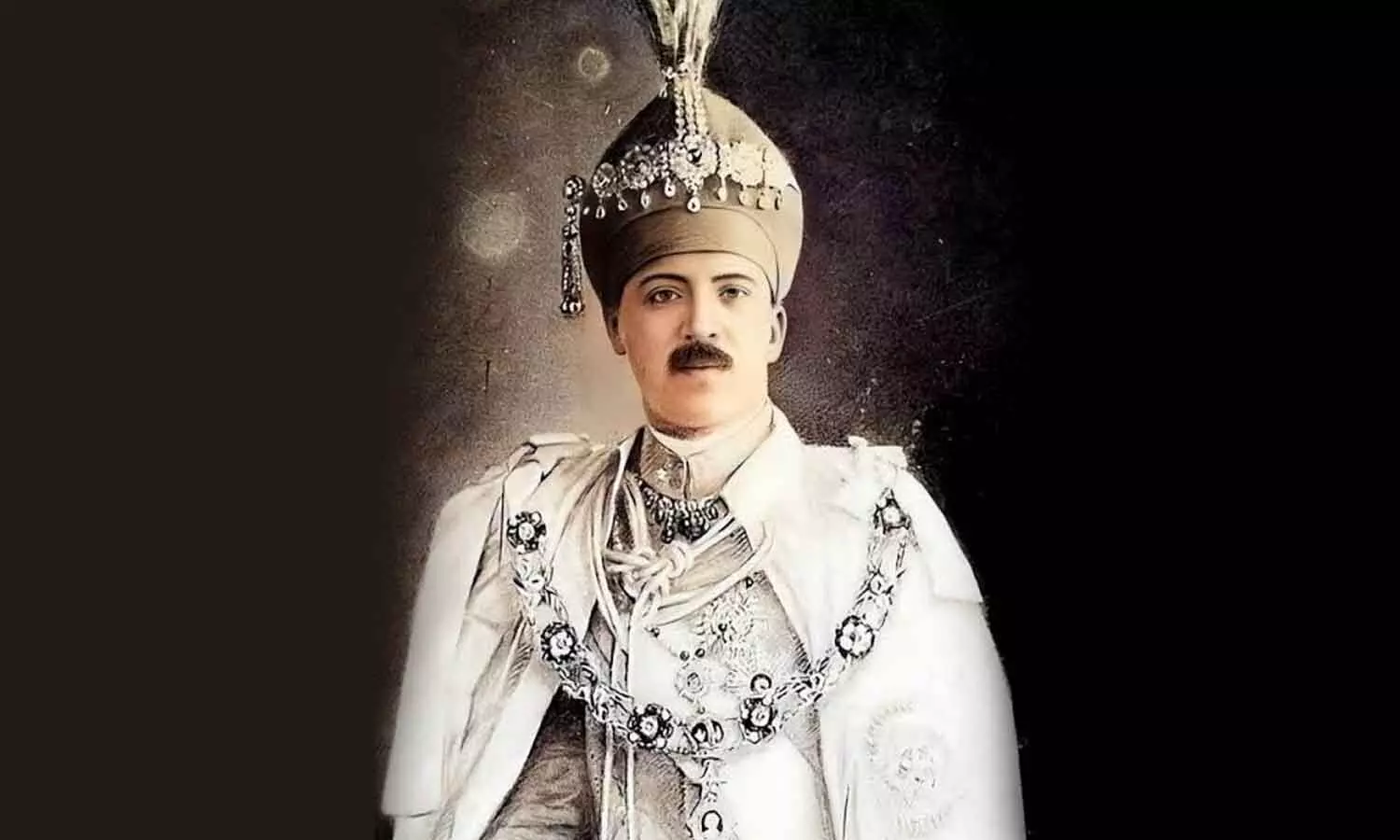
Seventh Nizam remembered on Hyd Integration Day
Hyderabad: Tehreek Muslim Shabban organized a public meeting at Masjid-e-Judi in King Koti to mark the 1948 Police Action and commemorate the legacy of the Seventh Nizam of Hyderabad Mir Osman Ali Khan. Addressing the gathering, Tehreek Muslim Shabban president Mohammed Mushtaq Malik stated that the ruler worked tirelessly for public welfare, promoting education, healthcare, and infrastructure.
He highlighted the Nizam patronage of religious and charitable institutions, including Hindu temples, maths, and mosques, noting that he regarded Hindus and Muslims as the two eyes of the state while upholding Hyderabad Ganga-Jamuna Tehzeeb. Mushtaq Malik urged the government to preserve this legacy for future generations. On the occasion, scholars, lawyers, ulema, teachers, and leaders of Muslim organisations offered floral tributes and performed Fatiha Khwani at the ruler grave.
Mushtaq Malik stated that September 17 should be remembered in the context of Hyderabad State integration into the Indian Union, recalling that the Government of India subsequently appointed the Seventh Nizam as Rajpramukh, a position he held for nearly three years. He demanded that the Telangana Government institute a state award in the ruler name for exceptional contributions to education and healthcare.
Furthermore, he urged the inclusion of the Nizam public service, promotion of communal harmony, and Ganga-Jamuna Tehzeeb in school curricula. Speakers detailed his extensive contributions to civic infrastructure, including the establishment of Osmania University, Osmania General Hospital, High Court, Nizam Orthopaedic Hospital, and ENT Hospital at Koti.
They also highlighted his achievements in irrigation, water supply, and industry through major projects such as Osmania Sagar, Nizam Sagar, Ali Sagar, Himayat Sagar, and Nizam Sugar Factory. Following integration, the erstwhile Hyderabad State was reorganized, with its territories becoming parts of present-day Telangana, Maharashtra, and Karnataka.


