




- ‘Fit Cop’ app to be launched for 90,000 personnel
- AP govt committed to holistic development
- Higher turnout recorded in Kotia region
- BRS launches grassroots drive for graduate MLC polls
- Vizagites excited over India–Sri Lanka ODI
- No code, no laptop: IT professionals build 57 AI agents in 35 minutes
- Nalgonda woman goes missing during morning walk in Boston
- Students told to stay away from drugs
Telangana High Court hears plea alleging threat to Hyderabad heritage from Metro project
In Short
Appearing for the petitioner, advocate Immaneni Rama Rao argued that the Metro Rail project was proceeding without following the mandatory heritage protection framework.

Share :
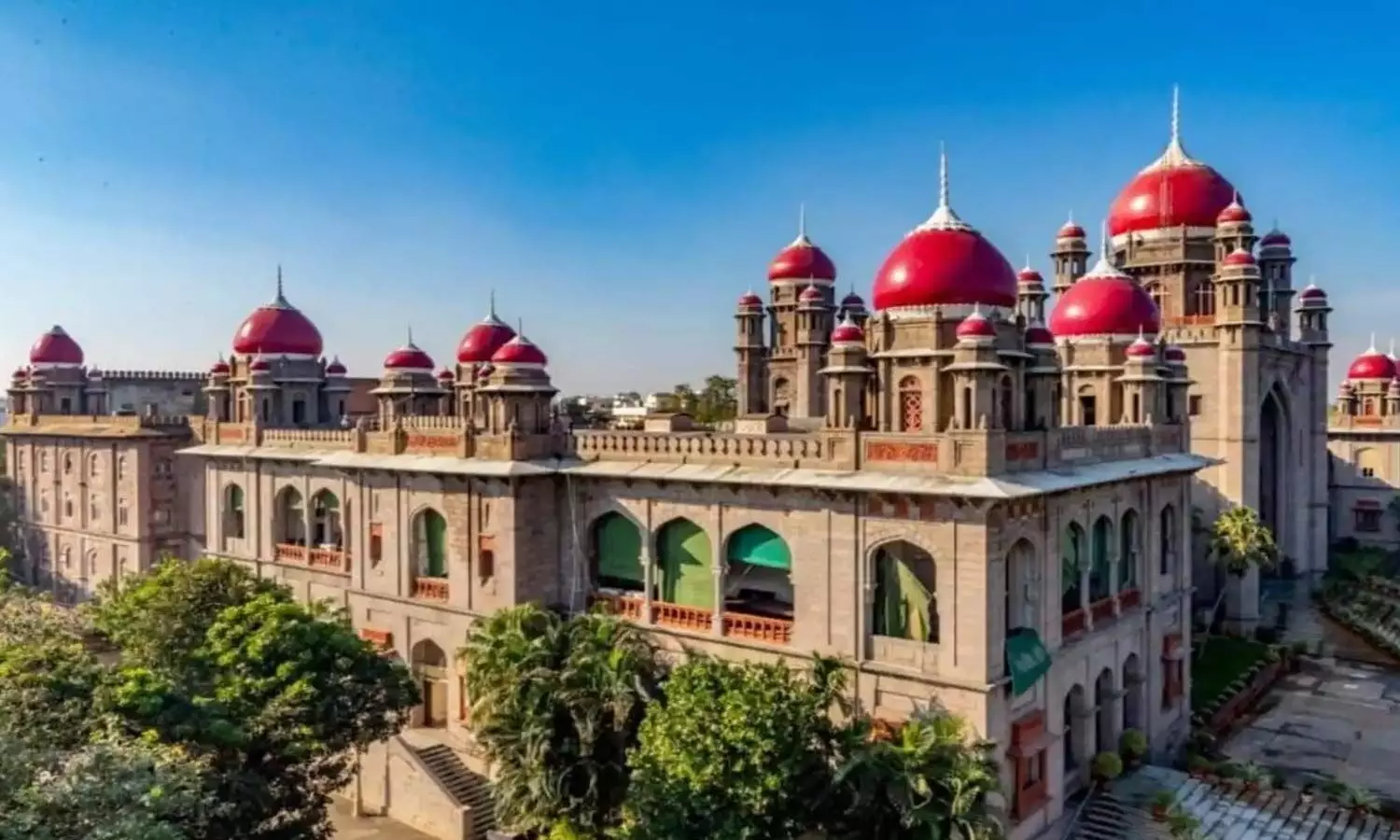
Telangana High Court
Hyderabad: The Telangana High Court division bench of Chief Justice Aparesh Kumar Singh and Justice Ghouse Meera Mohiuddin on Wednesday heard a PIL filed by the Act Public Welfare Foundation (APWF), represented by its president Mohammed Rahim Khan of Hyderabad.
The petitioner sought directions to halt the construction related to the Hyderabad Metro Rail Phase-II, Corridor-VI, passing through the Charminar Heritage Precinct, the Falaknuma Heritage Precinct and other notified heritage areas until a comprehensive heritage impact assessment is carried out and all statutory approvals are obtained under the Telangana Heritage Act 2017 and the Ancient Monuments and Archaeological Sites and Remains Act 1958.
Appearing for the petitioner, advocate Immaneni Rama Rao argued that the Metro Rail project was proceeding without following the mandatory heritage protection framework. He submitted that the State was attempting to justify development at the cost of Hyderabad’s cultural and historical heritage, despite earlier observations of the HC that the identity of a city is defined by its heritage and architecture and that development cannot come at the expense of protected heritage.
The petitioner contended that the State’s counter-affidavit contained contradictory statements regarding the number of affected heritage structures. While the government had initially stated that no heritage or religious structures would be impacted, it later acknowledged that three structures were affected.
However, the petitioner pointed to the government documents, which, according to him, listed six Grade-I heritage structures and a total of 102 heritage and sensitive structures along the proposed alignment. He argued that photographs placed on record by both sides showed damage to certain structures and disputed the government’s claim that no demolition had taken place.
The petitioner also questioned the functioning of the Hyderabad Heritage Conservation Committee. It was argued that the committee had not been properly constituted and that statutory approvals required under the heritage laws had not been obtained before undertaking project activities. He maintained that any work affecting heritage precincts could not proceed without compliance with the legal safeguards prescribed under the Telangana Heritage Act.
Additional Advocate-General Mohammed Imran Khan opposing the PIL submitted that the allegations were unfounded. He told the bench that only a few listed heritage structures were connected with the Metro alignment and that several of the 102 identified structures would not be acquired or disturbed. He said the government had filed a detailed additional affidavit in a tabulated format, as directed by the court, setting out the status of every heritage structure along the alignment.
The State submitted that no demolition or acquisition would be undertaken without completing the statutory process, including denotification wherever required under the law.
It stated that Metro works had not yet commenced in respect of several heritage properties identified in the affidavit and that necessary permissions would be obtained before any action affecting protected structures was taken.
Referring to photographs filed before the court, the AAG argued that structures such as Aliabad Sarai and the old MCH building at Darulshifa remained intact. He submitted that while adjoining private properties had been removed in certain locations, the notified heritage structures themselves had not been demolished. He stated that some buildings were already in a dilapidated condition and that all future action would be taken only after completing the statutory procedure.
The State informed the court that the petitioner’s earlier attempts to secure interim relief had not succeeded and that challenges before the Supreme Court against the refusal of interim orders had also failed. It maintained that the Metro project was being implemented in accordance with law and that the allegations of widespread damage to Hyderabad’s heritage were unsupported by the record.
Responding to the State’s submissions, the petitioner reiterated that the issue extended beyond individual heritage buildings and concerned the protection of entire heritage precincts. It was argued that the law protects not only listed structures but also the surrounding heritage environment, including open spaces and compound walls.
The petitioner submitted that even if a structure was not proposed for acquisition, any impact on a notified heritage precinct required prior approval from the competent heritage authorities.
During the hearing, the bench sought clarification on specific heritage structures referred to by the petitioner, including the Akkanna Madanna temple, and asked the counsel to identify the relevant entries in the government’s tabulated affidavit. After hearing all parties, the court observed that it would examine the pleadings and documents in detail before passing further orders. For further hearing, the case was adjourned to August 27.


