Wow! ‘Nari Shakti’ to be showcased at passing out parade of RR batch at NPA

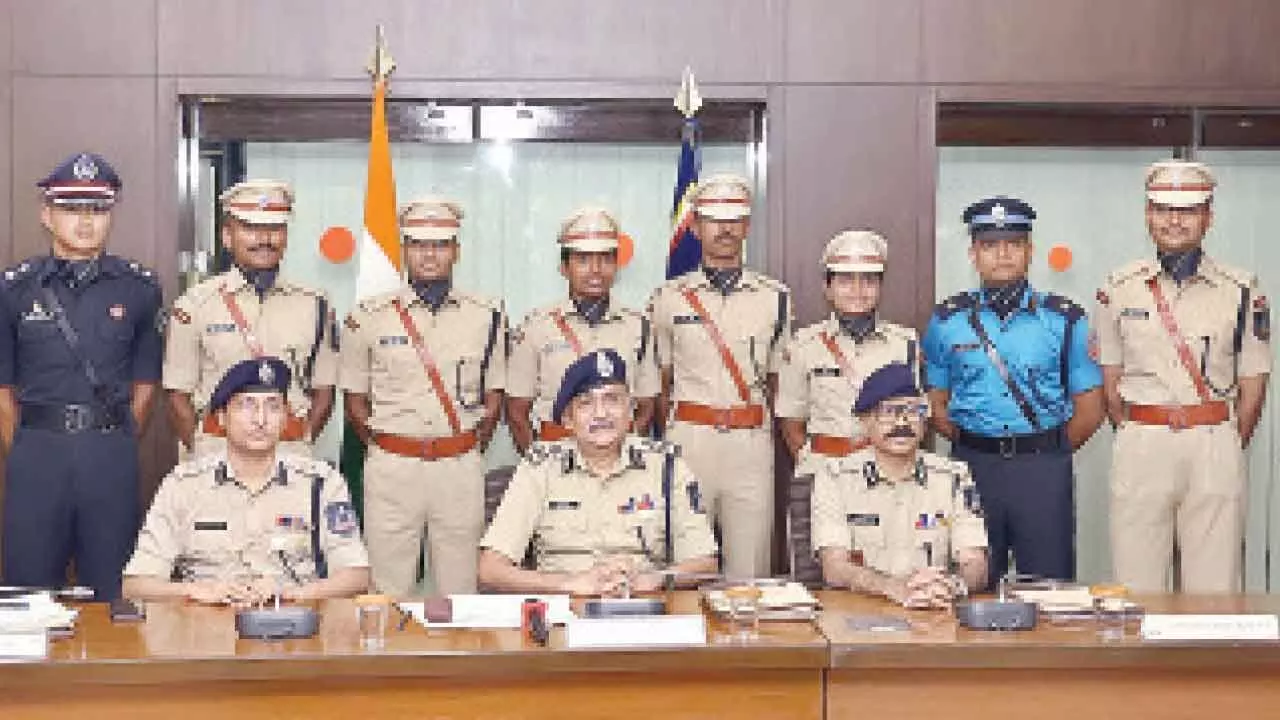
Hyderabad: On October 17, Hyderabad’s Sardar Vallabhbhai Patel National Police Academy (SVPNPA) will witness the passing out parade of 190 officer trainees, an event that not only marks the culmination of a transformative journey for the country's top police recruits but also reflects remarkable changes in the landscape of Indian policing.
This year, the academy will celebrate the highest-ever intake of women officer trainees, a distinct dip in engineering backgrounds among recruits, and a record number of participants from foreign police services.
The batch, referred to as the 77th Regular Recruits (RR), includes 174 IPS officers from across India and 16 officer trainees from Nepal, Bhutan, and the Maldives, with 65 notable women among them. SVPNPA Director Amit Garg, IPS, elaborated on the rigorous 15+49+29 “sandwich” model, a two-year (102-week) training regime engineered to produce physically fit, ethically grounded, technologically savvy and legally literate leaders.
The academy’s curriculum now emphasizes hands-on learning in ethics, law, investigation and the use of new criminal laws. Special focus has been placed on AI and big data tools (like NCRB’s AI-based platforms and e-Sakshi for analytics), cyber and crypto challenges, and drone technology, reflecting the evolving demands on modern policing.
Each officer trainee must navigate a regimen that includes yoga, equestrian skills, swimming, field training, navigation, map reading, stress management, and direct engagement with crime victims, ensuring a blend of physical, mental, and emotional fortitude.
One of the standout trends this year is the increased representation of women: from 20.66% in 2020 to 35.63% in 2024, underscoring a transformative shift in gender inclusivity within Indian policing. The total number of trainees trained at the academy to date is 6,476, including 380 from foreign countries, a testament to the institution’s global reach and growing regional partnerships.
Notably, while earlier batches saw as high as 68 percent of officer trainees with engineering backgrounds, this proportion has declined to 50 percent in 2024, paralleling a rise in the number of science graduates from 10 to 21 percent.
The percentage of female trainees with science and engineering degrees has dropped from 80 percent in 2020 to 64 percent, while the proportion of males in these disciplines has risen from 20 percent to 36 percent. The academic spectrum now broadens, with law remaining the least represented field.
Uttar Pradesh continues to send the highest number of officer trainees. At the same time, smaller states and union territories such as Sikkim, Uttarakhand, Puducherry, Gujarat, Goa, and Arunachal Pradesh feature the lowest representation—a pattern consistent across recent years.
Prime Minister Narendra Modi’s acronym “SMART” captures the academy’s vision: Sensitive and Straight, Modern and Mobile, Accountable and Aware, Resilient and Reliable, and Tech-savvy.
The NPA has implemented this paradigm across its teaching. Elective modules now include skills in artificial intelligence, machine learning, election management, case study-based learning, and human rights.
The training also emphasizes stress management, personality development, and empathy building, responding to the unique challenges and “glamour-versus-responsibility” dichotomy inherent in the IPS role.
Founded in 1948 as the Central Police Training College and renamed in honor of Sardar Vallabhbhai Patel, the “Iron Man of India,” who unified the Indian states and championed law enforcement reforms, the Academy stands on the former estate of the Nizam era, a location emblematic of Hyderabad’s complex law and order legacy.
SVPNPA has grown into the premier national center for police leadership training, blending traditions of discipline, inquiry, and service, and is today internationally recognized for its comprehensive training approach.
This year’s parade is more than a ceremonial milestone; it is a mirror to the evolving Indian Police Service, more inclusive, more responsive to contemporary challenges, and grounded in the responsibilities that come with the allure of the uniform.