






- 2027 UP polls: BJP's two-day core group meet to kick off in Mathura today
- PM Modi to visit Philippines today for ASEAN-India Summit
- PM determined to rid India of drug menace: Kishan Reddy
- TGBIE Secy allays fears over the merger of school and inter education
- Telangana eyes Japanese investments, jobs for youth
- PM flags B’luru traffic, proposes six-point fix
- Sandeep faces uphill task of uniting Telangana Congress
- Telangana eyes global aerospace, defence hub tag
Air quality improves as AQI drops to 290
In Short
Of the 58 air quality monitoring stations in the city, 34 recorded ‘poor’ air quality and 23 ‘very poor,’ while one (Delhi Cantonment) recorded ‘moderate’ air quality. NSIT Dwarka recorded the worst air quality with an AQI of 364.

Share :
Air quality improves as AQI drops to 290
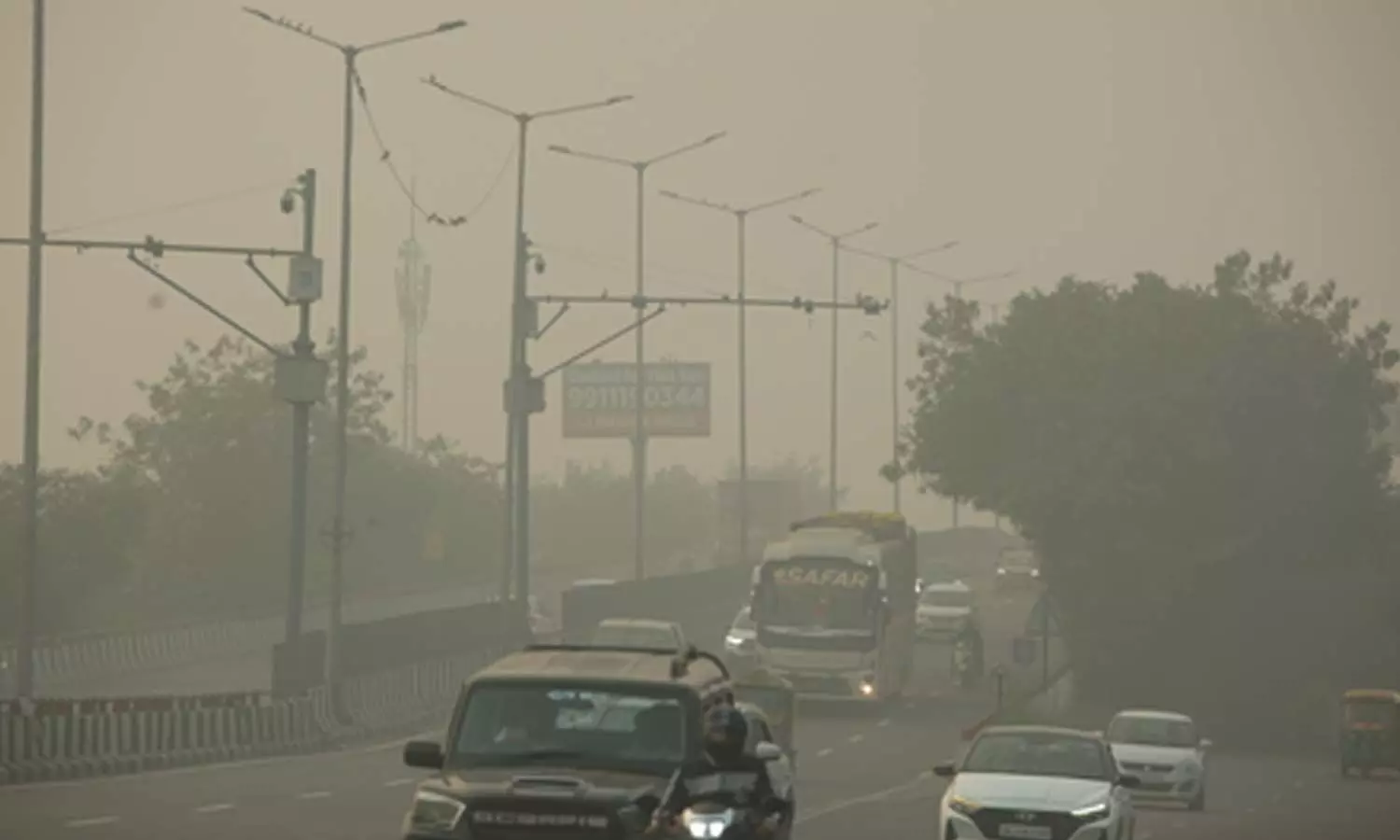
New Delhi: Delhi’s air quality was recorded in the ‘poor’ category on Sunday, with the Air Quality Index (AQI) settling at 290 at 4 pm, after several days of toxic air quality that had kept the national capital shrouded in a haze of pollution following Diwali.
Of the 58 air quality monitoring stations in the city, 34 recorded ‘poor’ air quality and 23 ‘very poor,’ while one (Delhi Cantonment) recorded ‘moderate’ air quality. NSIT Dwarka recorded the worst air quality with an AQI of 364.
In the morning, the city’s air quality stood in the ‘very poor’ category, with an AQI reading of 350, according to the Sameer app. According to the Central Pollution Control Board (CPCB), an AQI between zero and 50 is classified as ‘good’, 51 and 100 as ‘satisfactory’, 101 and 200 as ‘moderate’, 201 and 300 as ‘poor’, 301 and 400 as ‘very poor’, and 401 and 500 as ‘severe’.
The city’s air quality had remained in the ‘very poor’ category since November 11, with several hourly readings during this period getting close to the ‘severe’ mark and even crossing it once. The last time Delhi recorded a ‘poor’ AQI was on November 10, when it stood at 299.
Before that, the AQI was recorded at 261 on November 1.
According to the real-time source apportionment of PM2.5 by the Air Quality Early Warning System and the Integrated Decision Support System, biomass burning emerged as the largest contributor to Delhi’s pollution on Sunday, accounting for 37.1 per cent.


