




- Bangladesh announce schedule for crucial West Indies Test series
- Government asks Google to block search results for Peekaboo gender test kit
- Police Patrol Vehicle Stolen in Karimnagar
- BRS MLCs Tata Madhu and Naveen Reddy gets relief in Nampally court
- BRS protests Congress’ ‘failed rule’ over unfulfilled promises in Warangal
- iPhone 18 Pro Launches Tomorrow With A20 Pro Chip, Variable-Aperture Camera
- Tamil Nadu cabinet reshuffle likely as Assembly session ends
- Nani's Paradise Shoot Enters Final Stage
From West Bengal to UP, ‘nephews’ face different battles for political legacy
In Short
But a week later, all speculations on the “rift” with her nephew and heir apparent were put to rest when she reappointed him in the same position.

Share :
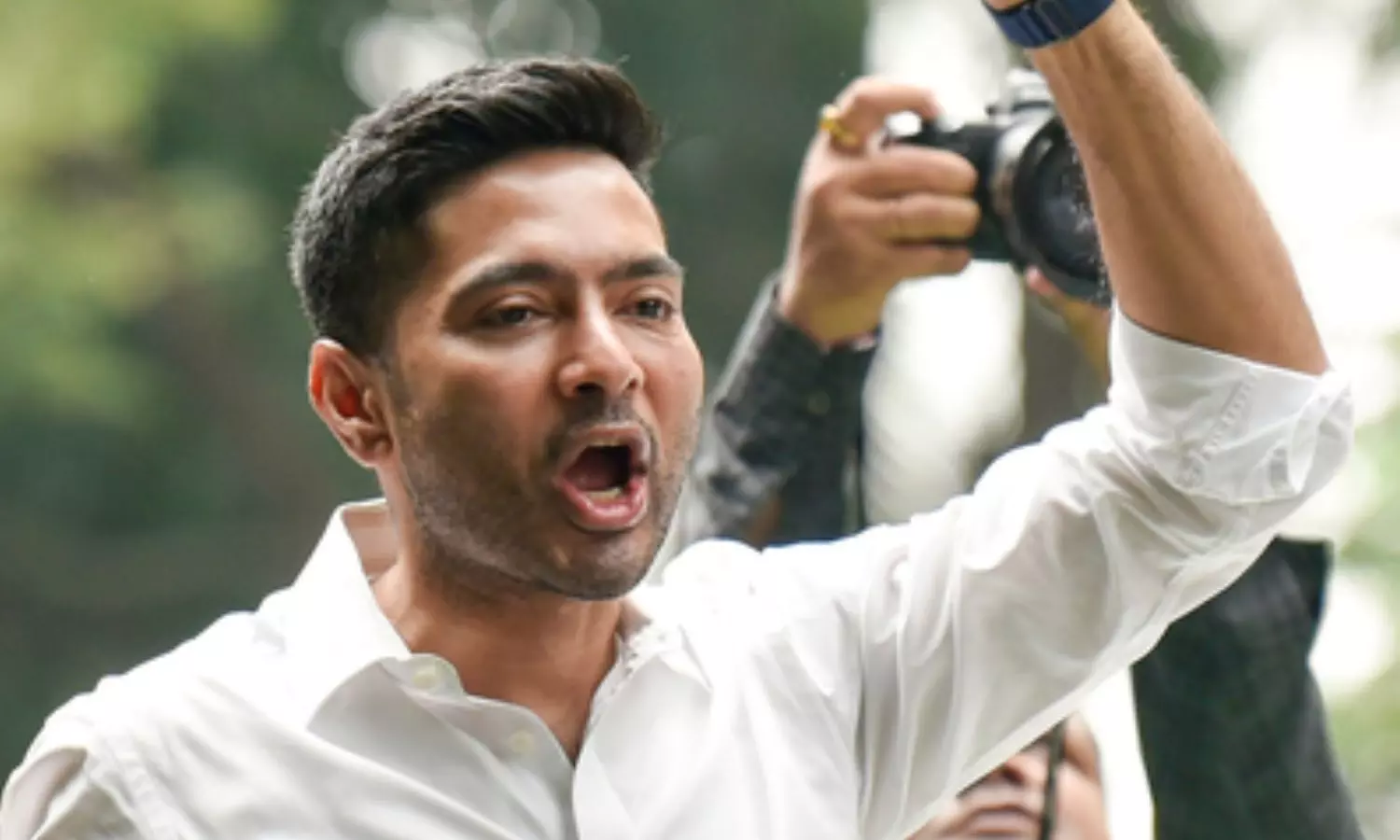
Trinamool Congress chief Mamata Banerjee dissolved her party’s national office-bearers’ committee
New Delhi: Four years ago, when Trinamool Congress chief Mamata Banerjee dissolved her party’s national office-bearers’ committee, even removing national general secretary Abhishek Banerjee, and formed a 20- member working committee comprising party veterans, it was considered a fallout of the then “old vs. new” leaders’ tiff spilling out in open.
But a week later, all speculations on the “rift” with her nephew and heir apparent were put to rest when she reappointed him in the same position. It is a different story today that the younger Banerjee is the target of allegations from outside and within; also, being accused of being the main reason for the party’s downfall in West Bengal.
The Kolkata story has rather shifted west, a little north, almost a 1,000 km away to Lucknow, where former Chief Minister of Uttar Pradesh Mayawati has now replaced one of her nephews with another in what is being reported as a family feud and infighting within the Bahujan Samaj Party (BSP).
It is again a different story that while Abhishek was removed once and reinstated within days, Akash Anand has been in and out of the party; but this time perhaps making way for his younger brother Ishan Anand. And the BSP supremo’s latest move has left open the issue of an heir apparent. Before their respective entries, both the BSP and the Trinamool operated through the unmediated, towering presence of their iconic woman leaders.
The nephews then took up the mantle of digital transition of their individual parties. Akash is widely credited with establishing the BSP's official social media apparatus, launching its youth outreach programmes to check the migration of young Dalit voters to other camps.
Abhishek introduced high-tech poll management systems, bypassing old-guards – except Mamata as “the face” – to build a highly centralised, technocratic party unit. Furthermore, both leaders represent the ultimate lightning rod for political opponents where others, largely the Bharatiya Janata Party (BJP), have systematically targeted the nephews as prime symbols of “Parivarvaad” (nepotism), casting them as entitled heirs to powerful political fiefdoms.
Despite these peripheral parallels, the actual exercise of power remains starkly diverse in their internal party standing. Abhishek still enjoys solid, institutionalised stability as the undisputed number two and clear heir-apparent within the Trinamool Congress.
When in power, tensions have occasionally surfaced between Abhishek’s tech-savvy youth camp and Mamata Banerjee's veteran loyalists, but his executive authority remained public. He continues to wield immense influence within the party’s “Kalighat faction”, following splits.
In Uttar Pradesh, while Akash Anand’s political life has been defined by a volatile, highly public cycle of promotion and demotion dictated by his aunt, Ishan’s future yet remains to be seen.
Earlier, Mayawati has repeatedly elevated Akash to the status of political successor, only to strip him of his positions. And now, she has again benched him, publicly declaring that he stills needs to gain “political maturity”, appointing his younger brother to key positions.
In the BSP, family ties appear to offer no immunity against the supreme leader's absolute veto. Meanwhile, political fortunes remain heavily tied to the electoral trajectories of their respective parties from Kolkata to Lucknow. Despite the recent loss, Abhishek Banerjee operates from a position of relative strength, defending a formidable political machine in West Bengal in the middle of intense multi-cornered political, electoral, and legal pressures.
Akash Anand, however, has been thrown into the deep end of a rapidly shrinking empire; the BSP has seen a decline in its Uttar Pradesh vote share over the last decade. Ishan now stands faced with little time or stable institutional authority to rebuild a new political equation and voter base amidst an ebb in their Dalit support base. Uttar Pradesh Assembly election is expected to be held in the first quarter of 2027. --


