




- Large concessions on border issues unlikely: Ex-diplomat on PM Modi-Xi meet
- Ramayana Begins Its Musical Journey With ‘Jai Jai Ram’
- Tarun Tejpal surrenders before Goa court, sent to Colvale jail to serve 10-year rape sentence
- Vietnam key partner in India's Act East, MAHASAGAR, Indo-Pacific visions: EAM Jaishankar
- Apple Could Launch iPhone Game Controllers Under the Beats Brand: Report
- Wagon R Next-Gen Spied -What’s new
- Happy Ganesh Chaturthi : Send Best Wishes & Messages to family & friends
- VHP welcomes HM Shah's UCC announcement; says move will advance women, child rights
Large concessions on border issues unlikely: Ex-diplomat on PM Modi-Xi meet
In Short
Speaking after the BRICS Summit, Fabian said Xi's visit to India after seven years was significant and provided an opportunity for the two leaders to hold bilateral discussions.

Share :
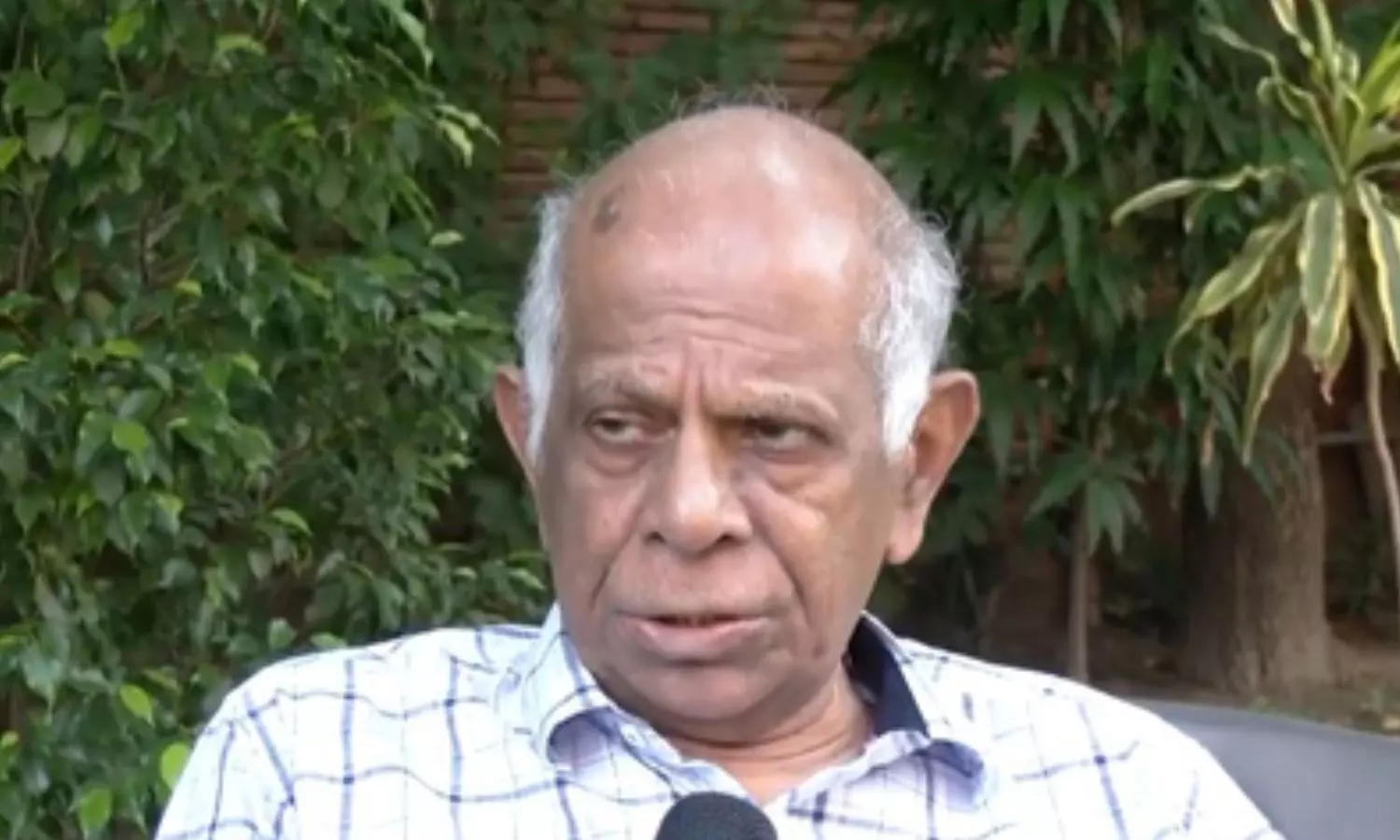
Former diplomat K.P. Fabian on Monday said Prime Minister Narendra Modi's
New Delhi: Former diplomat K.P. Fabian on Monday said Prime Minister Narendra Modi's bilateral meeting with Chinese President Xi Jinping during the BRICS Summit in New Delhi could lead to some progress in India-China relations, but cautioned that Beijing was unlikely to make any major concessions on the border issue.
Speaking after the BRICS Summit, Fabian said Xi's visit to India after seven years was significant and provided an opportunity for the two leaders to hold bilateral discussions.
"The last meeting was in 2019. But the two of them have met in other places. But Xi Jinping coming to India for the BRICS is important, and that naturally gave an opportunity for a bilateral meeting," he said.
"What you have to understand about India-China relations is that nothing moves unless there is a signal from the top. And the signal from the top comes only after they meet," he said.
"Therefore, we can expect some progress. But at the same time, we should recognise that China is unlikely to make any large concessions on the border matter," Fabian added.
He said China could prefer to keep the border issue unresolved so that it could be used as a diplomatic tool when required.
On the New Delhi Declaration adopted at the BRICS Summit, which included a condemnation of the Pahalgam terror attack and strong language against cross-border terrorism, Fabian said the development was positive for India but questioned whether China would support India's efforts at the United Nations Security Council.
"It is good that the declaration roundly condemns cross-border terrorism and has used language which India has been using," he said.
"But, you know, it's one thing to make statements; the question is, at the UN Security Council, if some of the Pakistani terrorist organisations have to be designated as terrorist agencies, will China cooperate?" Fabian asked.
On discussions within BRICS on reducing dependence on the US dollar for trade, Fabian advised against using the term "de-dollarisation", saying India should instead focus on promoting the greater use of national currencies.
"One thing I want to say is that our media has been talking about de-dollarisation. Well, in my view, it is unnecessary and impolitic to speak of de-dollarisation because that irritates President Trump," he said.
"It is smarter to talk of increased use of national currencies. That's point number one," Fabian added.
He pointed to existing arrangements between BRICS members, saying China and Russia were settling trade in their respective currencies, while India and Russia were also conducting a large share of their trade in Rupees and Roubles.
Fabian also opposed the idea of creating a common BRICS currency, arguing that it could undermine the financial sovereignty of member countries.
"Another thing I want to say is that we don't want a BRICS common currency. In fact, perhaps with the exception of China, nobody wants it. Because if there is a common currency, that means you cannot do anything with the interest rates, for example -- you know what I mean. So you are losing your financial sovereignty. India is not prepared," he said.
He further cautioned that if a common BRICS currency were ever introduced, it could be dominated by China given the size of its economy.
"Of course, should there be a BRICS currency -- mark my words... naturally it will be dominated by China. Because we have 11 states in BRICS now. Their total GDP is $34 trillion, and China's is $20 trillion. India should not go for a common currency," Fabian said.
ED seizes flats, FDs worth Rs 13.44 crore in Mumbai, Goa over United Services Club fraud
Large concessions on border issues unlikely: Ex-diplomat on PM Modi-Xi meet
Rajasthan civic polls: Congress wins Vasundhara Raje's stronghold Jhalawar; Independents upset equations in Bharatpur
Gujarat Police seize liquor worth over Rs 22 lakh in three raids, 11 held
Vijay Gifts Miniature Race Car To Ajith Kumar At Le Mans Race In Silverstone
Telangana Guv offers first puja to Khairatabad Ganesh; CM wishes people
CM Chandrababu Naidu offers prayers with family on Vinayaka Chavithi
Amazon suspends 21 Air operations after fatal Miami cargo plane crash
Ganesh Chaturthi celebrations sweep India; devotees throng Maharashtra temples, pandals
Apple launches iOS 27 today: New features, compatible iPhones and download


