




- Eight killed as bus plunges into deep canal in Rajasthan
- Musk Floats Idea of Amazon Rival Amid AI Shopping Clash
- Petrol and diesel prices today in Hyderabad, Delhi, Chennai and Mumbai on , 17 October 2026
- APPSC opens applications for eight categories of posts
- Zacharia out as White House press secretary after five days
- Trump waives Russia oil tariffs under Graham Act, bringing relief to India
- Zacharia out as White House press secretary after five days
- UN Security Council holds 6th straw poll on secretary-general candidates
Opposition Shifts Goalposts: From Gyanesh Kumar to ‘Regime Change’
In Short
The party spokesperson Pawan Khera said that the party had several icons and the biggest icon now was Rahul Gandhi and they want “regime change,” and would achieve it democratically.

Share :
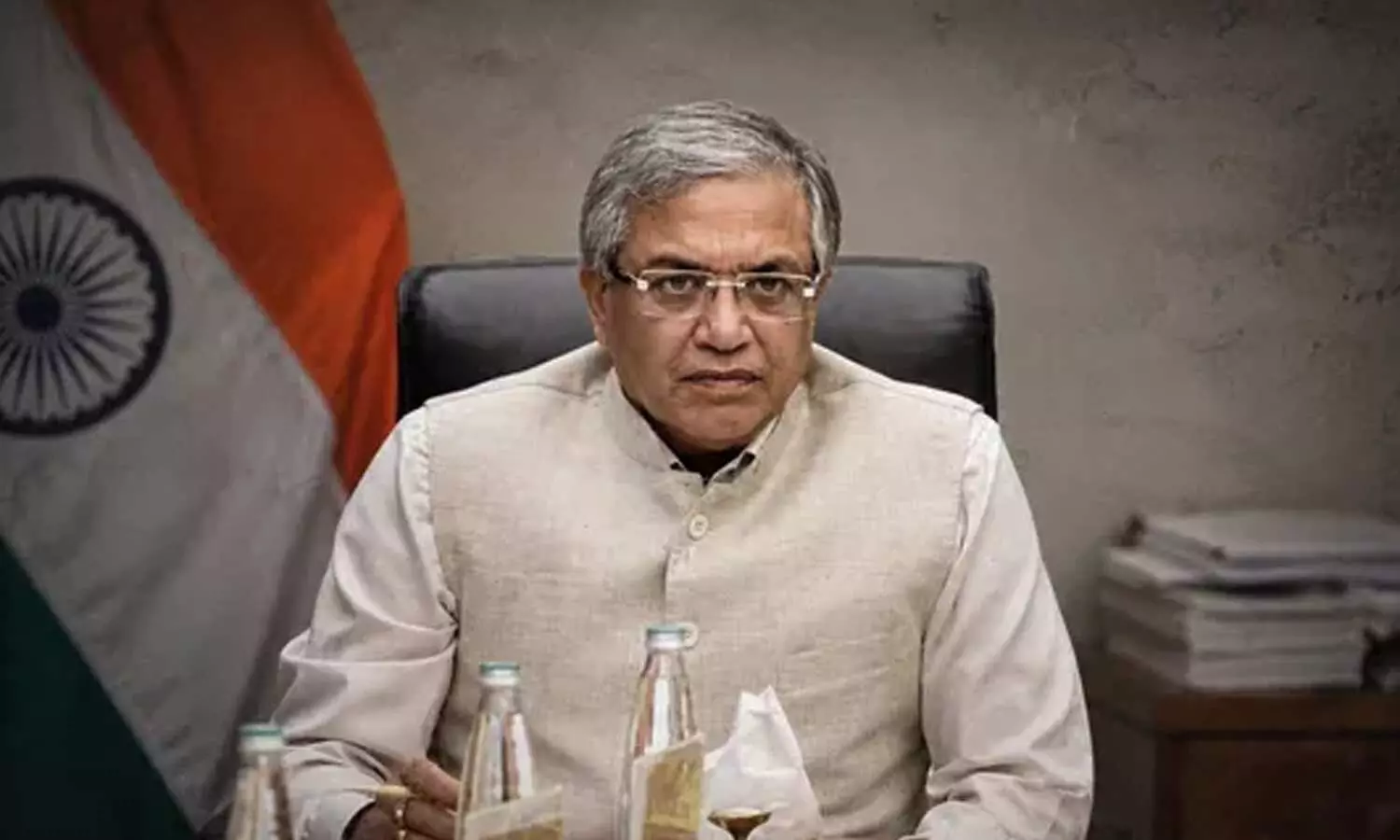
Gyanesh Kumar
Regime change has now become the buzzword for opposition parties who want all decisions to be taken on the streets and not in Parliament. When criticised by the ruling party that the opposition that the real target of the opposition was not Gyanesh Kumar, the Chief Election Commissioner but to bring anarchy on the lines one had seen in Bangladesh, the Congress party took a step backward saying that they do not need to get inspired by Bangladesh.
The party spokesperson Pawan Khera said that the party had several icons and the biggest icon now was Rahul Gandhi and they want “regime change,” and would achieve it democratically.
The Samajwadi Party had made it clear that they were opposed to the Bangladesh model and what they wanted was a change of government through elections and not through violence.
What the opposition should understand is that a routine change of government through democratic elections is not regime change. It is only a transition. Any party that wins elections and comes to power will have to continue to operate within the same constitutional and democratic framework. It is only a political transition.
Regime change takes place when large-scale public protests and popular movements challenge the existing rulers. If the movement succeeds in replacing the government or transforming the political system, it may result in regime change. Another way is through a military coup and foreign intervention, creating political instability, economic distress, and institutional breakdown, economic distress etc.
However, it is surprising that the Congress ecosystem, including its senior leaders and former ministers like P. Chidambaram, continues to defend the term “regime change,” calling it as a “normal” democratic process. He said it is the Opposition's duty to "depose the government through elections".
"Why is the BJP apoplectic with feigned rage on the use of the phrase 'regime change'? 'Regime change' is normal in a democracy. The duty of the Opposition is to 'oppose, expose and depose' the government. Which means: Oppose in politics, expose in Parliament and depose through elections," he added.
But activist and advocate Prashant Bhushan publicly stated that the protests have now turned into a “fight for regime change.” AISA president Neha Bora said she gets inspiration from Umar Khalid, a student activist and former research scholar at Jawaharlal Nehru University (JNU), who is accused of involvement in an alleged conspiracy behind the riots and invoked the Unlawful Activities (Prevention) Act (UAPA), among other laws, that took place in 2020 in Delhi and the Bangladesh riots.
Interestingly, she has now become the poster girl of the Congress party. This it is learnt has upset the NSUI.
The BJP alleged that "Congress, the INDIA Bloc, and the declining Left parties, who have failed to win elections, are adopting the term “regime change,” and want to overthrow the government through violent struggle, conspiracy, or collaboration with foreign powers.
The BJP also says that the timeline of various statements needs to be observed. Recalling the support of Sam Pitroda, the Chairman of the Indian Overseas Congress (IOC), BJP spokespersons said that Sam said that Soros was willing to invest $10 billion in India. He said the proposal could be considered on a case-by-case basis.
They said such statements and the assertions of activists like Neha Bora and Prashant Bhushan point towards the “end goal” of the opposition.The BJP pointed out that George Soros founded the Open Society Foundations (OSF), a philanthropic network that supports initiatives related to democracy, human rights and civil society.
The BJP alleged that Sonia Gandhi was a co-president of the Forum of Democratic Leaders in Asia Pacific (FDL-AP) Foundation in December 2024, which it claimed had received funding from Soros-linked philanthropic organisations. The BJP also alleged that the Rajiv Gandhi Foundation, chaired by Sonia Gandhi, had a partnership with organisations associated with Soros.
Wayanad MP Priyanka Gandhi Vadra dismissed the allegations as baseless and ridiculous, accusing the BJP of attempting to divert attention from the ‘Vote Chori’ issue.


