






Taliban accuses Pakistan of backing armed resistance groups amid escalating border tensions
In Short
According to a report, “Is Pakistan Backing Anti-Taliban Groups in Afghanistan?”, published by German broadcaster Deutsche Welle (DW)

Share :
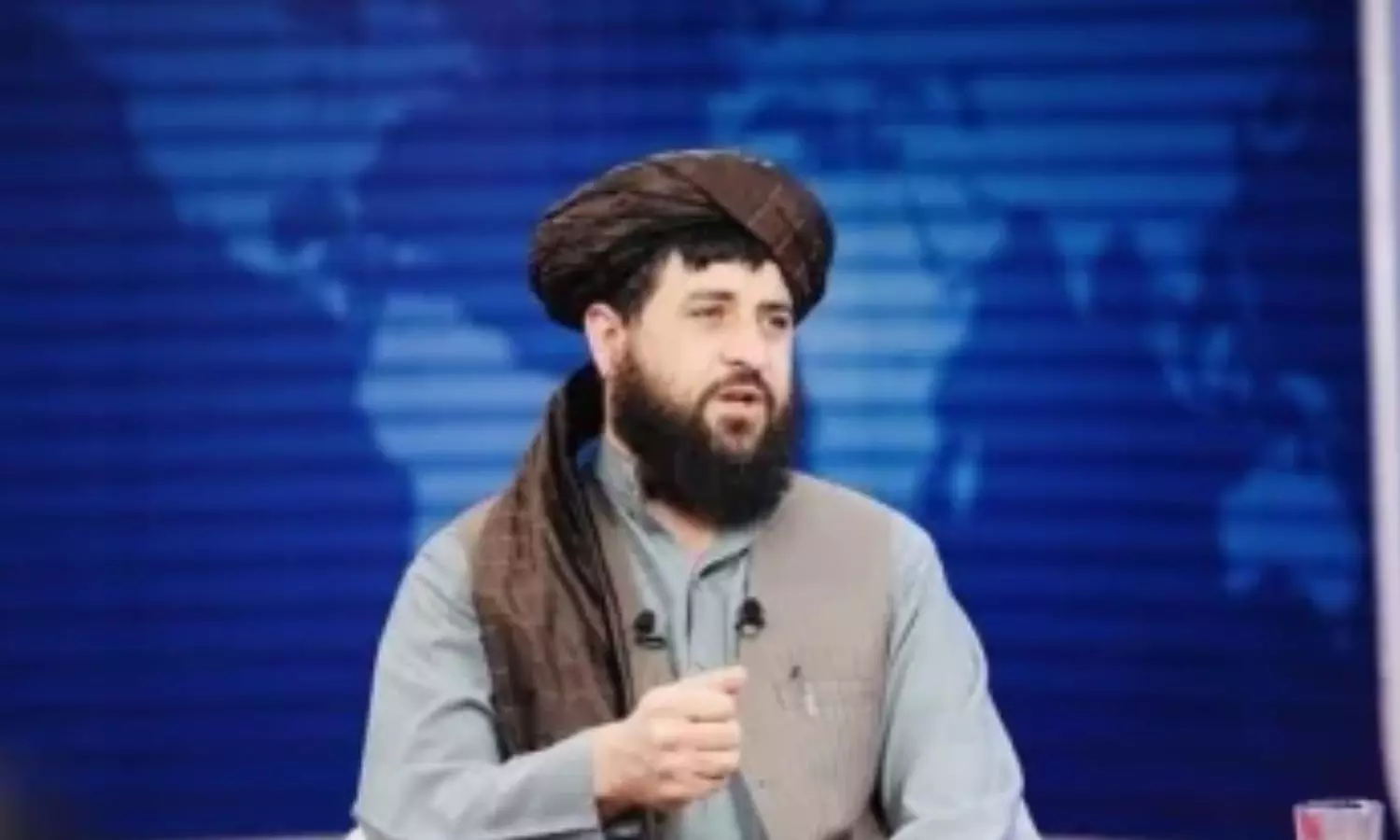
Afghanistan's Talibani regime has accused Pakistan of supporting armed groups
New Delhi: Afghanistan's Talibani regime has accused Pakistan of supporting armed groups opposed to their rule, alleging that Islamabad is attempting to destabilise the country by backing armed resistance forces operating along the two countries' border. Pakistan has rejected the allegations as propaganda, while analysts remain divided over the extent of any possible support.
According to a report, “Is Pakistan Backing Anti-Taliban Groups in Afghanistan?”, published by German broadcaster Deutsche Welle (DW), Taliban Foreign Minister Amir Khan Muttaqi recently accused Pakistan of launching a “project to destabilise Afghanistan”.
Muttaqi claimed that thousands of armed individuals had gathered along the Durand Line, the disputed Afghanistan-Pakistan border, to undermine the stability established under Taliban rule.
The allegations come amid months of tensions and armed clashes along the border between
Afghan Taliban forces and Pakistani security personnel.
Several anti-Taliban groups have claimed responsibility for attacks in different Afghan provinces. In July, the Afghanistan Freedom Front (AFF), an armed group opposed to the Taliban, reportedly clashed with Taliban forces in Zebak district of northeastern Badakhshan province. The group also claimed to have carried out attacks in Nooristan and Kunar provinces in October.
Another group, the United Front of Afghanistan, claimed that it had attacked Taliban forces in Kandahar province, close to the Pakistani border.
Taliban spokesperson Zabihullah Mujahid alleged in an interview with DW's Pashto-Dari service in September that militants involved in the violence in Badakhshan had crossed into Afghanistan from Pakistan's Chitral district and subsequently returned there.
He further claimed that Pakistani military personnel had accompanied the armed individuals.
Pakistan's Ministry of Information rejected the allegations, describing them as propaganda.
According to the DW report, groups opposing Taliban rule have denied receiving support from foreign governments, maintaining that their resistance is indigenous.
However, former Afghan lawmaker Shinkai Karokhail told DW that it would be logistically difficult for anti-Taliban fighters to cross the Pakistani border and operate inside Afghanistan without Islamabad's support.
“It is simply impossible,” she said, referring to the reported clashes in Badakhshan and Nooristan.
Views among regional experts differ on whether Pakistan is providing assistance to these groups. Pakistani political analyst and former senator Afrasiab Khattak described Islamabad's alleged support as real, claiming that Taliban opponents visit the Pakistani capital and hold meetings as part of Pakistan's policy towards Afghanistan.
Qandil Abbas, an associate professor of politics and international relations at Islamabad's Quaid-i-Azam University, offered a more cautious assessment, saying Pakistan might provide political support to opponents of the Taliban but not military assistance.
Ali Ahmad Jalali, a professor at the Near East South Asia Center for Strategic Studies at the National Defense University in Washington, said Pakistan could be supporting such groups to maintain leverage over the Taliban authorities.
The report also highlights the long-standing security tensions between Islamabad and Kabul. Pakistan has repeatedly demanded that the Taliban take action against anti-Pakistan militant organisations, particularly the Tehreek-e-Taliban Pakistan (TTP) and the Baloch Liberation Army (BLA).
Islamabad alleges that the TTP, which has carried out attacks against Pakistani civilians and security personnel, and the BLA, an outlawed separatist group active in Balochistan, organise and launch attacks from Afghan territory with the support of the Taliban.
Addressing the Economic Cooperation Organization (ECO) summit in Islamabad this week, Pakistani Foreign Minister Ishaq Dar said meaningful progress in relations required Afghan authorities to address the legitimate security concerns of neighbouring countries, particularly the threat of terrorism.
The Pakistani government also said on Friday that Afghanistan had not been invited to the ECO gathering because Islamabad does not recognise the Taliban regime in Kabul.
Jalali argued that Pakistan was demanding cooperation against groups such as the TTP, even though the Afghan Taliban and the TTP shared ideological and personal ties. He said the two organisations had fought alongside each other and sought similar political systems, adding that some Afghan Taliban members could even be among TTP fighters.
Experts have also pointed to the Taliban's attempts to improve relations with India, Pakistan's regional rival, as another source of concern for Islamabad.
Afghan international relations researcher Malek Sitez told DW that Pakistan was uncomfortable with Kabul's growing engagement with New Delhi, although he noted that Islamabad no longer exercised the level of influence over Afghanistan that it once did.
The allegations and counter-allegations underline the growing strain in relations between the Taliban administration and Pakistan, with cross-border militancy, regional alignments and competing security interests continuing to complicate ties.
Pawan Kalyan gives Jana Sena cadres free hand for panchayat polls
Two Cyclones likely in Bay of Bengal
PM Modi's advice against buying gold saved lakhs of traders, investors from losses: CTI
Special Pulse Polio drive begins in Telangana
Cyclone threat eases as rain and storms forecast to AP
NIELIT launches Amaravati campus to power Quantum Valley ambitions


