




- Hormones, metabolism & health: What women should know as they age
- Pregnancy back pain: What is normal and when should a woman see a physiotherapist?
- Police slap cases on KTR, Harish
- BRS-Congress showdown rocks Assembly
- Sridhar Babu defends ban on T-shirts with slogans
- ‘Literacy’ goes way beyond mere reading and writing
- Our democracy is endangered
- Vijay’s TVK faces its first electoral test in October
Govt signs MoU for clean energy through electric cooking
In Short
- APSECM, JNTUA ink pact for model electric cooking system at Hampi Hostel
- Project to save over Rs 1.23 cr annually, cut 250 tonnes of CO2 emissions

Share :
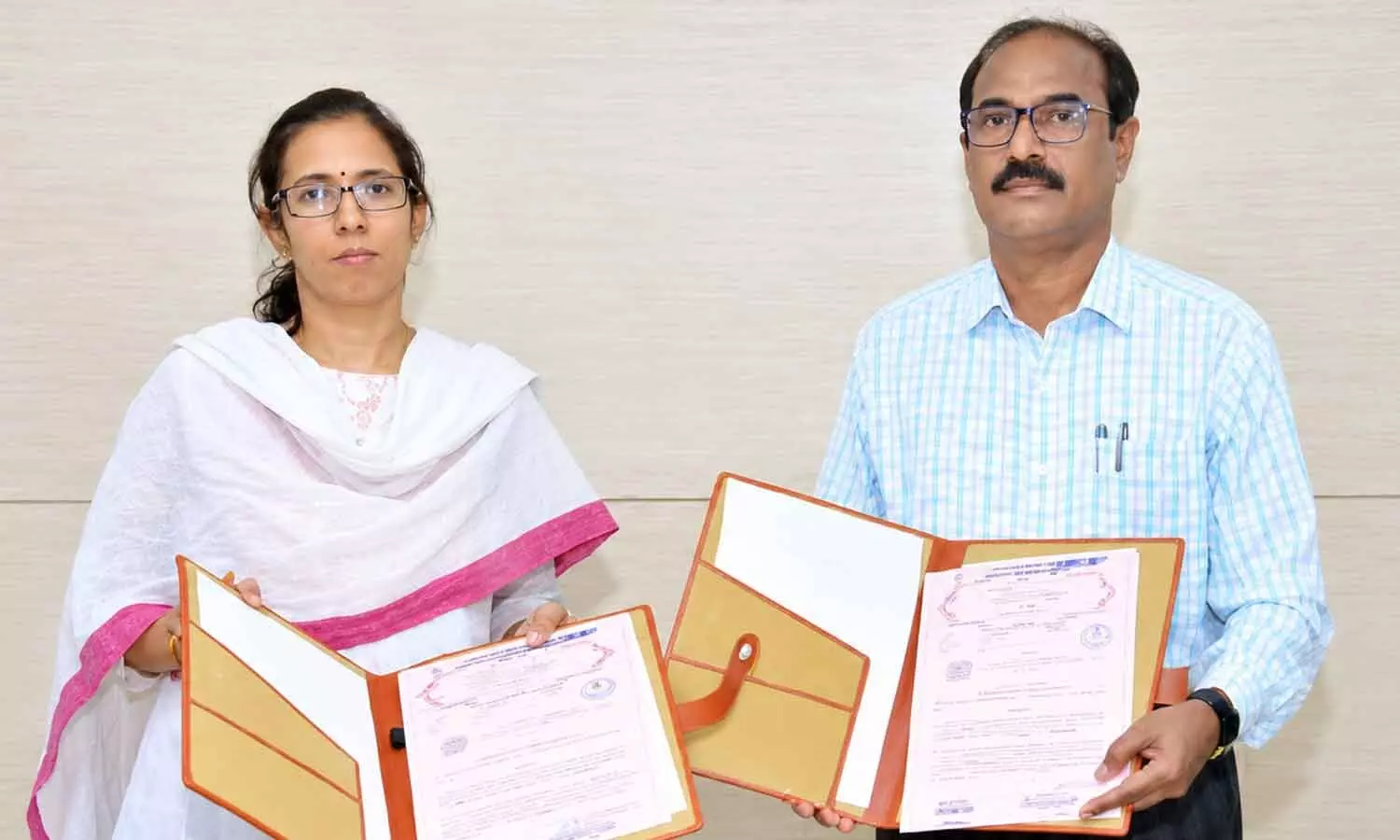
APSECM CEO S Nagalakshmi and JNTUA registrar Prof B Durga Prasad exchange MoU documents in Vijayawada on Monday
Vijayawada: Andhra Pradesh is taking a major step towards clean energy by introducing large-scale electric cooking in institutional kitchens, with the State’s first Electric Cooking Demonstration Project being established at Jawaharlal Nehru Technological University Anantapur (JNTUA).
The chief executive officer of the Andhra Pradesh State Energy Conservation Mission (APSECM) and APGenco managing director S Nagalakshmi and the registrar of JNTUA Prof B Durga Prasad signed and exchanged a Memorandum of Understanding (MoU) in Vijayawada on Monday. This agreement aims to implement a project at the Hampi Hostel located on the university campus.
Speaking on the occasion, Nagalakshmi said electric cooking was one of the most significant interventions in India’s clean energy transition. She said Andhra Pradesh was emerging as a frontrunner in promoting environmentally friendly, safe and cost-effective electric cooking technologies.
The project has been approved in accordance with the guidelines of the Bureau of Energy Efficiency (BEE), Government of India. APSECM has sanctioned financial assistance of.Rs 81.80 lakh during 2026-27 for procurement, installation, testing and commissioning of commercial-scale electric cooking equipment.
Nagalakshmi said nearly 60 per cent of India’s LPG requirement was met through imports, making the country vulnerable to fluctuations in international fuel prices and supply disruptions. Promoting electric cooking would reduce dependence on fossil fuels, strengthen energy security, curb pollution and improve safety in institutional kitchens, she added.
The Hampi Hostel’s centralised kitchen currently prepares meals for nearly 2,000 students every day using LPG. The existing system will be replaced with a modern electric cooking system under the project.
According to estimates, the shift to electric cooking is expected to reduce fuel expenditure by around Rs 33,805 per day, translating into annual savings of more than Rs.1.23 crore. The investment is expected to be recovered in about 310 days, or nearly 10 months. The project is also expected to reduce CO₂ emissions by nearly 250 tonnes annually.
Nagalakshmi said JNTUA was selected for the pilot project in view of its contribution to energy conservation and environmental sustainability. The university had earlier received the State Government’s Gold Award for Energy Conservation and conducted a five-day workshop on Energy Conservation and Energy Efficiency in February 2026.
The project is scheduled to be completed within five months. JNTUA will take up civil and electrical infrastructure works during the first two months, while APSECM will complete the tendering process and supervise the supply, installation and commissioning of the equipment during the following three months.
She said the initiative would serve as a model for replication in universities, student hostels, government hospitals and other institutional kitchens across the State, contributing to the goal of building a Green Andhra Pradesh.
JNTUA Hampi Hostel In-charge officer and associate professor in the department of Electrical and Electronics Engineering Dr Jitendra Goud and other officials were present.


