




- Anurag Kashyap joins Chiranjeevi’s ‘Kaaka’
- ‘418’ set for a chilling Dasara release
- ‘Potireddypalli’ movie launched with chocolate star Pawan in lead role
- Regular shoot of ‘Due Date’ begins in Hyderabad
- Vishnu Manchu seeks action against deepfakes
- Poojitha Ponnada’s Narthaki look unveiled
- A Life Well Planted
- Shilpa Shetty doles out Monday motivation, shows her focus and coordination with ball exercises
Suicide Prevention: Mentors to monitor, support medicos
In Short
- NTRUHS asks every faculty mentor to guide 6-7 students closely
- Early detection of academic, emotional and psychological stress stressed

Share :
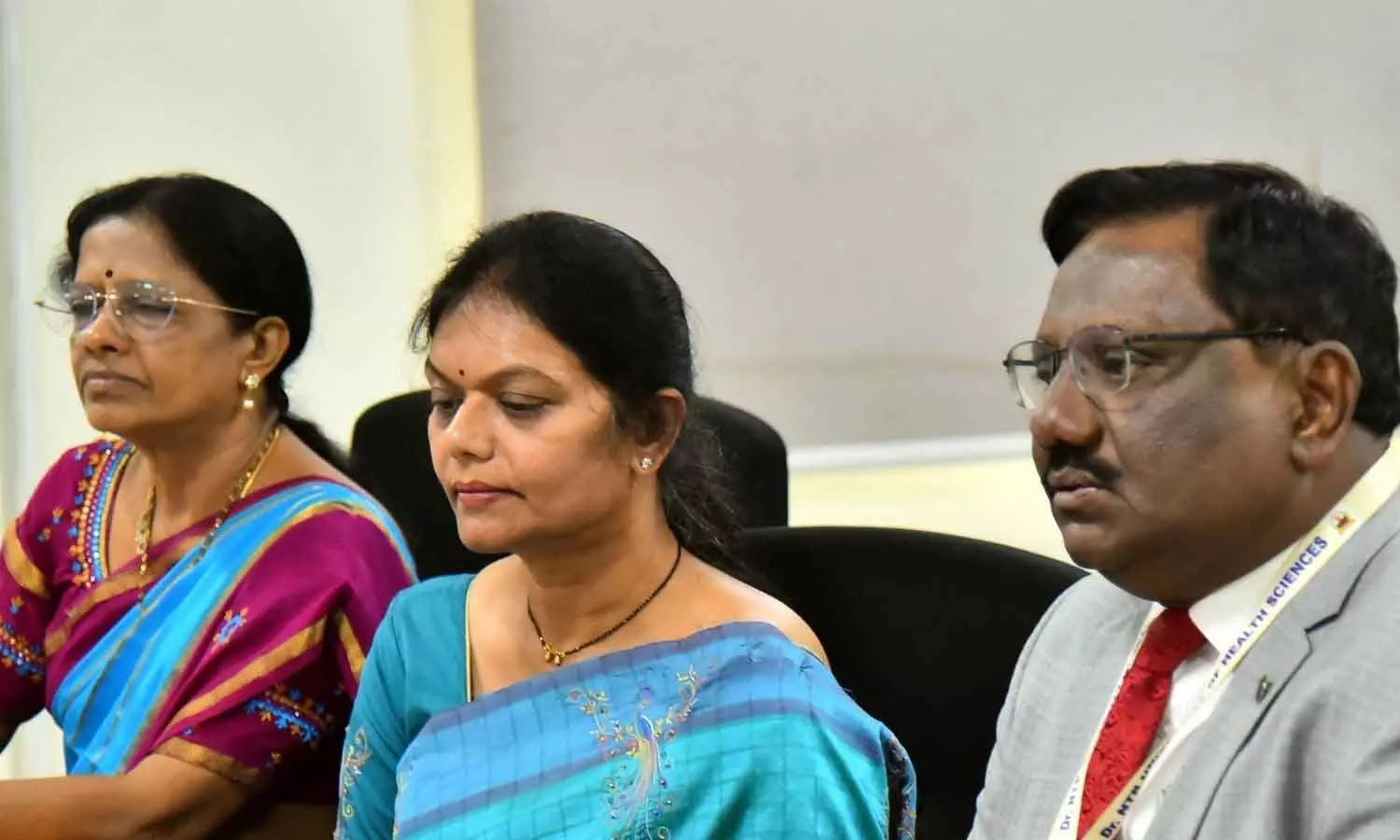
NTR University of Health Sciences vice-chancellor P Chandra Sekhar addressing a press conference on comprehensive suicide prevention and mental health awareness on the eve of World Mental Health Day in Vijayawada on Monday (Hans photo Ch Venkata Mastan)
Vijayawada: Dr NTR University of Health Sciences has called upon medical colleges to strengthen the Mentor-Mentee system, with each faculty member mentoring six to seven students to facilitate early identification of academic, emotional and psychological difficulties.
University vice-chancellor Dr P Chandrasekhar and registrar Dr T Sai Sudheer stressed the need for a strong institutional support mechanism while addressing principals of medical colleges during a webinar on Monday on safeguarding the mental health and well-being of medical students.
EASE-AP medical director and child and adolescent psychiatrist Dr Aparna Vuppala, USA, explained the mental-health challenges faced by medical students and highlighted preventive and supportive measures that institutions should adopt.
Addressing a press conference later, Dr Chandrasekhar, Dr Sai Sudheer and Dr Aparna Vuppala said regular interaction between mentors and students would help identify warning signs at an early stage. Dr Surya Prabha, director of research, also participated.
The university advised colleges to create awareness among students about academic pressures, available support systems and the importance of physical and mental well-being. Parents should also be involved through meetings at least once a year, they said.
Mentors should watch for signs such as social withdrawal, frequent absenteeism, sudden decline in academic performance, harmful habits and repeated academic failures, and facilitate professional support wherever necessary.
The EASE-AP (Emotional Assessment of Students by Educators) programme, launched in 2023, is being implemented with the support of QPR Institute India and Suicide Prevention India Foundation. Training for the 2025 MBBS batch was conducted in 17 government and 19 private medical colleges, covering 36 institutions.
In the 19 private medical colleges, 3,645 students enrolled for Peer Mentor Training, with 3,633 attending. A total of 3,059 students completed QPR training.
The four-to-six-hour peer mentor training covers identification of stress and emotional distress, warning signs, stress management, active listening, empathetic response and referral to professional help. QPR stands for ‘Question, Persuade and Refer’. Dr Aparna Vuppala said seeking help for mental-health problems should never be viewed as a weakness. She urged students and parents to overcome stigma and seek professional assistance when required.
She also appealed to the media to report suicide-related incidents responsibly by avoiding sensational headlines, details of methods or locations and reproduction of personal messages.
The university also agreed to suggestions for special stress-management sessions for postgraduate students and stressed strict implementation of National Medical Commission guidelines on student well-being.


