




- PGRS suspended due to local body polls
- 300 YSRCP activists join TDP
- TDP Mayor candidate files nomination
- District election, expenditure observers inspect nomination filing process
- Focus shifts to high-voltage campaigning among TDP-YSRCP Mayoral candidates
- Jana Sena TDP leaders join YSRCP
- Election observer inspects nomination process
- Centre urged to honour green crusader Narendra Reddy
Season of Anger: Protests break out across France, Italy and Portugal
In Short
Massive protests hit France, Belgium, Portugal, Italy, and Albania as rising living costs, education cuts, and housing crises trigger widespread public anger across Europe.

Share :
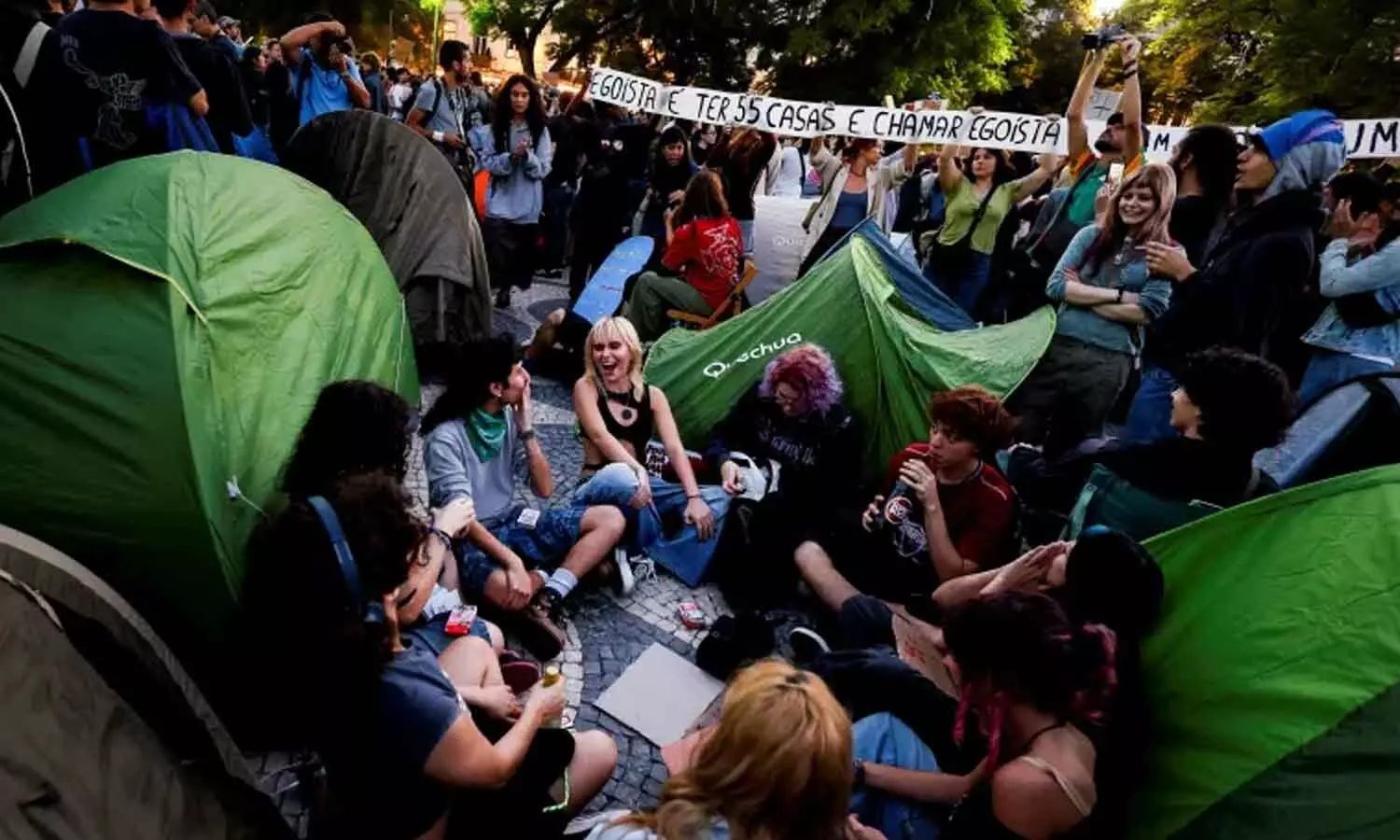
Protests break out across France, Italy and Portugal
New Delhi/Paris/Washington: Major protests have been reported from many countries in recent days, with some of them continuing to simmer and spread. From France to Argentina, many of these protests seemed to be over issues that have been commonly seen in nearly every nation, issues such as economic strain linked to housing costs, inflation, public-service funding and anti-incumbency.
France and Albania at the moment face the most serious challenges to their policies from wave after wave of protesters, leading to situations that could spread like wildfire. We look at some of these protests.
Massive protests have broken out in France due to two reasons concerning government policies linked to anger over high prices ahead of the presidential election, and a massive student and teacher movement protesting school conditions as well as education funding cuts. The election will put the curtains down on President Emmanuel Macron since the country's laws make him ineligible to contest any more.
The France student crisis began last month as a small, localised protest to demand education funding by both teachers and students in Paris before it spread to a larger area.
Violent clashes have been reported ever since the protest began, with classes disrupted in many areas. Today, it has turned into a massive protest over rising fuel prices and cost of living. French Interior Minister Laurent Nunez told the news channel France 24 that 5.5 lakh people took part in the protests against dwindling purchasing power, with 1.10 lakh coming out on the streets of Paris alone.
In Belgium, rising household expenses amid a cut in public spending have also sparked protests by students, who do not want to pay higher education or university registration charges. This escalated into protests over cost of living concerns across Belgium.
On Saturday, clashes broke out between protesters and the police in Brussels and Liege, forcing the police to use water cannons against them. Belgian Interior Minister Bernard Quintin called it "pure and simple violence, organised and repeated to destabilise our society" and termed the protesters as "rioters."
In Portugal, thousands of people marched in Lisbon over rising cost of living combined with low pay and difficulty in getting affordable housing. In Lisbon and many other cities, property prices have more than doubled since 2017 while rents for new leases have risen by nearly as much. This has placed younger workers and lower-income households under pressure with many feeling the problem goes beyond the inability to buy a house but also rental living becoming increasingly unaffordable.
Unlike the French protesters, the Portuguese marches have remained confined to issues like wages, housing and household affordability.
In Italy too, the same issues seen in other parts of Europe appear to be happening with many protesting over rising living costs while their purchasing power has been falling. Clashes were reported in Milan in protests over stagnant wages, inflation and the difficulty of meeting everyday expenses, though the Italian protests were smaller than the incidents in France.
Albania has also come under fire from its students over the bad conditions of their universities, high education costs, and lack of financial assistance and employment opportunities after graduation.


