




- Congress should introspect instead of blaming EC for poll defeats: MP CM
- PM Modi Highlights India’s Digital Growth, Seeks Global Cybercrime Framework
- Everyone must participate in the mission to make Wanaparthy a TB-free district: District Collector Adarsh Surabhi
- Battle between two ideologies in country, Oppn wants to spread anarchy: Gaurav Bhatia
- HDFC Bank CEO Anup Bagchi’s Rs 35.89 Crore Pay Package Explained
- ‘Do-or-die fight to protect democracy’: Congress as Kharge hosting lunch for INDIA bloc
- Uttarakhand Man Missing In UAE: Family Seeks Help To Trace 28-Year-Old Yuvraj
- Nana Patekar’s Demise: Chiranjeevi, Kamal Haasan, Hrithik Roshan Pay Emotional Tributes
South Asia's heat preparedness advancing, but implementation systems lag: assessment
In Short
A new South Asia assessment finds India, Nepal, Bangladesh and Bhutan are strengthening heatwave policies and early warning systems, but gaps remain in health surveillance, local financing and on-ground implementation needed to protect communities from extreme heat.

Share :
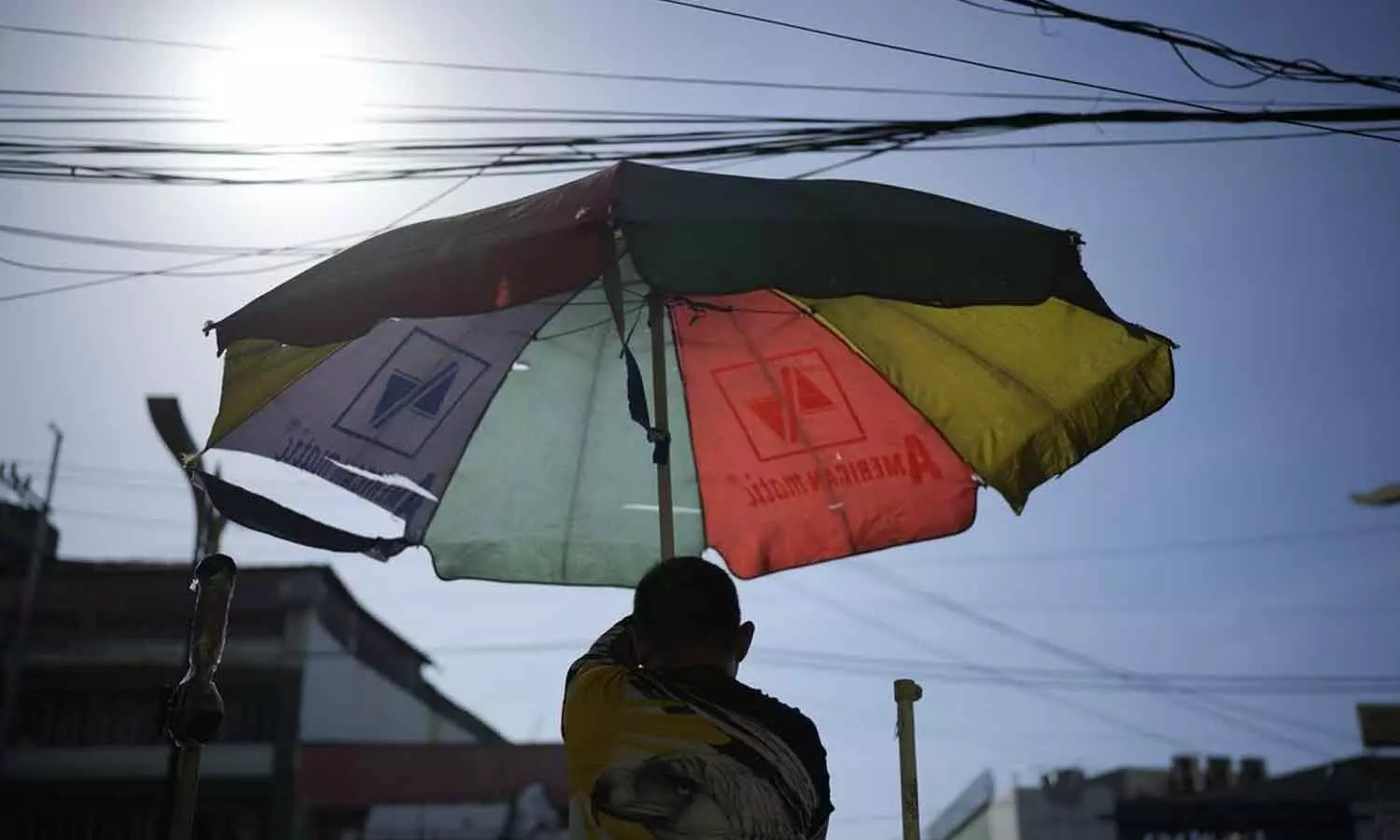
Representational Image
Bangkok: South Asian countries are strengthening policies and planning to tackle extreme heat, but systems needed to implement them on the ground, including health surveillance and local financing, are lagging, a joint assessment said on Thursday.
Launched at the Global Heat Forum in Bangkok, the assessment maps how India, Nepal, Bangladesh and Bhutan are preparing for extreme heat and identifies gaps in their response.
The assessment was conducted by the South Asia Hub of the Global Heat Health Information Network (GHHIN), hosted in New Delhi by the Council on Energy, Environment and Water (CEEW), in partnership with several organisations, including the Sustainable Futures Collaborative (SFC), Natural Resources Defense Council (NRDC), BRAC James P Grant School of Public Health and United Nations Economic and Social Commission for Asia and the Pacific (UNESCAP), alongside the WHO-WMO Climate and Health Joint Programme.
“Across the four countries, the assessments find real momentum,” the report said. “The region's defences are advancing fastest on planning and policy through heat action plans, forecasting, and early warning, while the systems that turn these into on-the-ground action and protection need to catch up. Even as some countries begin to close that gap at scale, efforts remain uneven.”
The assessment said India has moved from reactive relief towards proactive risk reduction, but the next step is to extend heat action beyond disaster management by ensuring dedicated funding and incorporating health outcomes into every plan.
Vishwas Chitale, a CEEW fellow and Chair of the GHHIN South Asia Hub, said extreme heat has become a year-round regional risk and the assessment shows South Asia is “not starting from zero”.
“Our district-level work in India has shown how quickly heat risk is rising, and every country here forecasts that heat is worse than it was five years ago. The task now is to connect those forecasts to health systems, local budgets and labour rules, so that a warning reliably becomes protection,” he said.
CEEW's district-level study in India found that 57 per cent of the country's districts, home to nearly three-quarters of its population, face high to very high heat risk.
India has more than 250 city and district heat action plans in place, and heatwaves are now recognised as a notified natural disaster under the country's disaster risk management funding, the assessment said.
The country has also built national surveillance for heat-related illness and trained more than 18,000 medical officers to respond to them.
NRDC's Prima Madan said extreme heat was not merely a technical challenge but also affected health, equity, productivity and sustainability across South Asia. She said traditional methods used by communities to cope with heat were increasingly being overwhelmed as heatwaves became more intense and frequent.
“India’s early action and one of the world’s largest networks of heat action plans show that preparedness saves lives. The task now is to strengthen implementation, health systems and local finance, while sharing solutions across the region,” Madan said.
SFC's Purvi Patel said India had made a promising start by expanding heat action plans and health surveillance, but the next challenge was to institutionalise these plans, assess whether they were protecting people's health and ensure appropriate financing and systemic reforms for long-term resilience.
For Nepal, the assessment recommended incorporating heat into health surveillance, beginning with mandatory recording of heat-related admissions at hospitals in the Terai region. It also called for strengthening mechanisms to translate warnings issued by Nepal's Department of Hydrology and Meteorology into action at the local level.
For Bangladesh, the assessment recommended dedicated national and sub-national heat action plans and a heat-health surveillance system linking weather forecasts with hospitals. It also called for a unified heat action plan in Bhutan.


