




- India women’s Asia Cup triumph clouded by narrow politics
- EET Retail acquires leading UK independent forecourt network SGN Retail
- Woman Biker Hit By Car In Gurugram After Asking Driver To Keep Distance
- Anthropic CEO Dario Amodei says AI firms lied, warns of technology’s dangers
- International Chocolate Day 2026: Celebrating the Legacy of Milton Hershey
- CM Shivakumar appeals to people to maintain peace, harmony on Ganesh Chaturthi
- Former White House AI official urges OpenAI, Anthropic to slow AI development
- Sensex, Nifty to remain closed on Ganesh Chaturthi
Trump's Irish unification remarks draw opposition in UK
In Short
US President Donald Trump's remarks supporting Irish unification have sparked criticism from UK political leaders, who reaffirmed that Northern Ireland's constitutional future must be decided by its people under the Belfast Agreement.

Share :
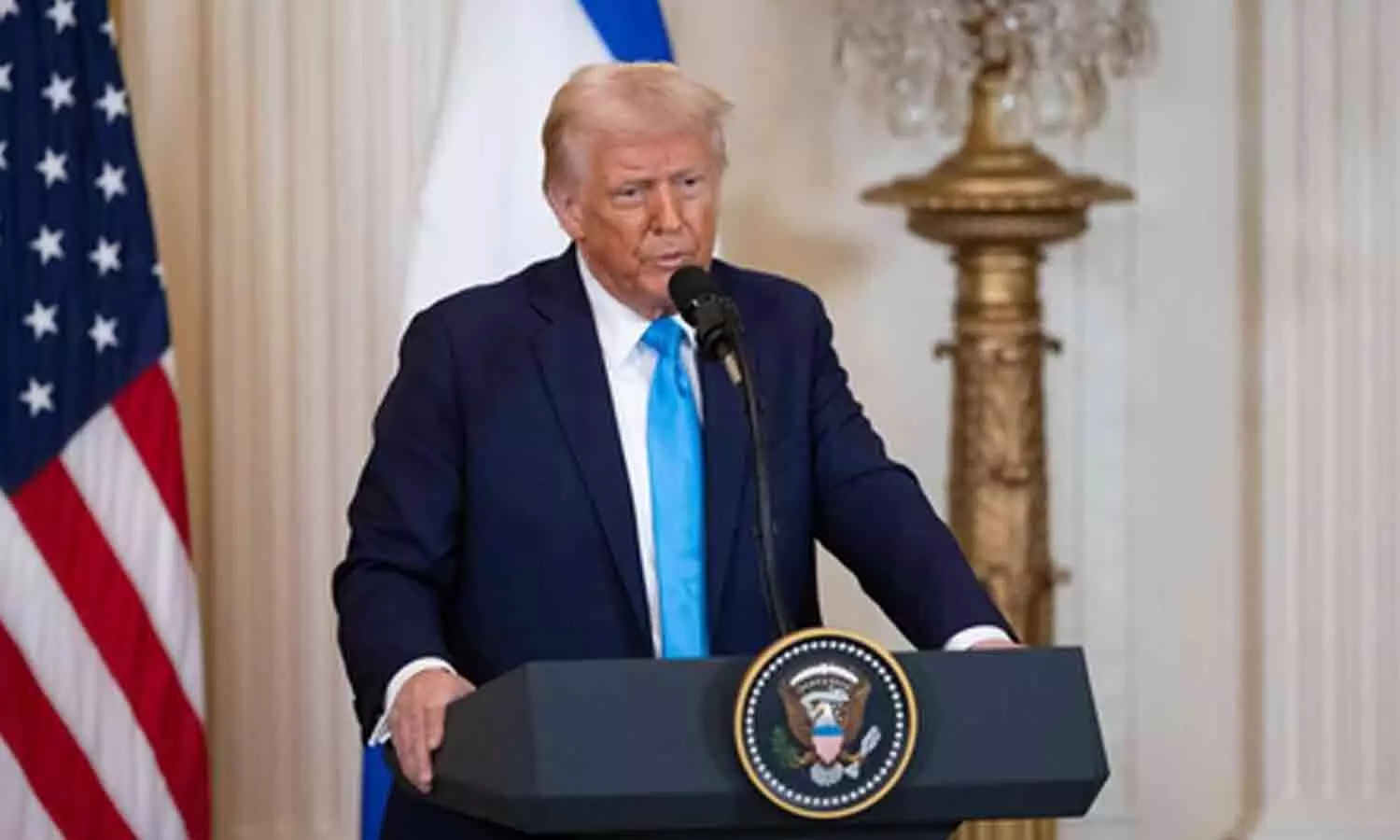
US President Donald Trump
Washington: The remarks by US President Donald Trump on the unification of Ireland and Britain's Northern Ireland have sparked strong opposition from the United Kingdom.
During a two-day visit to Ireland, Trump said on Saturday he would "love to see" the unification of Ireland and Northern Ireland.
"I don't want to cause any problems, but I will tell you, I'd love to see it unified," Trump said at a joint press conference with Irish Prime Minister Micheal Martin in Dublin. He said he believed unification would "happen eventually" and "may as well happen now."
Trump later acknowledged that the issue was controversial, saying there was "no good answer" to the question of Irish unification.
Martin urged politicians to "keep a calm perspective" on Trump's comments, saying that there was no need for an overreaction. He added that Trump's view on the issue was consistent with remarks he had made previously, reports Xinhua news agency.
British Conservative Party leader Kemi Badenoch said on X Saturday that Trump was "shooting from the hip as usual, just like he did with Greenland and Canada becoming the 51st state."
Gavin Robinson, leader of the Democratic Unionist Party, rejected Trump's remarks, saying on X that "Northern Ireland's constitutional future will be decided by the people of Northern Ireland, not by commentary in London, Dublin or Washington."
"Northern Ireland is part of the United Kingdom because that is the settled democratic will of its people," Robinson added.
Reform UK leader Nigel Farage also said on X that he disagreed with Trump, adding that "Northern Ireland is a proud and integral part of the United Kingdom."
The British government has maintained that there is currently insufficient support for a referendum on Northern Ireland's constitutional status. British Prime Minister Andy Burnham said in late August that a referendum on Irish unification was "off the table" for now.
Ireland and Northern Ireland are separate political entities. The 1998 Belfast Agreement established the principle of consent, stipulating that Northern Ireland will remain part of the United Kingdom unless a majority of its people vote for a united Ireland.
Council warns Bengal govt over proliferation of unrecognised homeopathy institutes
BJP chief Nitin Nabin urges people to light 'Ashirvaad ka diya' on PM Modi's birthday
India women’s Asia Cup triumph clouded by narrow politics
Rajinikanth's publicist trashes report that claims actor urged 'Jailer 2' makers to get 'U/A' certificate for film
Amazon suspends 21 Air operations after fatal Miami cargo plane crash
Ganesh Chaturthi celebrations sweep India; devotees throng Maharashtra temples, pandals
Politics and sport do go together
Weather alert issued for 17 Bihar districts; rain and lightning forecast
LoP Rahul Gandhi, Cong chief Kharge extend Ganesh Chaturthi greetings, highlight spirit of unity
First-ever Ganga Aarti held on River Thames in UK


