






- Shared civilisational heritage key to stronger SCO cooperation: Gajendra Singh Shekhawat
- PM Modi praises Nitish Kumar's leadership, says Bihar's development journey continues under CM Samrat Choudhary
- ‘It was a great pleasure’: PM Modi after meeting Nitish Kumar at Patna airport
- Google Creates a Fake Internet to Test Its AI
- Tummala Nageshwara Rao orders release of Sitarama project water for crops in Bhadradri Kothagudem
- Panja Vaishnav Tej Joins Hands With Primeshow Entertainment For HanuMan 2
- Can AI solve the Riemann hypothesis, a 167-year-old problem?
- Dadasaheb Phalke International Film Festival Awards 2026: Check Out The Complete Winners List
US, Russia weaken UN killer-AI safeguards: Report
In Short
A report claims the United States and Russia pushed to remove key safeguards from a proposed UN framework on lethal autonomous weapons, including provisions for human review of AI-selected targets and requirements for predictability and accountability.

Share :
US, Russia weaken UN killer-AI safeguards: Report
United Nations: The United States and Russia forced the removal of key safeguards from a proposed United Nations framework governing lethal autonomous weapons, including a requirement for humans to review targets selected by artificial intelligence, The Washington Post reported on Saturday.
The changes were made during negotiations held in Geneva earlier this month under the Convention on Certain Conventional Weapons. The talks marked the UN’s most advanced attempt to establish international rules for weapons that can identify, select and engage targets with limited or no human intervention.
US and Russian diplomats spent nearly 15 hours revising the document on the final day, the Post reported. It cited three people familiar with the closed-door discussions and documents reviewed by the newspaper.
The two delegations removed language requiring autonomous weapons to operate in a “predictable” and “reliable” manner. They also deleted a provision requiring ethical considerations when such systems are used.
Another provision would have required humans to review military targets identified by AI before an attack. That safeguard was also removed, according to the report.
The negotiations took place behind closed doors after UN cameras were switched off and civil society observers were asked to leave. The US and Russian delegations each included about 10 legal experts, nearly twice the number fielded by many other countries, the Post reported.
The US State Department, Russian Foreign Ministry and the United Nations did not respond to requests for comment from the newspaper.
Human Rights Watch separately said Russia and the United States had weakened provisions that were widely supported by other governments. The final report removed references to the design and development of autonomous weapons and narrowed the legal framework from international law generally to international humanitarian law.
It also dropped references to explainability and traceability. Those safeguards are intended to make it possible to understand how an AI system reached a targeting decision and to determine responsibility when something goes wrong.
The revised document still says human control and judgement are required for compliance with international law. It also contains restrictions on systems that cannot operate within the rules governing armed conflict.
Verity Coyle of Human Rights Watch warned that weaker rules could permit machines to make life-and-death decisions without effective human control. She said the likely consequences included greater civilian harm, reduced accountability and the faster expansion of automated warfare.
The Geneva process currently involves non-binding recommendations. But the document could form the basis for negotiations on the world’s first legally binding treaty regulating lethal autonomous weapons.
Decisions under the Convention on Certain Conventional Weapons are generally reached by consensus. That gives major military powers considerable influence and allows individual countries to block stronger provisions supported by a majority.
Governments are expected to meet again in Geneva in November. They will decide whether the three-year deliberations should move towards formal negotiations on a new international instrument.
The debate has gained urgency as AI becomes more deeply embedded in military planning. The Post previously reported that the US military used an Anthropic chatbot to help identify nearly 1,000 targets during the first 24 hours of its war with Iran. AI-assisted systems have also been used in other recent conflicts.
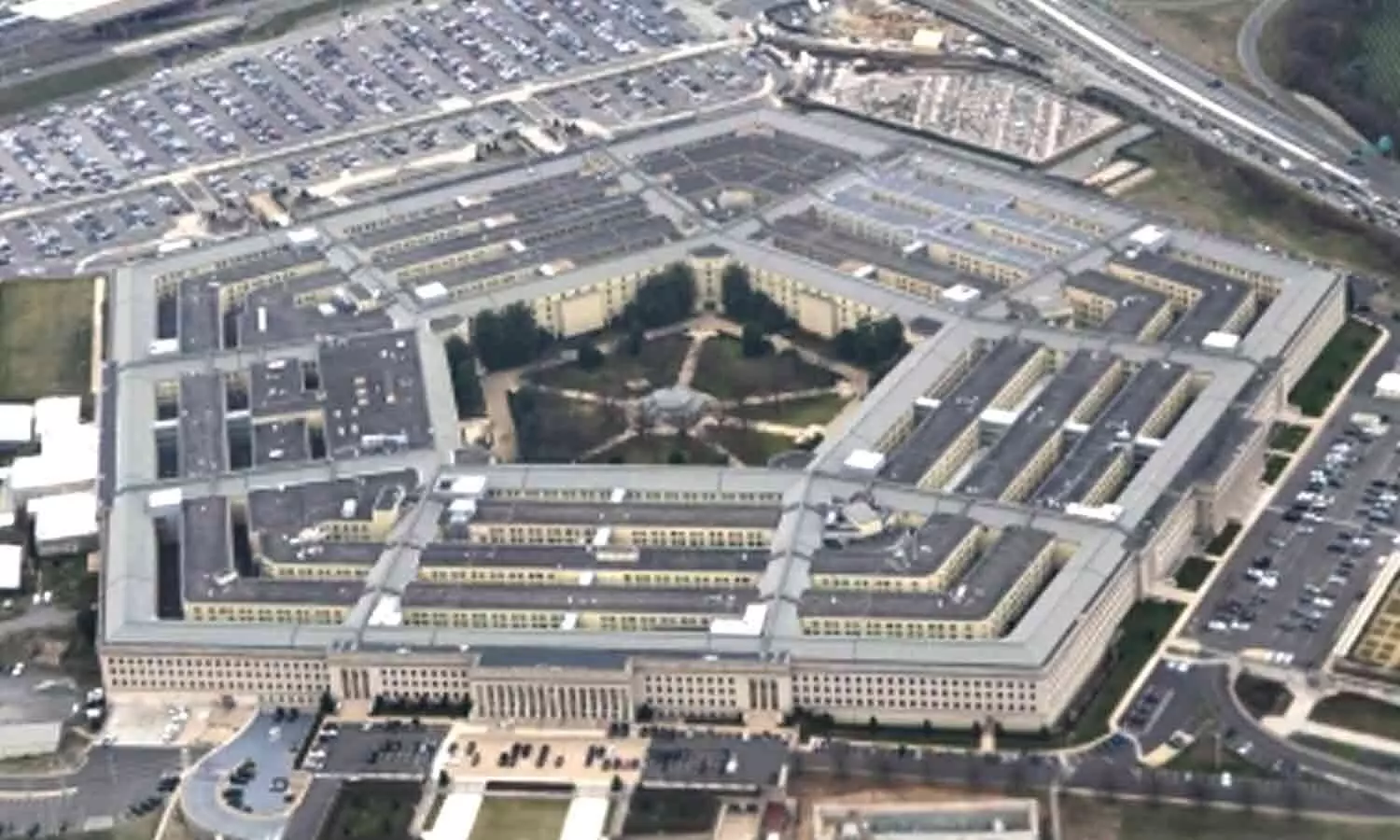
The Pentagon is separately revising its 2023 directive governing autonomous weapons. That policy requires appropriate levels of human judgement over the use of force. President Donald Trump ordered an update of the directive in June, but the revised version had not been released by late September.
Shared civilisational heritage key to stronger SCO cooperation: Gajendra Singh Shekhawat
India-Canada CEPA: 6th round ends with progress on goods, services, investment
Maha CM Fadnavis inaugurates high-tech facilities for Brihanmumbai Police Commissionerate
Noida: Bar operates under guise of cafe, manager held after police raid
BRS main political rival, BJP no competitor: CM Revanth
Ronaldo will be invited to state soon: Revanth
Raj Gopal continues tirade against Revanth
CM Chandrababu Naidu sets Dec 2027 IPO target for APMDC
TG’s engineering, pharma exports zoom 68% in 3 yrs
Godavari water lifeline for Hyderabad nearing reality


