




- US says Iran oil exports blocked at Hormuz
- World Bank unveils first digital strategy
- Rubio to hold talks with EAM Jaishankar, honour 26/11 victims during Mumbai visit
- Contingency plan to tackle El Nino in Telangana
- Aprilia expands portfolio with the launch of SXR GT range
- Post-Navaratri detox for women: How to recover after fasting without harming your health
- Are Indian pros ‘indentured servants’ of the US ?
- Gujarat CM calls for social harmony and unity in 'Vijayadashami' message
US says Iran oil exports blocked at Hormuz
In Short
The Secretary of State acknowledged public frustration over the continuing confrontation with Iran but maintained that Washington had achieved important military objectives.

Share :
US says Iran oil exports blocked at Hormuz
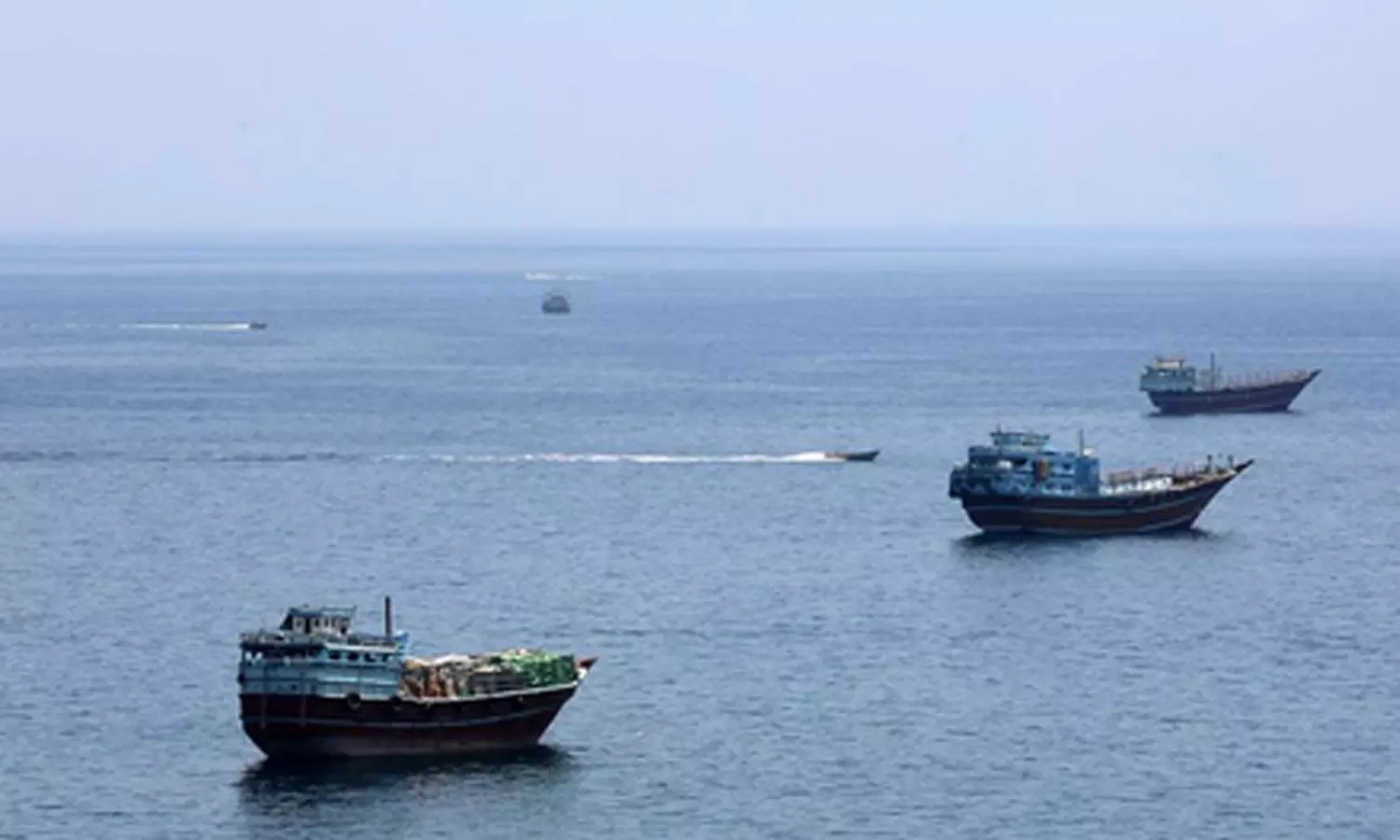
Washington: The United States has effectively blocked Iranian oil exports through the Strait of Hormuz while allowing millions of barrels of crude from other countries to reach global markets, Secretary of State Marco Rubio has said, describing the strategy as part of Washington's efforts to weaken Tehran's economy without disrupting international energy supplies.
Rubio said between 13 million and 14 million barrels of oil were passing through the strategic waterway daily, with American military forces escorting and protecting commercial vessels against Iranian attacks.
The remarks, made during an interview with Breitbart News on October 15 and released by the State Department on October 19, offered an account of Washington's military and economic strategy in the Gulf.
"Today, on average over the last 10 days and certainly over the last 30, about 13 to 14 million barrels of oil are going through the Straits of Hormuz out to the global market, and some days it’s actually equivalent to what it was pre-conflict," Rubio said.
The figures represent the administration's assessment and were not independently verified in the interview.
The Strait of Hormuz is one of the world's most important energy corridors, connecting oil-producing Gulf countries with international markets, including India and other major Asian economies.
Rubio said American forces were helping maintain shipping movements despite continuing Iranian attacks.
"And the U.S. military is involved in escorting and defending these ships from these strikes," he said.
The Secretary of State claimed that Iran had lost control of the waterway following American military operations and that Washington was now using sanctions and a blockade to restrict Tehran's oil revenues.
"The only country in the world that cannot get a single barrel of oil through the Straits of Hormuz is Iran," Rubio said.
The assertion was not accompanied by independent shipping data or figures showing the volume of Iranian exports affected by the restrictions.
Rubio said the administration's objective was to prevent Iran from using energy supplies and maritime security as instruments of pressure against other countries.
He argued that American military operations had significantly weakened Iran's conventional capabilities, including its naval forces, air defences and facilities producing missiles and drones.
According to Rubio, the administration had sought to prevent Tehran from developing a nuclear weapon while relying on conventional military capabilities to deter international intervention.
He said Iran continued to threaten shipping even after losing much of its ability to control the strait.
Rubio also defended the administration's economic measures against Tehran, saying they were designed to reduce the resources available to Iran's military and allied armed groups.
"Every dollar you deny them in sanctions is a dollar they don’t have for Hizballah, a dollar they don’t have for Hamas, a dollar they don’t have for the terrorist militias inside of Iraq, and a dollar they don’t have for their own military or their own nuclear ambitions," he said.
The Secretary of State acknowledged public frustration over the continuing confrontation with Iran but maintained that Washington had achieved important military objectives.
He described the current American military role in the Strait of Hormuz primarily as defensive, involving the protection of shipping while economic pressure continued.
The claims about Iran's military losses, oil exports and the effectiveness of the blockade could not be independently established from the interview alone.
The Strait of Hormuz connects the Persian Gulf with the Gulf of Oman and the Arabian Sea. It is a major transit route for crude oil and liquefied natural gas shipped from Gulf producers to international customers, making disruptions particularly significant for energy-importing Asian economies.


