




- Anthropic launches new tools to help businesses monitor AI spending and costs
- PM Modi to inaugurate Rs 407.56-crore Banas Dairy projects, lay foundation stone for two Bio-CNG plants tomorrow
- Australian teenager dies in hospital after drive-by shooting
- 'Dangerous for democracy,' Kiren Rijiju hits out at Naseeruddin Shah over 'Dimagi Naxal' boast
- MP govt transfers 12 IPS officers, reshuffles police administration
- Cyberabad Traffic Police plans one-way loop to ease traffic at IT corridor
- Nearly Rs 35 Crore Allegedly Missing from PNB Accounts in Greater Noida, Five Employees Suspended
- KIIFB land probe puts CPI(M)’s Kannur citadel under scrutiny
Army shifts J&K anti-drug fight from border surveillance to breaking demand
In Short
Indian Army shifts its anti-drug strategy in Jammu and Kashmir from border surveillance to reducing drug demand through rehabilitation, youth engagement and community outreach.

Share :
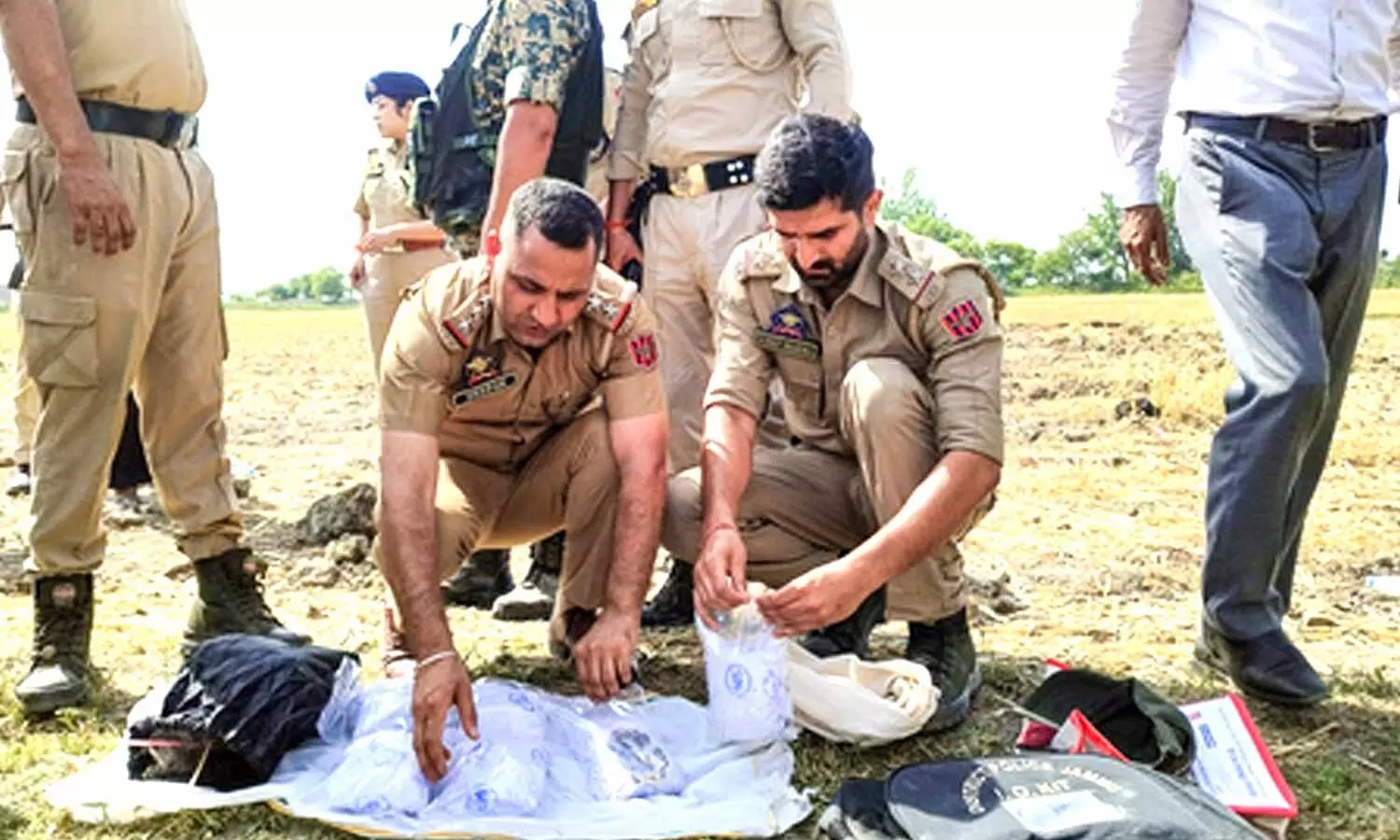
Army shifts J&K anti-drug fight from border surveillance to breaking demand
New Delhi: India has gradually evolved from a transit hub for narcotics into a major consumer market for illegal drugs. The growing threat has prompted the Narendra Modi government to intensify its nationwide campaign against drug trafficking and substance abuse.
As part of this crackdown, central and state agencies have focused heavily on Punjab and the northeastern states, where drug trafficking and addiction pose serious challenges.
Jammu and Kashmir has also emerged as a key focus area, with several local NGOs warning that substance abuse threatens the future of an entire generation. While the local police and the Narcotics Control Bureau (NCB) have been at the forefront of efforts to curb the menace, the Indian Army has also been playing a significant role in the fight against drugs.
An official said that the Indian Army largely relied on surveillance and intelligence sharing to battle the drug problem.
“This has largely helped in keeping the supply chains down, as a result of which the transit routes were off the charts for the narcotic smugglers. This, however, led to an increase in drone drops by the Pakistan-based smugglers,” the official said.
Countering drone-based drug smuggling remains a challenge, with security agencies managing to intercept some consignments while others get through. Drone drops have enabled Pakistani smugglers to recover much of the ground they had lost due to cross-border surveillance and intelligence sharing by the Indian Army, an official said.
The Army has realised that tackling drone incursions and keeping transit routes under surveillance alone will not eliminate the drug menace. Its current strategy places greater emphasis on dismantling the domestic consumer market and curbing demand for narcotics, the official added.
Another official said the Indian Army is working closely with the Jammu and Kashmir administration and other authorities to tackle the drug menace and curb substance abuse across the Union Territory.
“Public outreach programmes based on a whole-of-society approach have helped many young people overcome addiction. Community engagement is also being encouraged, with senior citizens and religious leaders playing an active role,” the official said.
The prime goal of the Indian Army is to engage with society so that there would be early detection of the problem, which in turn would help in effective counselling and other measures which would help youth who are addicted, the official added.
Officials say such issues cannot always be tackled by implementing law enforcement tactics. For instance, if the Army and the police block the supply chains and stop drugs from entering Jammu and Kashmir entirely from the border, then the addict would look elsewhere.
He or she would look to source drugs from Himachal Pradesh or Punjab, where the drug menace is high. This would automatically lead to a massive spike in drug-related activity in Punjab or Himachal Pradesh.
Punjab is already battling the menace in a big way and currently is one of the most affected states in the country.
Officials say the approach by the Indian Army to engage with society is the best one, as it aims at eradicating the menace at the roots, whereby there is no demand at all in the consumer market.
The results are visible, and the target audience has gone up manifold.
In 2021, the number of persons treated stood at 5,382. Statistics for the year 2025-26 show that 46491 persons have been treated. Jammu and Kashmir ranks among the top five states/UTs in India for opioid abuse, with surveys showing that 5.4 lakh individuals are addicted to this substance.
About 90 per cent of the hard-core drug users fall within the age demographic of 17 to 33 years. Further data would also reveal that 1.68 lakh children aged 10 to 17 are addicted to this substance. Daily case load at the hospitals to treat the problem have risen from 10-15 cases a day to 150-200.
The Officials say that the Indian Army’s role remains crucial in this battle. The Army is structured and has plenty of resources at its disposal. It has organised youth engagement and skill training programmes, sponsored sports events, provided medical assistance, and identified supply routes and shut them down completely.
The Indian Army’s role is also crucial as it helps in a trust-building exercise among the youth who are the future. These are the youths who are susceptible to disinformation campaigns by Pakistan, and once they fall into the trap, they tend to turn against the Indian Army.
Further, addicts are also easy prey for the Inter-Services Intelligence-backed elements who lure such youths into committing acts of terror instead of money so that they can purchase drugs.
A study showed that addicts spend close to Rs 88,000 a month to sustain their addiction. Having the rehabilitated youth on the side of the Indian Army is also helpful in the long run.
They become assets for the region, and once the local population backs the security agencies to the fullest, then it is hard for Pakistan-based elements to crack them and provoke them against the Indian state, an official said.


