






- PM Modi to inaugurate First SCO Civilisational Dialogue Forum in Delhi tomorrow
- 'Moily revealed that UPA-era allegations against PM Modi, HM Shah were politically motivated': BJP
- Boost wages to drive consumer demand, sustain growth momentum: Economic Affairs Secretary
- PM Modi Urges Ministers To Promote Savings, Says ‘Khao, Peeyo, Mauj Karo’ Not Part Of Indian Culture
- Rahul calls Indian democracy 'sick' in US; BJP says he is against India's democratic fabric
- Google Gemini 4 Neon: New AI Model Promises Three Times Faster Performance
- India’s life insurer new business premium rises 26.2 pc in October
- Political row erupts over proposal to rename Mumbai’s Dadar Station as 'Chaityabhoomi'; MNS corporator protests
Cab Strike Hits Delhi-NCR: Fares Surge To Rs 800 As Drivers Protest Against Ola, Uber
In Short
Delhi NCR witnessed a cab strike as fares have been hiked to Rs 800 by drivers in protest of the surge in their fares due to Ola and Uber.

Share :
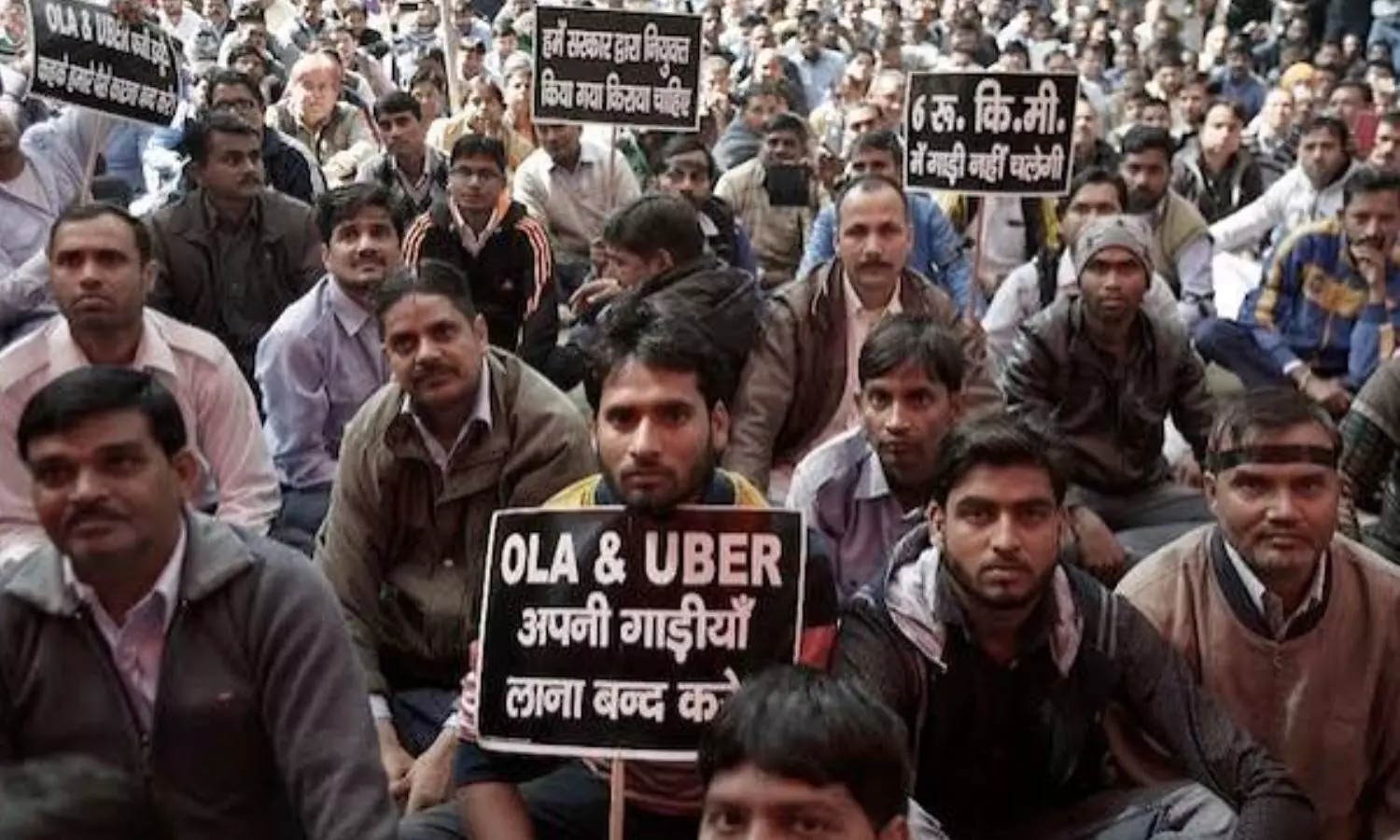
Cab Strike Hits Delhi-NCR: Fares Surge To Rs 800 As Drivers Protest Against Ola, Uber
Taxi and auto-rickshaw owners' unions in Delhi-NCR have demanded a hike in rates and declared a ban on private bike-taxis in the city, among other demands, during their protest against hiked taxes on the vehicles on Thursday.
In the peak hours that coincide with work times, cab fares jumped to more than Rs 800, up from the normal price of Rs 300. Once in an incident, a passenger had to pay Rs 803 for covering a distance of 13 km from Greater Kailash in South Delhi to Film City in Noida.
Transport unions of Bharatiya Mazdoor Sangh (BMS) staged the protest at the Ramlila Maidan in Delhi. Citizens sought changes in the auto and taxi fares, ban on private bike-taxis, and removal of some fitness condition for auto-rickshaws.
Avoid using the car during rush hours, as fares may be higher
The effect of the demonstration was witnessed on ride-hailing platforms like Ola, Uber and Rapido. The cost of fare was at Rs 420 for a journey between Greater Kailash and Film City, Noida, which usually takes about Rs 300.The fare for the journey from Greater Kailash to Film City, Noida was fetching too much at around 9 am, generally the fare is around Rs 300. By 10 am, it had crossed Rs 500 and one passenger finally paid Rs 803.
Higher charges were also reported by other commuters. A resident of South Delhi said that an auto that made a journey of around 3 km from Hemkunt Colony to the Cambridge School was charging a fare of Rs 90-92 through the Uber app which was normal Rs 75-80.
Normally the hourly rental fee for a cab is around Rs 325 for an hour's drive for 10 km, which had now been raised to Rs 406. The usual fare of the cabs has also been reported to be Rs 10-15 higher.
The commuter also claimed that the drivers were refusing to take the fare indicated on the app. On a round trip from Greater Kailash to Sreenivaspuri a driver refused a booking that had Rs 190 on board for the entire trip and took Rs 150 each for the two legs of the journey.
According to India Today Digital, they found that there has been a rise in the fares of at least 30 per cent for non-peak hours of auto-rickshaw and cab service on both the Ola and Rapido.
Drivers are unhappy with ride-hailing apps for a variety of reasons
As commuters face increased fare prices, the payment systems used by app-based services are being cited as a challenge for drivers to make a profitable living, especially on extended trips.
According to Anupam Kumar who drives for Ola and Rapido, the drivers are paid approximately Rs 104-114 per km for the initial 3 km, depending on the platform. The payment per km, however, decreases with distance.
He said that trips of 30 to 35 km from South Delhi to Gurugram or Greater Noida, for instance, can often prove unprofitable as the cost of the fuel does not go down commensurately with the distance.
Kumar also pointed out disparities in the reward drivers receive for waiting in traffic. Ola adjusts fares according to the waiting time, whereas Rapido doesn't offer that as a service, according to him, which means that the driver has to pay the same even if they are delayed.
A cab driver in Delhi also raised doubts about the private ride-hailing companies taking over, and asked why the government didn't ban Ola, Uber and Rapido. He said Bharat taxi is a good option for commuters but asked why it did not get popular.
STRIKE IMPACT SPREADS BEYOND DELHI
The protest has also impacted transport services in other regions of the country apart from the national capital. Unions in Ambala, Chandigarh and other parts of Haryana, except Gurugram, were observing the strike in a better manner, Kumar said.
He claimed that the union members were inspecting vehicles from Delhi-NCR to find out who was driving their vehicles through an app. In several instances it was reported that the drivers of these platforms were having their phones confiscated, which made it more difficult to take online rides.
DRIVER SAFETY IS ONE OF THE IMPORTANT REQUESTS
Drivers have brought issues of personal safety to the forefront, apart from fare changes and payment issues. The emergence of violence against cab drivers, including one murder in Faridabad recently, has made the sector's workers nervous, Kumar added.
Drivers want more security, such as a system that would enable them to check passenger identification before booking.
The unions have also called for the formation of a dedicated welfare board for auto and taxi drivers, review of Delhi's EV policy to address auto and taxi drivers' concerns and speed up of the processing of documents related to work, by the Delhi Transport department.
Fares have risen and transport is scarce, but drivers argue the protest is greater than that, calling attention to the many issues they face with low pay, working conditions and safety in the app-mediated transport industry.
One more Jharkhand official arrested in RIMS land scam, eight officials held so far
Uddhav Thackeray should apologise to Balasaheb for aligning with Congress: Shiv Sena
If the two lakh job guarantee is not implemented, the MLCs should be defeated
Himachal Minister's Operation Sindoor Remarks Invite Political Stunt, Refuses to Apologise
Akvan Impact: Rough Seas Force 80 Andhra Fishermen to Take Shelter in Odisha
Modi to India Inc: Chart 10-Year Roadmap to Make India a Viksit Bharat by 2047
Our aim is to transform Telangana into $3 trillion economy: Telangana CM
Strict punishment for goons indulging in anarchy, warns UP CM Yogi Adityanath
'Modi became PM through people's mandate, not Congress' mercy': Karnataka BJP hits back at Veerappa Moily
Akhilesh Yadav expresses sorrow, offers condolences over death of boy during roadshow; says SP will assist kin


