Chaos in Delhi as private bus fleet goes off-road

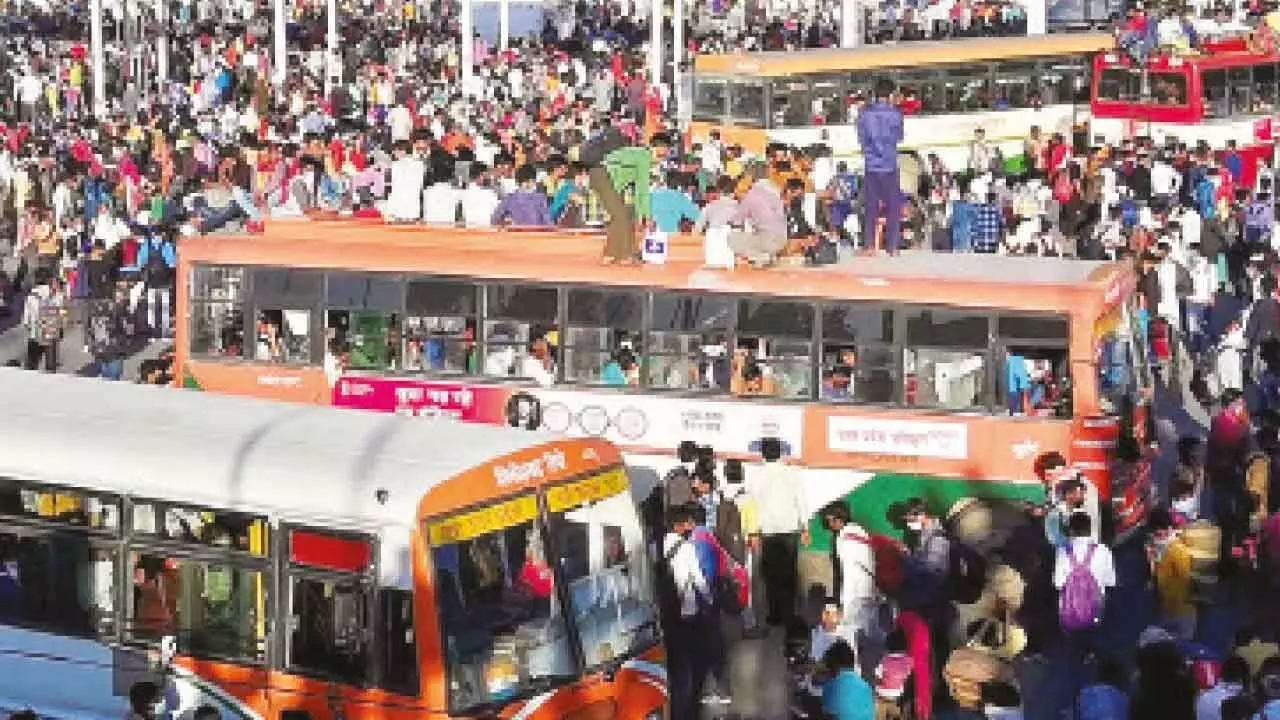
New Delhi: Delhi’s public transport system is under mounting pressure as over 600 buses were pulled from service on Wednesday, leaving lakhs of daily commuters stranded across the capital. The crisis was triggered by the termination of contracts for 533 private CNG cluster buses operated under the Delhi Integrated Multi-Modal Transit System (DIMTS) and an ongoing strike by bus operators over unpaid salaries.
According to officials, 613 buses in total, including around 80 buses from the Ghazipur depot—did not operate on July 16. This abrupt drop in fleet strength has intensified crowding at bus stops and caused delays on major routes, especially during peak commuting hours in the morning and evening.
Delhi currently records around 40 lakh daily bus passengers, but with fewer buses on the road, many passengers are forced to wait longer and travel in overcrowded vehicles. The problem is particularly severe in areas that already suffered from limited frequency and connectivity.
Until July 15, Delhi’s combined bus fleet stood at 6,368 vehicles, which included 3,372 buses from Delhi Transport Corporation (DTC) and 2,996 from DIMTS. The DTC fleet comprised 1,170 CNG buses, 1,800 twelve-meter electric buses, and 402 nine-meter electric buses (Devi buses). DIMTS, on the other hand, operated 2,283 CNG buses, 380 electric buses, and 333 Devi buses. With the exit of 533 CNG cluster buses, the total number of operational buses has now fallen to 5,835, far below the estimated requirement of 11,000 to meet Delhi’s public transport demands.
The situation stems from the expiration of the bus contract on July 15. The dispute over the contract’s renewal reached the Delhi High Court, which referred the matter to an arbitrator. On July 15, the arbitrator ruled that the contract period had not been extended, though the Delhi government is free to enter into a new agreement if it chooses. However, the transition has been anything but smooth, as salary delays have triggered a strike among drivers and operators, compounding the shortage.
This double blow,legal delays and worker unrest has left commuters facing significant inconvenience. Long queues, packed buses, and uncertainty have become the norm for Delhi’s public transport users. Critics have also pointed fingers at the BJP-led Delhi government, questioning its preparedness and long-term planning. Although the government has announced its aim to electrify the entire bus fleet by 2027, progress has been limited. Only small nine-meter electric buses (Devi) have been introduced so far, with larger electric buses yet to make a visible impact on the ground.