




- Dharavi Experience Centre will build trust among area residents: CM Fadnavis
- Centre expands support across agri and allied sectors to boost rural livelihoods: FM Sitharaman
- K'taka BJP objects to CM, cabinet ministers’ protest at EC office; demands FIRs, arrest
- Left student unions, other organisations stage protest to demand CEC’s resignation
- Zoho launches Arattai-for-Business with free messaging
- Lashkar kill, Rs 3,000 crore drug haul highlight intelligence first security strategy
- Gandhi Jayanti 2026: History, Significance And Mahatma Gandhi’s Legacy
- Pralhad Joshi joins cleanliness drive in K'taka's Hubballi
Gandhi Jayanti 2026: History, Significance And Mahatma Gandhi’s Legacy
In Short
Gandhi Jayanti 2026 is the 157th birth anniversary of Mahatma Gandhi. Understand the importance of 2nd October and his contribution to the freedom movement of India, his message of truth and non-violence.

Share :
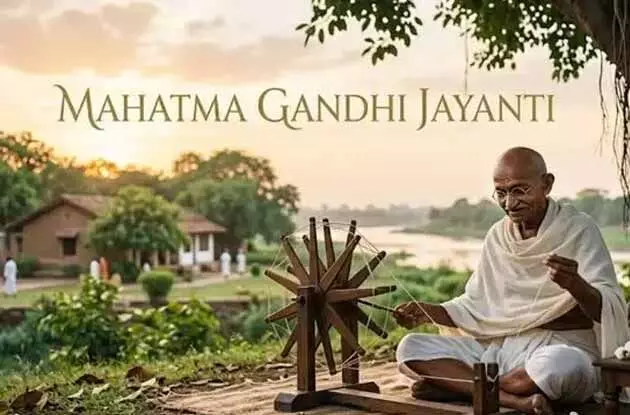
Gandhi Jayanti 2026: History, Significance And Mahatma Gandhi’s Legacy
Gandhi Jayanti is being celebrated in India on October 2 to pay tribute to one of the most significant leaders of the country's freedom movement. Born on October 2, 1869, in Porbandar, Gujarat, Gandhi’s philosophy of truth, non-violence and peaceful resistance continues to be remembered in India and around the world.
Gandhi Jayanti is also a national holiday and it is celebrated by holding prayer meetings, commemoration programmes, cleanliness drives and educational events.
What is the reason behind celebrating Gandhi Jayanti on 2nd October?
He was born on 2 October 1869 so this is celebrated as Gandhi Jayanti every year. It is a day to commemorate his contribution towards the independence movement of India and his philosophy of Ahimsa (non-violence) and Satyagraha.
Non-violent resistance was the focus of Gandhi's political struggle, civil disobedience and the pursuit of truth. His ideas were identified with some of the big movements of the fight against the British rule in India.
October 2 is also known as the International day of non-violence. It is an observance instituted by the United Nations in 2007, as a testament to the worldwide importance of non-violence and peaceful conflict resolution.
Gandhi's contribution to India's struggle for Independence
In 1915, Mahatma Gandhi came back to India from South Africa and subsequently emerged as a prominent leader of the freedom movement.
He was associated with several movements which has shaped the country and its independence. These movements include Non-Cooperation movement, Civil Disobedience movement and Quit India movement. One of his methods of non-violent resistance was the Salt March of 1930, which was a major part of the Civil Disobedience Movement.
Gandhi had also advocated for resistance to injustice without the use of violence through Satyagraha. He convinced many Indians to join the struggle for independence through his campaigns.
Gandhi’s Philosophy Of Truth And Non-Violence
The principles of truth, non-violence, self-discipline, simplicity and self-reliance were a part of Gandhi's public life.
His political fight for independence was not the only thing that was his philosophy. He also called for social reform, rural development, for Swadeshi and greater involvement of common people in the process of nation building.
The Government of India has been continuing to link Gandhi Jayanti with cleanliness campaigns and social service and community engagement.
Gandhi Jayanti How it is Celebrated?
There are various programmes to commemorate Gandhi Jayanti held throughout India. In New Delhi, the capital of India, National leaders and the citizens honor him at his memorial in Raj Ghat.
Typical activities that take place on the day include prayer meetings, cultural programmes, educational activities and drives on cleanliness. They may have essay competitions, debates, quizzes and other events in schools and colleges on the life and ideas of Gandhi.
In 2026, there are again programmes and events organised by Government on Gandhi's ideals of Truth, Non-violence and social service.
Gandhi's impact outside of India
Gandhi's ideas of non-violence also spread to other countries for the use of civil rights movements. The ideas he has presented have been studied and referenced by leaders and movements that have fought for equality and justice in various parts of the world.
The principles of Gandhi's approach are recognized internationally, which is why the United Nations has made an International Day of Non-Violence, 2 October.
Gandhi Jayanti 2026 is a day of remembrance
Gandhi Jayanti is not just the celebration of Mahatma Gandhi's life but also a reminder of the values of his public life. October 2 is still being celebrated in 2026 through tributes, prayer services, educational programmes and community initiatives in the name of peace, non-violence and social responsibility in honour of his 157th birth anniversary in India.
Supreme Court to hear plea challenging individual exercise of powers by CEC Gyanesh Kumar on Monday
India emerged as trusted voice for global peace under PM Modi, says Amit Shah
'Opportunity to forget past mistakes': SP chief welcomes those willing to defeat BJP
Telangana govt. announced two DAs yo employees, to disburse with October salary
Putin praises PM Modi's 'very good ideas' for ending Ukraine conflict
Hanuman Chalisa helped in preventing tragedy—Capt. Smit


