
Mizoram connects to national rail grid after 79 years of Independence

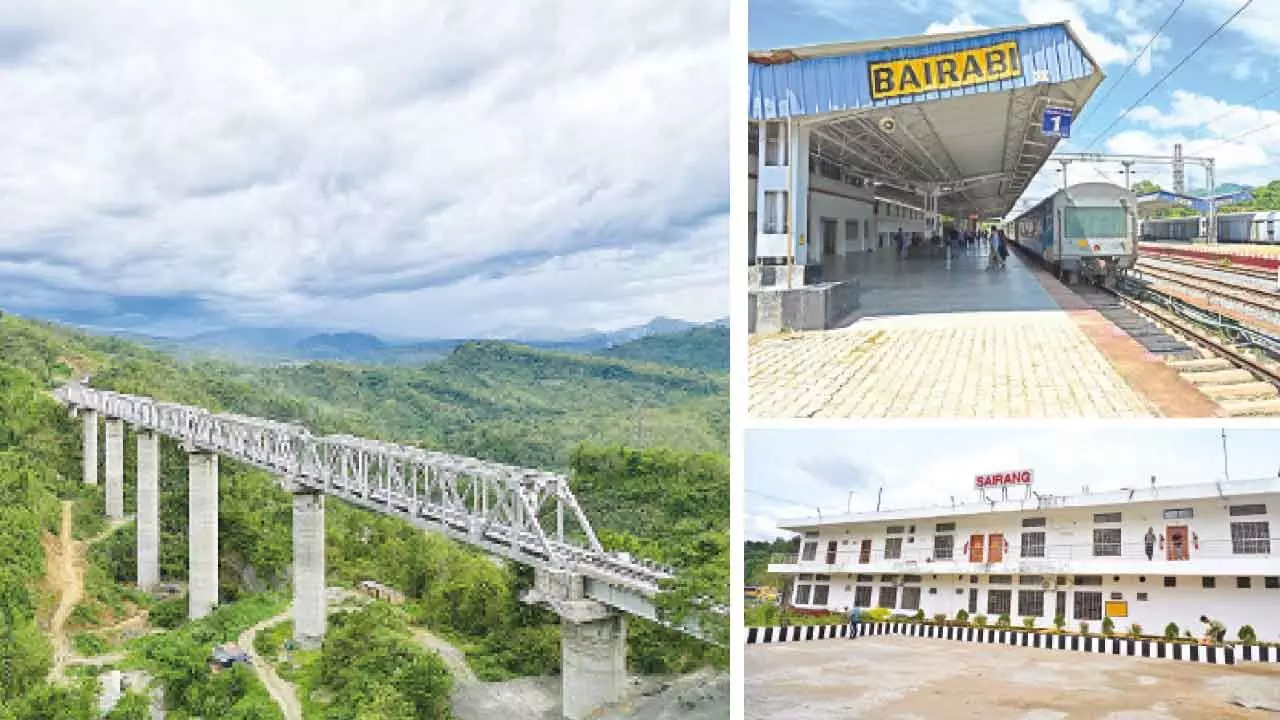
Prime Minister Narendra Modi is set to inaugurate the new 52-km Bairabi-Sairang railway line today, a project that is poised to transform the state’s economy and tourism, marking a new chapter of development for the Northeast
Aizawl: In a monumental achievement for the nation, the state of Mizoram is on the cusp of a historic transformation, as it is set to be integrated into India’s vast railway network for the very first time. This landmark event comes nearly 79 years after India’s independence, marking a significant step towards fulfilling a long-standing aspiration of the Mizo people. Prime Minister Narendra Modi is scheduled to inaugurate the new 52-kilometre Bairabi-Sairang railway line on September 13. Hailed as an unparalleled engineering marvel, the project stands as a testament to human resilience and ingenuity in the face of formidable natural challenges.
The Prime Minister himself laid the foundation stone for this vital project on November 29, 2014, a symbolic act that heralded a renewed and robust commitment to addressing the chronic connectivity issues of the Northeast region. For decades, the lack of robust transport infrastructure had been a significant barrier to Mizoram’s economic and social progress, isolating the state from the mainstream developmental narrative. The new railway line is not merely a transport link; it is a powerful symbol of integration and progress, promising to open up the state to a new era of opportunity. The journey to this milestone has been fraught with immense challenges, a testament to the relentless forces of nature that govern Mizoram’s rugged terrain. The construction team faced a Herculean task as they navigated steep hills, deep gorges, and a treacherous landscape. A primary difficulty was the soft and unstable nature of the rocks, which were prone to faults, fractures, and water ingress.
These geological frailties led to frequent and dangerous collapses, making construction work perilous and slow. Specialised and innovative engineering techniques were required to build the line’s impressive infrastructure, which includes a total of 48 tunnels and 55 major bridges, each one a victory over the hostile environment. The unforgiving weather further tested the project’s mettle. Mizoram’s heavy monsoon season can last for up to eight months, severely restricting construction work to just a few months each year.
This seasonal constraint meant that the project, which was sanctioned in 1999, had to be executed in short, intense bursts over more than two decades. Despite these formidable obstacles, the project was brought to fruition at a cost of approximately Rs 8,000 crore, far exceeding its initial estimate of Rs 2,384 crore. This significant cost increase reflects the extreme difficulties encountered during the construction phase. The inauguration on September 13 will mark the culmination of over two decades of tireless effort by engineers, labourers, and officials to bring this vital link to life, transforming a vision into reality.
A new compass of development
The new railway line is poised to be a game-changer for Mizoram, promising to transform tourism and usher in a new era of development. The state’s pristine natural beauty, vibrant culture, and serene landscapes have long been hidden from the rest of the country due to poor connectivity.
The railway will now provide a convenient and reliable mode of transport for tourists, making it easier for them to explore the ‘Land of the Highlanders’. This influx of tourism is expected to create new employment opportunities, boost local businesses, and contribute significantly to the state’s economy.
South Central Railway’s CPRO, Sridhar, underscored the project’s profound importance, stating that connectivity is the “compass of development”. He noted that the region’s historical inaccessibility has long been a significant barrier to its progress, a challenge the new railway is now set to overcome. By providing a direct and efficient link, the railway will not only facilitate the movement of people but also of goods, raw materials, and agricultural produce, connecting Mizoram’s markets more closely with the rest of the country. This will help in integrating the state into the national economic framework and fostering a more balanced and inclusive growth.
This historic rail link is expected to make travel to and from the state significantly easier and more convenient for residents and tourists alike. By opening up a new corridor for movement, the railway will not only boost tourism but also provide a crucial lifeline for the local populace, connecting them more closely with the rest of the country.


