






Modi Turns Media Critic: Urges Focus on Success Stories, Showcase India's Achievements
In Short
Prime Minister Narendra Modi urges Indian media to highlight the country's success stories, technological achievements and development progress during a Diwali Milan event at BJP headquarters, while expressing confidence in the Viksit Bharat vision by 2047.

Share :
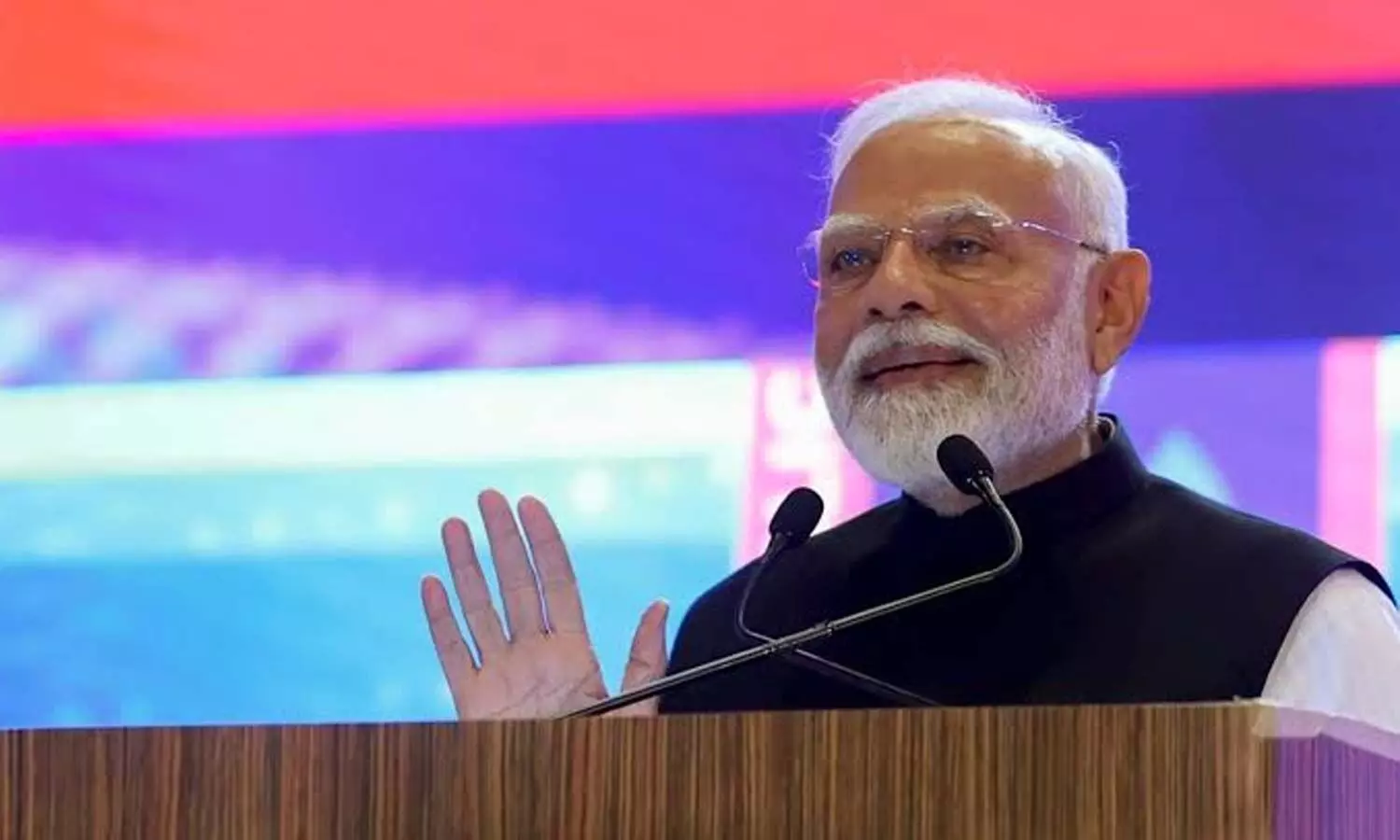
Prime Minister Narendra Modi
Prime Minister Narendra Modi on Thursday donned the role of media advisor and critic and urged them to “work on success stories” and showcase the work that was being done.
Addressing a Diwali Milan for journalists at the BJP headquarters here, Modi said he has had a long relationship with the media, right from the days he used to arrange chairs at such events.
He said, "I have interacted with the media and seen it evolve from days of press releases to Instagram reels." The prime minister said nothing is considered impossible in the world of news, and field reporters reach everywhere, even in times of crisis and disasters.
He also requested the media to spread awareness about the fight against drug abuse. "I request Indian media to work on success stories of the country... a lot of such work is already being done," the prime minister said.
He later highlighted his government's achievements in different sectors and asserted that India will definitely become a developed country.
Modi said the goal of a Viksit Bharat is entirely within reach, given the achievements India has made in recent years. He emphasised that 2047, the centenary of India's Independence, should not be seen as a deadline until which the country must wait, but as a goal towards which continuous progress must be made.
"Given the achievements with which India is moving forward today, the goal of a Viksit Bharat is entirely within reach," PM Modi said.
Citing India's technological and infrastructural progress, he said the country has achieved milestones that were once difficult to imagine.
"Who would have imagined that India would make history by landing near the Moon's south pole; it would become the world's second-largest mobile manufacturer? During these same 12 years, India has built the world's third-largest startup ecosystem. Today, our UPI has become the largest real-time payment system globally," he said.
"If we can achieve all this, then the dream of a Viksit Bharat can certainly be realised. Who would have thought that the world's highest railway arch bridge would be built over the Chenab River?" he added.
Referring to the infrastructure development witnessed over the past 12 years, PM Modi recalled how even the construction of a four-lane road was once considered a major achievement.
"Friends, remember that 12 years ago, even building a four-lane road was considered a major achievement. I remember that during my first one or two years as Chief Minister, whenever I visited a village, the requests I received in memorandums were often along these lines: 'Sir, during the drought, when work is undertaken, please ensure that at least a road is built in our village'," he said.
The Prime Minister also spoke about the changing approach towards poverty alleviation, saying that while earlier governments repeatedly promised to eradicate poverty, the country was now witnessing people overcoming poverty and a reduction in poverty levels
"There was a time when every leader spoke about eradicating poverty from the Red Fort. It was almost like a constant mantra for them. Promises to eliminate poverty were made in every election. But today, the poor are actually overcoming poverty themselves, and we are witnessing poverty being reduced," he added.
Modii said, “Friends, I would like to make one more point. The 2047 deadline does not mean that we have to wait until then. Think about India's freedom movement. The goal of complete independence was not something that could be achieved in a day or two. But gradually, smaller goals were set and achieved, which built people's confidence that independence would certainly be attained. Eventually, the entire country stood united with that resolve. It is this confidence among the people that will take us towards the goal of a developed India," he said.


