NIA Court Explains Malegaon Blast Acquittals: Insufficient Evidence And Legal Procedural Failures

Special NIA court acquits all seven Malegaon blast accused citing lack of direct evidence, defective UAPA sanctions, and prosecution's failure to prove key allegations against Pragya Thakur and others.
A special National Investigation Agency court has provided detailed reasoning for acquitting all seven individuals accused in the 2008 Malegaon bomb blast case, emphasizing that convictions cannot be based on perceptions or moral considerations without substantial evidence.
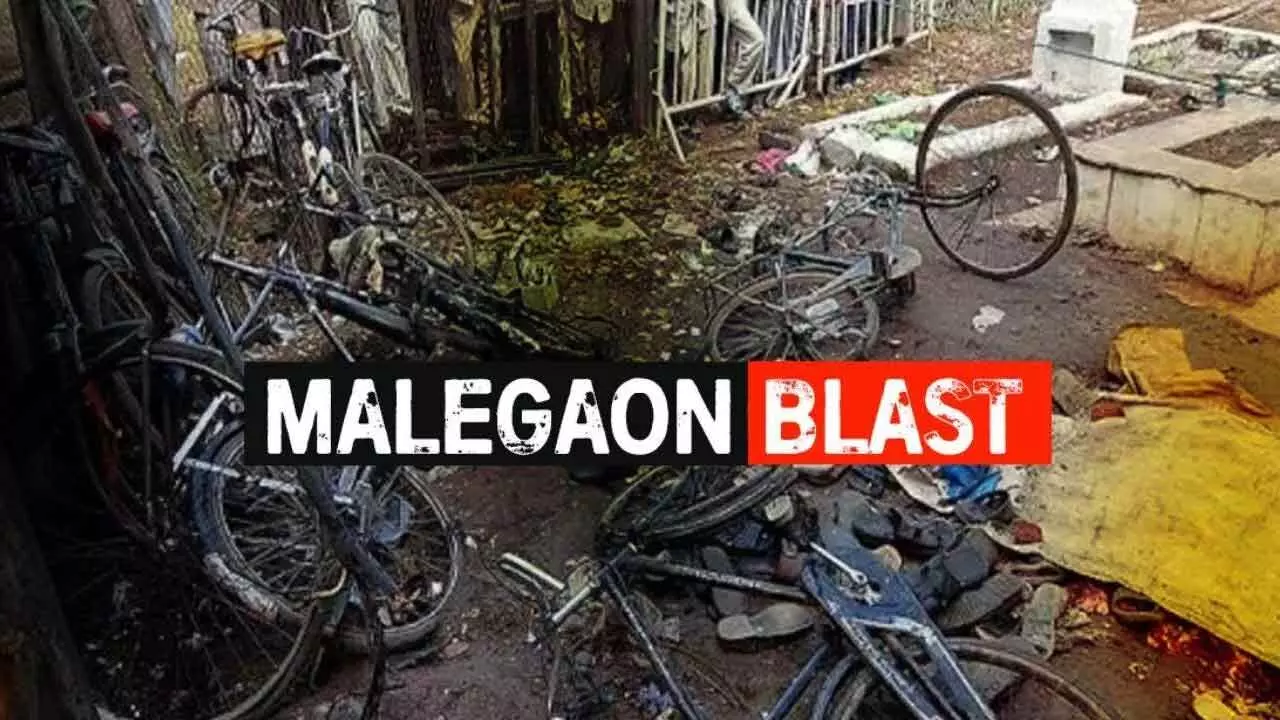
Special Judge AK Lahoti delivered the verdict nearly seventeen years after the explosion that killed six people and wounded dozens in Maharashtra's communally sensitive Malegaon town. The court's comprehensive analysis revealed multiple prosecutorial failures and procedural deficiencies that undermined the case against former BJP MP Sadhvi Pragya Singh Thakur, Lieutenant Colonel Prasad Purohit, and five co-accused.
The judgment highlighted a fundamental philosophical stance regarding terrorism and religious associations. The court observed that terrorism transcends religious boundaries since no authentic religion advocates violence, emphasizing that judicial decisions must rely on concrete evidence rather than societal perceptions or moral assumptions about alleged wrongdoing.
A critical legal flaw emerged regarding the application of the Unlawful Activities Prevention Act, which the prosecution had invoked to strengthen terror-related charges. The court determined that mandatory sanctions for UAPA prosecution were not obtained according to prescribed legal procedures, rendering both sanction orders defective and invalidating the terror law's application in this case.
The prosecution's evidentiary presentation faced severe judicial scrutiny regarding key technical aspects. While the court acknowledged that an explosion had indeed occurred in Malegaon, it found insufficient proof linking the motorcycle discovered at the blast site to any explosive device, creating a fundamental gap in the prosecution's theory about the attack's methodology.
Discrepancies in victim documentation further weakened the prosecution's credibility. The court noted inconsistencies in injury reports, concluding that 95 rather than the claimed 101 people were wounded, with evidence suggesting manipulation in some medical certificates used to support the case.
Regarding allegations against the Hindutva organization Abhinav Bharat, the court found no material evidence supporting claims of the group's involvement in terrorist activities. The judgment stated that while the prosecution frequently referenced the organization, no concrete proof demonstrated that Abhinav Bharat's resources were utilized for terror-related purposes.
The court ordered compensation for victims' families, directing ₹2 lakh payments to each deceased victim's relatives and ₹50,000 for each injured person, acknowledging the genuine suffering caused by the blast while maintaining judicial objectivity regarding the accused individuals' culpability.