






“No Point Keeping Constitution in Pocket; Take Time to Read It, Shah Tells Rahul”
In Short
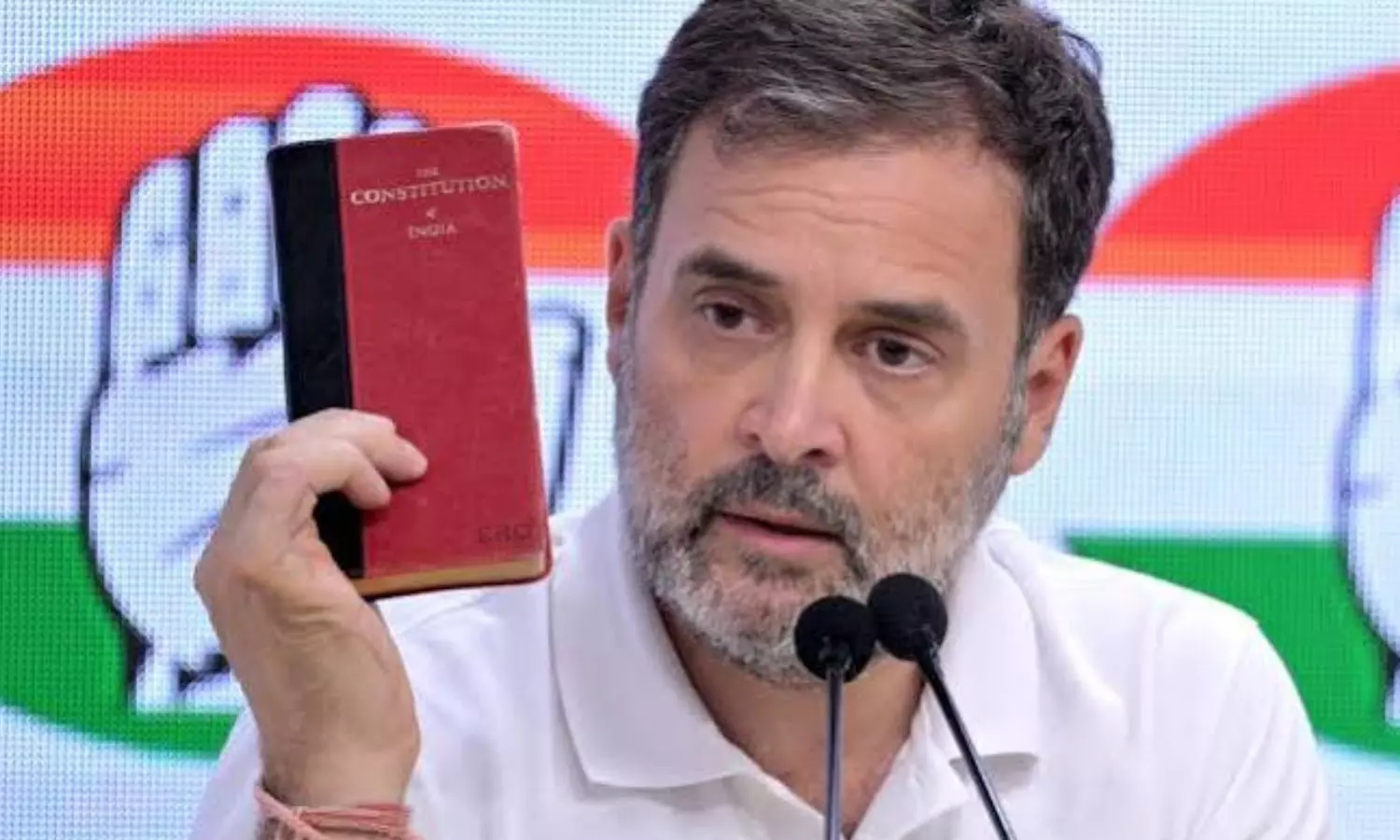
Addressing the ‘Samvidhan Gaurav Diwas’, the Home Minister said keeping a copy of the Constitution in pocket makes no sense. The Constitution carries the hope and aspirations.

Share :
“No Point Keeping Constitution in Pocket; Take Time to Read It, Shah Tells Rahul”
Union Home Minister Amit Shah on Thursday attacked the opposition parties, particularly the Congress, saying those using the Constitution "for show" should take time out to read and understand its "spirit".
Addressing the ‘Samvidhan Gaurav Diwas’, the Home Minister said keeping a copy of the Constitution in pocket makes no sense. The Constitution carries the hope and aspirations. Shah paid tributes to freedom fighters, he said, "For 90 years, from 1857 to 1947, scores of freedom fighters dedicated their life to ensure the nation's freedom. The result of all those sacrifices were drafted by the Constitution makers into a document.
Shah said the Constitution cannot be understood if it is only looked at as a book, and instead one has to dig deeper to comprehend its true essence.
Quoting Mahakavi Kalidasa, he said the country whose natives are fond of festivals and celebrations turned into a group of citizens suffering from an inferiority complex. He was apparently referring to the failure of implementing Supreme Courts order on Karthigai Deepam.
He said that the Congress had always violated the Constitution, and the darkest days were seen when Rahul Gandhi’s grandmother, Indira Gandhi, imposed the Emergency and had put all opposition leaders in jail and gagged the media. All human rights were taken away. That is their commitment to the Constitution, he fumed.
Shah said, "Human rights were absolutely violated during the 200-250 years of British rule and slowly the golden bird, which Mahakavi Kalidasa famously described as the country.
The Home Minister referred to the Constitution as a "roadmap" granted by its makers to restore what the country lost during centuries of British rule.
"The makers of the Constitution had decided that people will have the right to decide whom to bring to power. They had also provided a path for those coming to power to rule within the constraints of the Constitution," he said.
"Therefore, it is the responsibility of all Indians to uphold respect to the Constitution. But unfortunately, attempts were made after independence to treat the Constitution just as a manual for governance. The process of strengthening the spirit of the Constitution among the nation's citizens was forgotten," he stated, targeting the Congress' tenures at the Centre.
He said keeping all these things in mind, Shah said Prime Minister Narendra Modi's announcement of the Samvidhan Gaurav Diwas in 2015 to take the values enshrined in the Constitution to its citizens and make them aware of these.
Invoking the Chairman of the Constituent Assembly, Rajendra Prasad, he said: "Those who have read discussions of the Constituent Assembly must know that the patience, endurance, and capacity possessed by Rajendra Prasad were rare. He acknowledged and appreciated whatever idea was proposed before the Assembly, irrespective of the ideology."
HM Shah also launched an attack on the Opposition, saying: "Those who are opposing our culture today, I want to tell them to take time out and go through the original copy of the Constitution and look whose pictures it contains. It carries Lord Ram's arrival in Ayodhya, Lord Buddha, Lord Mahavir, 10th of the Sikh Guru Gobind Singh ji, Rani Laxmibai, Dandi March and Netaji Subhash Chandra Bose."
In a veiled reference to the Leader of Opposition in the Lok Sabha, Rahul Gandhi, he said: "Those who roam carrying a copy of the Constitution, I request them to take out 15 minutes, visit the Parliament Library and look at the pictures illustrated (under the leadership of) Nandalal Bose (in the original handwritten manuscript of the Constitution)."
"Even the poorest of the poor, without any caste or family background, are being voted to power by the citizens here...faith in democracy, the Constitution, and the constitutional institutions have increased over these years," he said.
He elaborated on the various schemes, including opening of bank accounts for the poor with infrastructure and the digital economy. PM Modi has empowered the poor and ensured benefits reach the last beneficiary; along with this, we have ensured that the poor are treated with dignity," he asserted.
Shah also referred to the abolition of Article 370 from J&K and eradication of Naxalism and its resolve to achieve Nasha Mukt Bharat.
Meanwhile, a two-day meeting of the BJP national office bearers will be held here from Friday to discuss at length key organisational matters and the party's future plans.
According to sources, Prime Minister Narendra Modi will also attend the meeting at the PUSA campus, which will be presided over by BJP president Nitin Nabin.
This will be the first structured meeting of the newly appointed national office bearers of the BJP in which the prime minister will also participate. It comes as the party prepares for another crucial round of state elections, including in Uttar Pradesh and Punjab.
“The two-day meeting will extensively deliberate on various key organisational matters and the party’s future action plans, among other things. The newly appointed national office bearers will also get an opportunity to receive Prime Minister Modi’s guidance.”
Sources said all the newly appointed national office bearers, including in-charges and co-in-charges of states and BJP Morchas, will participate in the meeting.


