






- Anirudh Ravichander And Kavya Maran’s Dreamy Greece Wedding Pics Are Here
- Bullet-Riddled Bodies Of Two Missing SPOs Recovered In J&K’s Kishtwar, Search For Terrorists Underway
- Gold and Silver rates today, 12 Nov in Hyderabad, Visakhapatnam, check gold prices of 18K, 22K, 24K
- Bullet-riddled bodies of two missing SPOs recovered in J&K’s Kishtwar
- RBI issues consolidated domestic money transfer rules; retains Rs 50,000 cash NEFT cap
- Democrats accuse US envoys of weakening Ukraine
- One killed as three-storey building collapses in New York
- Madras HC likely to hear Anbil Mahesh‘s bail plea today in school approval scam case
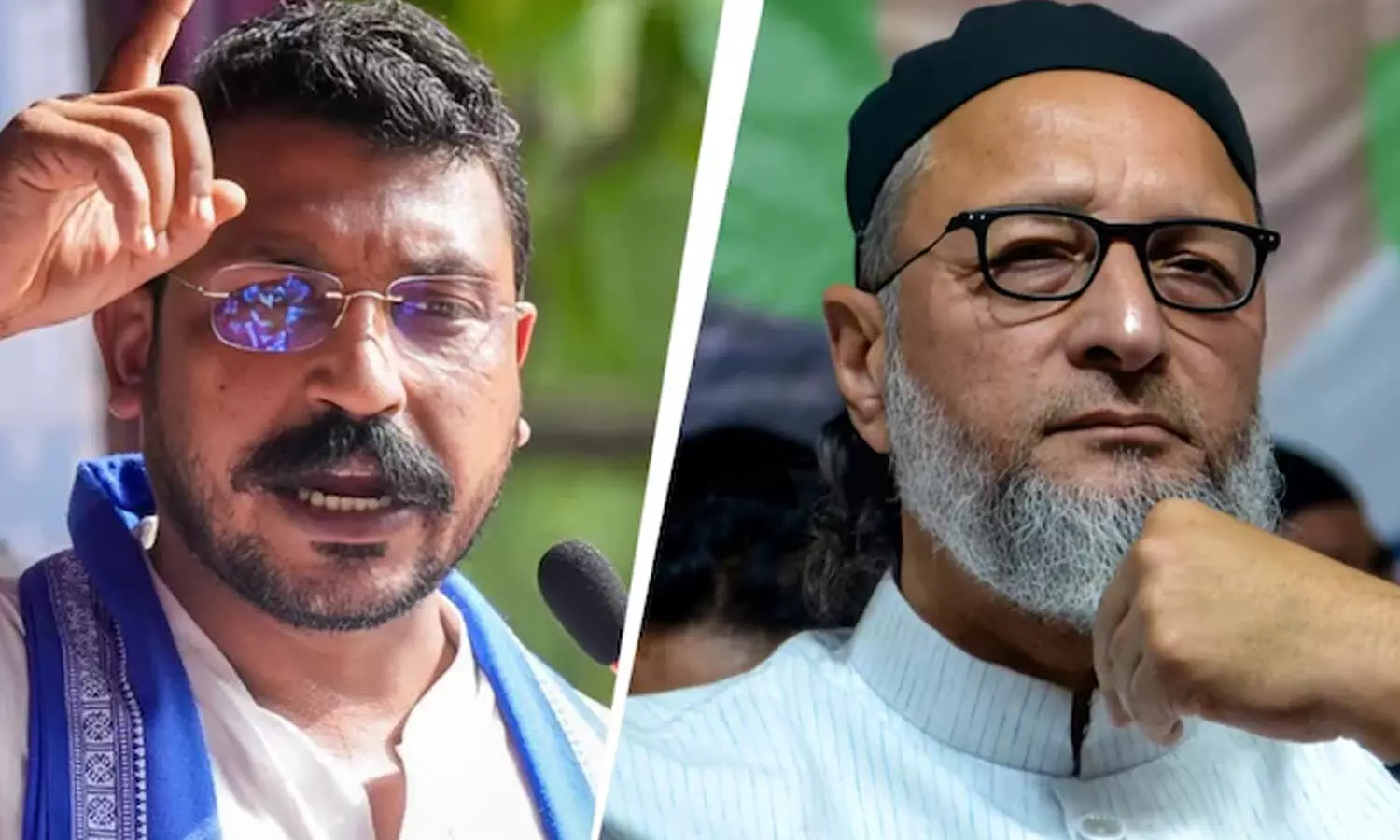
Owaisi-Azad Tie-up: A New Headache for SP-Congress in UP?
In Short
The proposed understanding between AIMIM and Azad Samaj Party could alter the electoral calculations and could damage the SP-Congress alliance.

Share :
Owaisi-Azad Tie-up: A New Headache for SP-Congress in UP?
The stage is set for an alliance between the AIMIM and the Azad Samaj Party (ASP) led by Chandrashekhar Azad. The new alliance may not be in no way can even dream of coming to power or emerge as a major force in UP Assembly for the present but it certainly can alter electoral calculations and cause damage to the alliance between Samajwadi Party and the Congress.
The proposed understanding between AIMIM and Azad Samaj Party could alter the electoral calculations and could damage the SP-Congress alliance.
In the last elections, ASP contested around 110 seats and secured only 0.13% of the statewide vote. AIMIM, which contested 95 seats, secured about 0.49% of the vote. Neither party won a seat.
But Azad's victory from Nagina (SC) in the Bijnor district Lok Sabha constituency in Western UP improved his political standing, and his party is trying to enter the space created by the downfall of the BSP led by Mayawati.
It is learnt that Azad Samaj Party could contest around 150 seats while the AIMIM would contest around 50 seats. This alliance would be focusing more on western UP and Rohilkhand areas.
Its significance lies in three areas: the Dalit vote, the weakening or fragmentation of traditional BSP support, and its possible impact on the BJP, Samajwadi Party and Congress.
Azad has established himself as a prominent younger face of Ambedkarite and Dalit politics.
The proposed alliance can prove to be a challenger to BSP: This is perhaps its most important long-term political objective. If Azad succeeds in attracting younger Dalit voters and sections of non-Jatav Dalits, Mayawati's traditional political space could shrink further.
For SP, it is a matter of concern as even a small transfer of muslim or Dalit votes can change the outcome in closely contested constituencies.
As far as BJP is concerned, it could benefit from opposition vote fragmentation in closely contested constituencies. For Congress, it could cause a dent in the Muslim outreach due to mobilisation of Muslim votes by AIMIM.
If the alliance manages to win at least a handful of seats in the upcoming elections and establishes itself as a serious regional force, it can play the role of kingmaker in the event of a hung Assembly.
Azad has a following among sections of Dalit youth, particularly in western UP, and for these elections, he is making all-out efforts to expand beyond Dalits and wants to reach out to OBCs and minorities. The most important development is that he is positioning his party as an alternative to Mayawati's BSP.
Azad and Owaisi separately arrived in Lucknow ahead of the Thursday event, though they did not reveal the details of their alliance or the joint presser expected at a Gomti Nagar hotel in the state capital on Thursday afternoon.
The development comes after the main INDIA bloc parties in UP -- the Samajwadi Party and the Congress -- showed no interest in Owaisi's offer to include him in their seat-sharing pact for the UP polls.
A miffed Owaisi, whose October 2 deadline to the SP and the Congress to decide on his inclusion in the INDIA bloc did not find any takers, is now set to float a loose third front of sorts along with ASP to target minorities and Dalits, the two key vote banks who, along with OBCs, hold the key to power in UP.


