






- Tummala Nageshwara Rao orders release of Sitarama project water for crops in Bhadradri Kothagudem
- Panja Vaishnav Tej Joins Hands With Primeshow Entertainment For HanuMan 2
- Can AI solve the Riemann hypothesis, a 167-year-old problem?
- Dadasaheb Phalke International Film Festival Awards 2026: Check Out The Complete Winners List
- Anthropic CEO Dario Amodei puts culture before technical talent in hiring
- Youth Congress causes damage at Meta office in Hyderabad
- Petrol and diesel prices today in Hyderabad, Delhi, Chennai and Mumbai on 21 November 2026
- White House aide Stephen Miller predicts US' 'greatest two years'
Rahul Gandhi in Spot. Trump Sings India’s Growth Story
In Short
Addressing a news conference at the White House, in the presence of Vice President JD Vance and Secretary of State Marco Rubio, Trump said interest rates in India were low and its GDP was growing at 7 per cent.

Share :
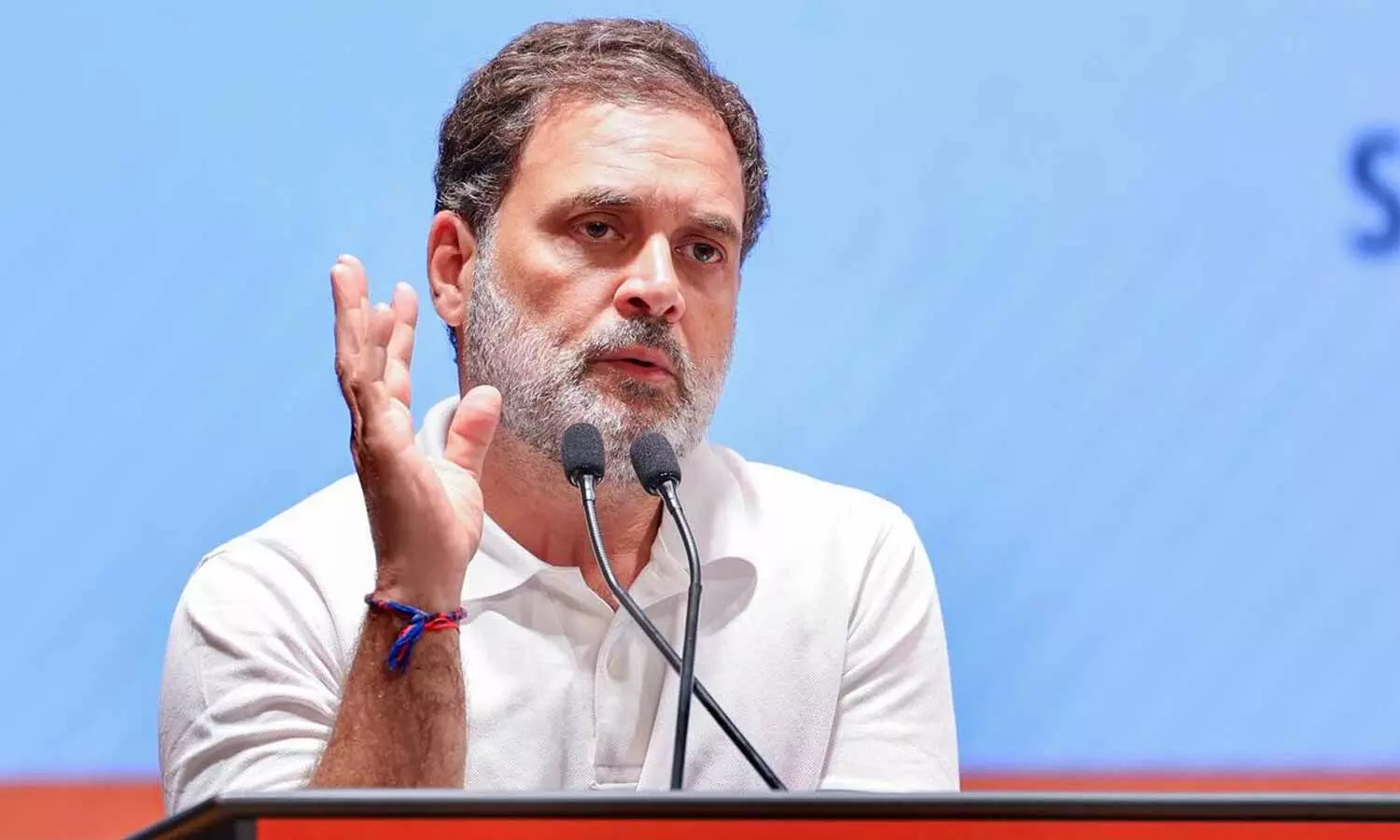
Leader of Opposition Rahul Gandhi
After losing the midterm battle, US President Donald Trump seems to have had a change of heart about India's economy. Having earlier described it as a "dead economy" — a remark endorsed by Opposition leaders such as Rahul Gandhi — Trump on Friday was all praise for India's economic growth.
Addressing a news conference at the White House, in the presence of Vice President JD Vance and Secretary of State Marco Rubio, Trump said interest rates in India were low and its GDP was growing at 7 per cent. He urged the US to follow India's example, arguing that the Federal Reserve should lower borrowing costs when economic indicators improve rather than raise interest rates.
Low interest rates, he said, had helped India register strong economic growth, and it was time the US moved towards having the lowest interest rates. This, he argued, would help accelerate America's economic growth.
Trump further said India's impressive economic performance was the result of low interest rates and 7 per cent GDP growth. He suggested that much could be achieved by creating a more favourable borrowing environment. Referring to India’s growth rate, He contrasted it with US growth rate figures of 14%, 15% or perhaps even 20 per cent.
He also pointed out that the US had traditionally enjoyed some of the lowest interest rates in the world and questioned why they had risen so sharply despite the country recording strong economic indicators.
The US President claimed that poverty in the country was at an all-time low. He argued that high interest rates were preventing the US from achieving better growth. Blaming the Federal Reserve, he said it had been raising interest rates whenever economic indicators turned positive. "But the opposite should happen," he said. Raising rates despite strong economic performance, he alleged, was being done "to destroy the country." However, he stopped short of personally blaming the Federal Reserve chairman.
It may be recalled that Trump suffered a major rebuke from voters in the midterm elections, with inflation, the rising cost of living and his handling of the Iran issue among the factors that contributed to the setback. Democrats made significant gains, including in traditionally Republican strongholds.
Although Trump has another two years in office before the next presidential election, the midterm results are widely being viewed as a referendum on his leadership and governance.
Trump's latest assessment of India's economy raises a fundamental question: Will the Opposition in India acknowledge what the US President has now said, or will Leader of the Opposition Rahul Gandhi continue to insist that India's economy is on the verge of disaster? Gandhi made that remark just two days earlier while interacting with students at Columbia University in New York.
The contrast is striking. An American President who had once dismissed India's economy as dead is now citing its growth and interest-rate policies as an example for his own country. Will India's Opposition take note?
BRS main political rival, BJP no competitor: CM Revanth
Ronaldo will be invited to state soon: Revanth
Raj Gopal continues tirade against Revanth
CM Chandrababu Naidu sets Dec 2027 IPO target for APMDC
TG’s engineering, pharma exports zoom 68% in 3 yrs
Godavari water lifeline for Hyderabad nearing reality


