






- Zepto Co-founder Recalls Near Shutdown Scare After Major Technical Failure
- Most-Wanted LeT Terrorist Lateef Bhat Killed After Standoff Inside Kulgam Mosque
- AI Could Be Behind Global Tech Outages, US Official and CEOs Suggest
- AP on high alert ahead of Cyclone Akvan, AP Home Minister calls for vigilance
- Petrol and diesel prices today in Hyderabad, Delhi, Chennai and Mumbai on 18 November 2026
- Gold and Silver rates today, 18 Nov, 2026 in Hyderabad, Visakhapatnam, check gold prices of 18K, 22K, 24K
- Gold and Silver rates today, 18 Nov, 2026 in Hyderabad, Visakhapatnam, check gold prices of 18K, 22K, 24K
- Gold and silver rates today 18 Nov, 2026 slashes in Bengaluru and Chennai, check gold prices of 18K, 22K, 24K
Rahul Projects Gloom, BJP Says It’s Boom: What’s the Real Story?
In Short
The BJP cited projections by various global agencies and said that while the world recognises India as one of the fastest-growing economies, the LoP insults the country on foreign soil.

Share :
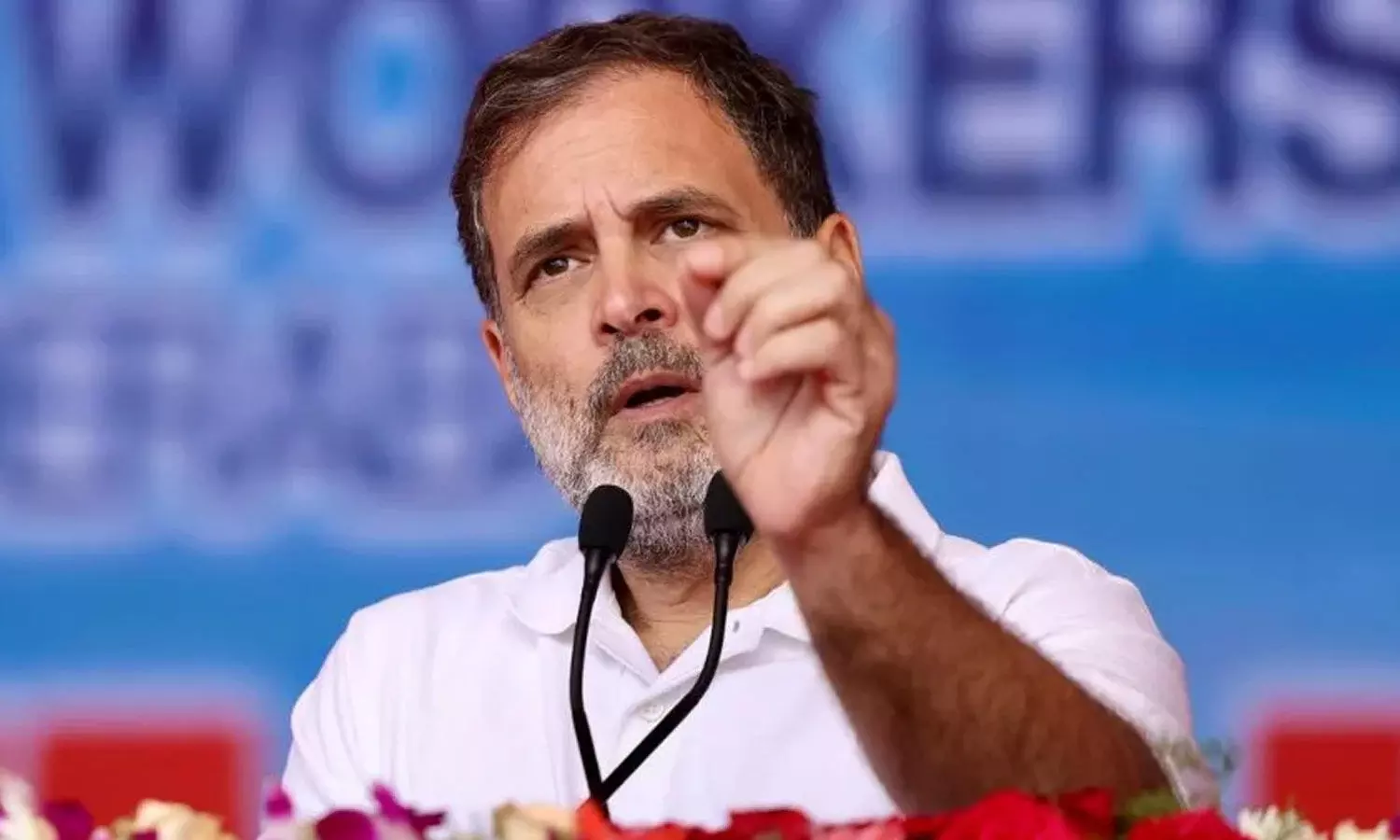
Rahul Gandhi
India is sitting on an "economic disaster" with massive unemployment, a broken manufacturing base and deep-rooted problems in its education system. This is what the LoP Rahul Gandhi said during a fireside chat at Columbia University in New York on Tuesday.
The BJP cited projections by various global agencies and said that while the world recognises India as one of the fastest-growing economies, the LoP insults the country on foreign soil. They challenged him to debate such issues in Parliament. They said speaking ill of India and speaking untruth is not new to the LoP, they said.
Referring to his comments that the country’s economic model has stopped giving results almost a decade ago. He also claimed that the government's initiatives like ‘Make in India’ and ‘Start-up India’ have not delivered results and have “broken” the economic backbone, which is not new.
In October 2025, too, Rahul stirred controversy while speaking at the EIA University in Colombia. At that time, he also said that India’s democratic system was under wholesale assault, preventing India from becoming a true world leader. He had repeated that a few big businessmen control the economy.
The Congress party leaders supported Rahul Gandhi’s claim then and would do the same today on national TV during debates, while the BJP would quote projections of India’s economic growth at 7 per cent for FY2027, even as RBI's professional forecasters have estimated a 7.1 per cent growth rate for the same period. Goldman Sachs expects India's real GDP to grow by 6.9 per cent in 2026 despite global economic uncertainties.
Citing a World Bank report, the BJP said poverty at the lower-middle-income benchmark has declined from 57.7 per cent to 16.1 per cent, lifting an estimated 496 million people out of poverty.
"From infrastructure and manufacturing to digital transformation, services, investment and financial inclusion, India is advancing across sectors and strengthening its position in the global economy," the BJP said.
BJP spokesperson Pradeep Bhandari said, "Rahul Gandhi has become the leader of anti-India propaganda."
He alleged that Gandhi made foreigners criticise India's democracy during the Bharat Summit in Hyderabad and questioned his conduct as the LoP. "Rahul Gandhi's inherent hate for India's progress & Indian democracy makes him speak ill about India every time he goes abroad.
Comparing Gandhi with Prime Minister Narendra Modi, Bhandari said the PM upholds India's national interests during his official foreign visits while Rahul Gandhi is a "disaster as a responsible LoP,” the BJP alleged.
Calling the remarks of Rahul Gandhi as “fabricated falsehoods”, the BJP spokesperson said, "Rahul Gandhi terming the vibrant Indian economy as being on the brink of a disaster when New India is rising on the international stage as the world's fastest (growing) economy only exposes the political bankruptcy of the failed and frustrated Rahul Gandhi," he said.
1 cr families will get Rs 5 Lakh insurance: CM Revanth
CM Revanth seeks Chhattisgarh nod for Sammakka Sagar
Government officials more corrupt than politicians: Congress MLA Anirudh
‘No Mention Of State In Memoir’: No place for Telangana in Sonia's heart, says KTR
Health alert: Fake silver waraq units busted in hyderabad
NTG refuses to stay Musi Riverfront project; seeks state govt’s response


