Stampede at New Delhi Railway Station Raises Questions on Crowd Management; 18 Dead, Several Injured

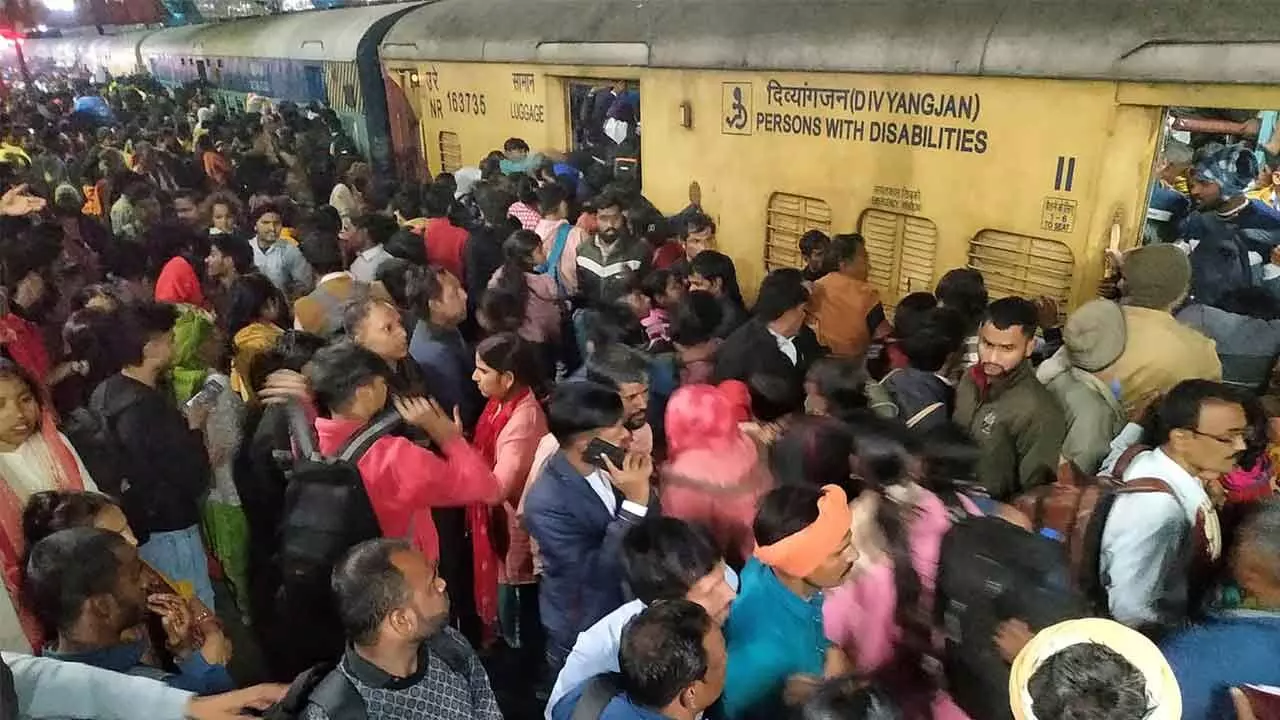
New Delhi: A tragic stampede at the New Delhi Railway Station late Saturday night claimed 18 lives and left several others injured, highlighting critical lapses in crowd control during peak travel seasons. The incident occurred on platforms 14 and 15, where thousands of passengers had gathered to board trains to Prayagraj for the ongoing Maha Kumbh.
With two key trains to Prayagraj canceled, an uncontrollable surge of travelers resulted in chaos. Officials noted that ticket counters were issuing 1,500 general tickets every hour, further worsening the congestion. Despite efforts to manage the crowd, the situation spiraled out of control, leading to a deadly stampede near platform 16’s escalator.
Authorities Under Fire for Poor Planning
The incident has sparked criticism of the Railways and the government’s preparedness for large-scale events like the Maha Kumbh. The Congress called the tragedy a “failure of the Railways” and accused authorities of negligence.
Delhi Fire Services chief Atul Garg acknowledged that the station was severely overcrowded, while police officials confirmed that managing the swelling crowd had become “uncontrollable.” An Indian Air Force sergeant at the station stated that repeated announcements were made urging passengers to disperse, but the sheer number of people made it impossible to regulate movement.
Government Responds Amid Political Criticism
Prime Minister Narendra Modi expressed his condolences on social media, calling the incident distressing and assuring support for affected families. Meanwhile, a two-member committee has been formed to probe the disaster, with an emphasis on reviewing railway crowd management protocols.
As investigations continue, the stampede raises pressing questions about how authorities handle surges in passenger traffic during religious gatherings, and whether more stringent measures could have prevented this devastating loss of life.