






- Vijaya BPEd College wins women’s ball badminton title
- SVU to conduct training in ChatGPT, Claude, Gemini and Perplexity
- Nellore ready for phase-2 of panchayat polls
- ERO seeks parties cooperation for electoral roll revision
- SC judges visit historic courts in Rajamahendravaram
- Ongole: Six held for stealing gold from trader
- TDP factional feud erupts into violence in Kosigi; one grievously injured
- Tirupati gears up for 61st All-India DGPs–IGPs conference at IISER from Dec 4
Call to ban animal cruelty in stage shows
In Short
Artistes, cultural activists, and wildlife conservationists in Brahmapur demand a code of conduct and police action against obscene Badi Nach shows and animal abuse in Ganjam.

Share :
Call to ban animal cruelty in stage shows
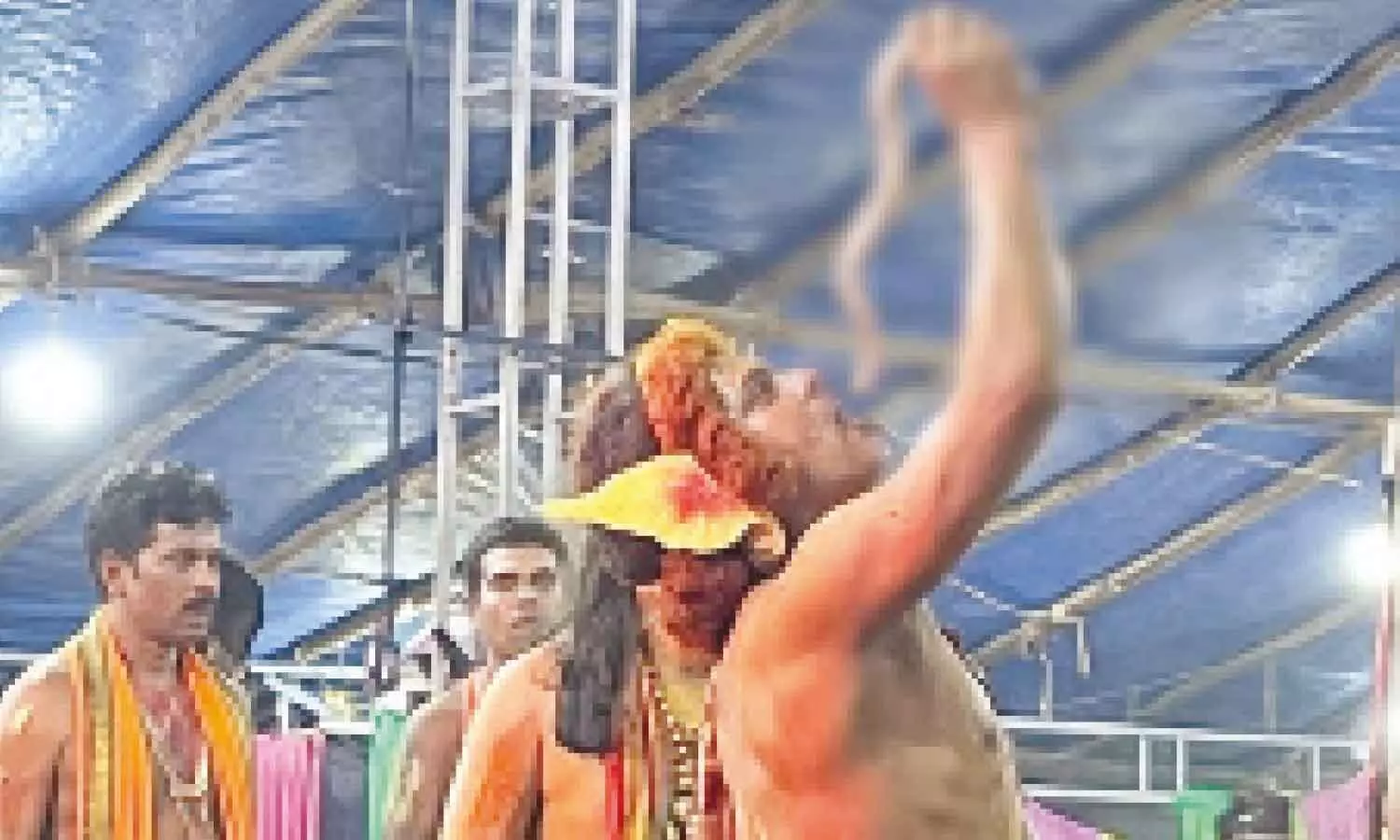
Brahmapur: Demzcrackdown on obscene and objectionable Badi Nach performances in Ganjam district, artistes, cultural activists and wildlife conservationists on Saturday urged the State government to introduce a strict code of conduct, initiate police action against violators and prevent the misuse of the traditional art form in the name of entertainment.
At a press conference, the participants alleged that several Badi Nach performances had crossed all limits of decency by displaying obscenity, hurting religious sentiments, mistreating animals on stage, performing dangerous stunts and distorting the sacred Ramayana tradition. They demanded strict monitoring of such programmes and accountability of organisers and performers.
The press conference was convened by renowned stage artiste and Ganjam District Theatre Directors’ Association president Rajagopal Padhi, who strongly condemned the degradation of the traditional art form. He warned that such objectionable performances were setting a dangerous precedent and demanded stringent action by the police and district administration.
Noted cultural researcher Anantaram Kar Kaundinya questioned the presentation of religious themes in Badi Nach. He alleged that the sacred epic and cultural traditions were being distorted for cheap entertainment.
Referring to the controversial incident at Lanjia, he questioned how a performer could allegedly bite and chew a snake or a snake-like animal on stage despite strict laws protecting wildlife. He demanded action against the performer and raised objections to the response of the local sarpanch.
Wildlife conservationist Sagar Patra also strongly condemned the alleged consumption and mistreatment of animals and birds during stage performances, saying that compassion towards living beings was being confined to slogans.
Odisha Natya Sangha’s South Zone vice-president Bhavani Shankar Mishra and spiritual personality K Krishnamurthy also criticised the objectionable practices, warning that they were bringing disrepute to Ganjam’s rich artistic and cultural heritage. The participants said they would meet the Ganjam Collector and press for strict enforcement of laws, a government-approved code of conduct and action against those violating it.
Folk theatre and religious performances have traditionally been powerful mediums of cultural expression. Their strength lies in the performers’ ability to mesmerise audiences through powerful acting, expressive gestures, captivating dialogue, music and dramatic presentation. An artiste’s talent is reflected in his ability to bring a character alive before the audience, not necessarily in his willingness to undertake bizarre or potentially dangerous acts.
One wonders why some performers increasingly resort to such unusual practices. Is it an attempt to demonstrate extraordinary courage, attract public attention or earn instant popularity in the age of social media? Whatever the motivation, sensationalism should not be allowed to overshadow the artistic and cultural essence of traditional performances.
There is also a larger social concern. When such acts are performed before a public audience, particularly in the presence of children and young people, they can create misleading impressions and even encourage imitation.
After all, the real strength of an artiste lies in his ability to hold the audience spellbound through performance, not in his ability to shock them. Let our folk traditions be remembered for their artistic brilliance and cultursl richness, not for sensational acts that momentarily go viral.


