






- India, Egypt set to explore preferential trade agreement or an FTA: Piyush Goyal
- India steps up efforts as peacemaker between Russia and Ukraine, seeks limited yet fruitful outcomes: Report
- FairPoint: Sonia's memoir opens Gandhi family's closed doors, but leaves much hidden
- India to get preferential access in US market under trade pact: Piyush Goyal
- Along with Aatmanirbharta, India must be a developer, innovator & global leader in cutting-edge technologies: Rajnath Singh
- Tribals most affected by Maoist violence; earlier govts remained mute spectators, says PM Modi
- India must become a developer of advanced technologies: Rajnath Singh
- CM Vijay to honour Class 10, 12 toppers in Chennai on November 18
Odisha extends EV policy validity till Dec 31
In Short
Under the policy, the Odisha government provides 100 per cent exemption from road tax and registration fees, along with purchase subsidies for electric vehicles (EVs).

Share :
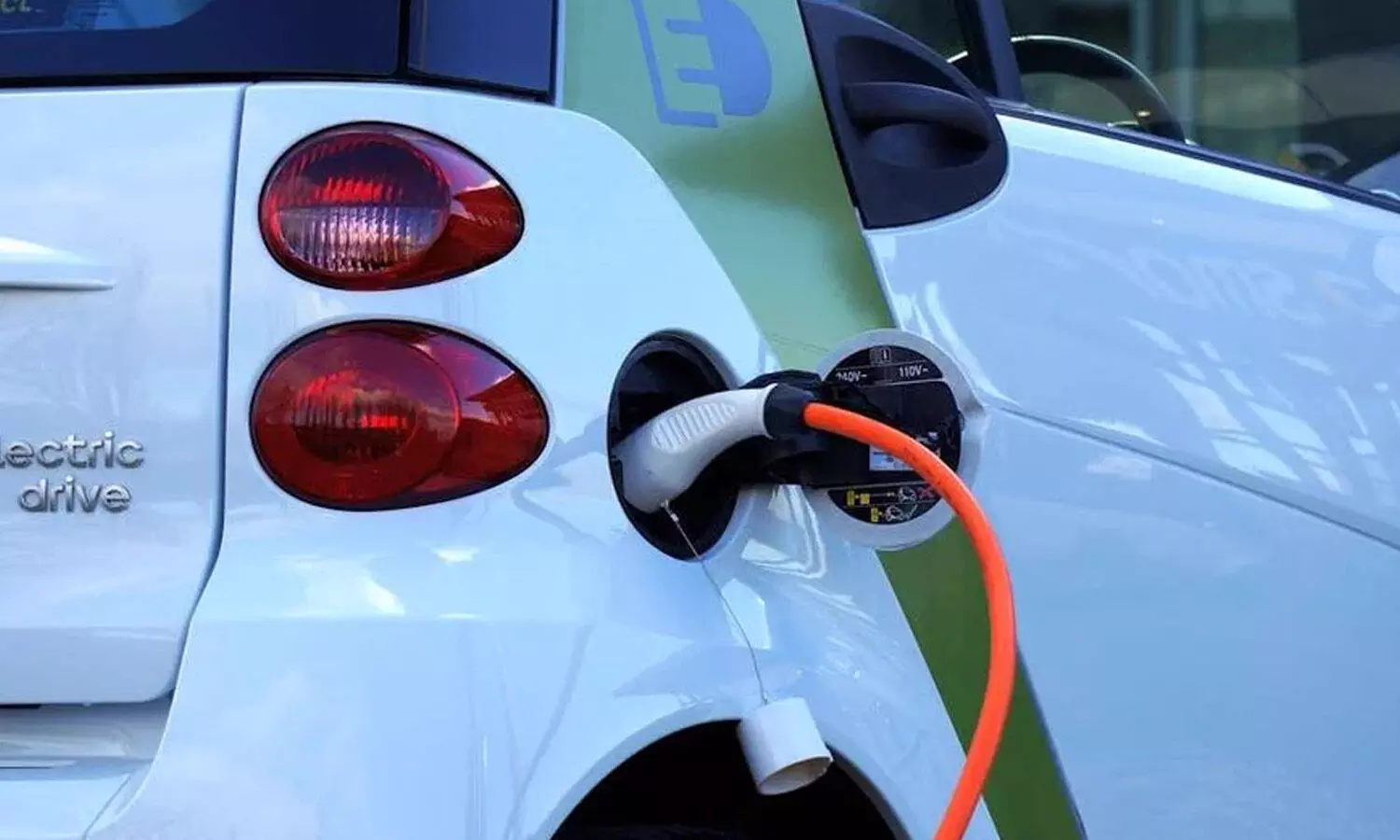
Odisha extends EV policy validity till Dec 31
Bhubaneswar: To promote green mobility and accelerate the transition towards sustainable transportation, the State government has extended the validity period of the Odisha Electric Vehicle Policy, 2021 till December 31, 2026, an official notification said.
A notification in this regard has been issued by the Commerce and Transport department on Saturday. It said, “In exercise of powers conferred under the provisions of para 11.5 of the Odisha Electric Vehicle Policy, 2021, the government has been pleased to extend the validity period of the policy till December 31, 2026.” The extension was made keeping in view the State government’s commitment to reduce carbon emissions.
Under the policy, the Odisha government provides 100 per cent exemption from road tax and registration fees, along with purchase subsidies for electric vehicles (EVs).
The State government had introduced the Odisha Electric Vehicle Policy, 2021, to encourage adoption of EVs and promote the manufacture of EVs and its components in the State.
As part of the policy, the State government extends financial incentives, including incentives for manufacturing industries, purchase incentives, scrapping incentives, interest subvention in loans, and waiving of road tax and registration fees to encourage adoption of EVs.
Under the policy, on purchase of a two-wheeler, a customer gets a subsidy of 15 per cent of the vehicle cost, capped at Rs 5,000, or Rs 5,000 per kWh, subject to a maximum subsidy of Rs 20,000.
The wheeler subsidy is 15 per cent of the vehicle cost, capped at Rs 10,000, or a flat subsidy of Rs 30,000.
For four-wheelers, the subsidy amount is 15 per cent of the vehicle cost, capped at Rs 50,000, or Rs 10,000 per kWh, subject to a maximum subsidy of Rs 1.5 lakh. Passenger buses are eligible for a subsidy of 10 per cent of the vehicle cost, ranging from Rs 4 lakh to Rs 20 lakh depending on specifications, while goods carriers are eligible for a Rs 30,000 subsidy for the initial units.
Bhutanese PM Tobgay tours India Mela 2026 in Thimphu, celebrates India-Bhutan friendship
Air Marshal Tejinder Singh stresses AI-linked operational preparedness
Students' group KYS condemns Delhi University for starting 'profit-driven' courses
Genesis frontman Phil Collins wells up on getting inducted in Rock and Roll Hall of Fame as solo artiste
Winter session of Parliament likely to start in first week of Dec
Elaborate security arrangements put in place for V-P Radhakrishnan's Odisha visit
Gadkari dismisses media reports on his quitting politics as 'false news'
High Command to Decide on Woman Minister's Induction: CM DK Shivakumar
“Rahul Defamed India; Should Visit Villages If He Wants to Return to Power: Amit Shah”
Bengal CM announces welfare measures for tribal community in Jhargram


