




US Open: Lucky loser Gea eyes QF after remarkable New York turnaround
In Short
French lucky loser Arthur Gea has turned his US Open fortunes around, reaching the fourth round at Flushing Meadows and moving within one win of a maiden Grand Slam quarter-final.

Share :
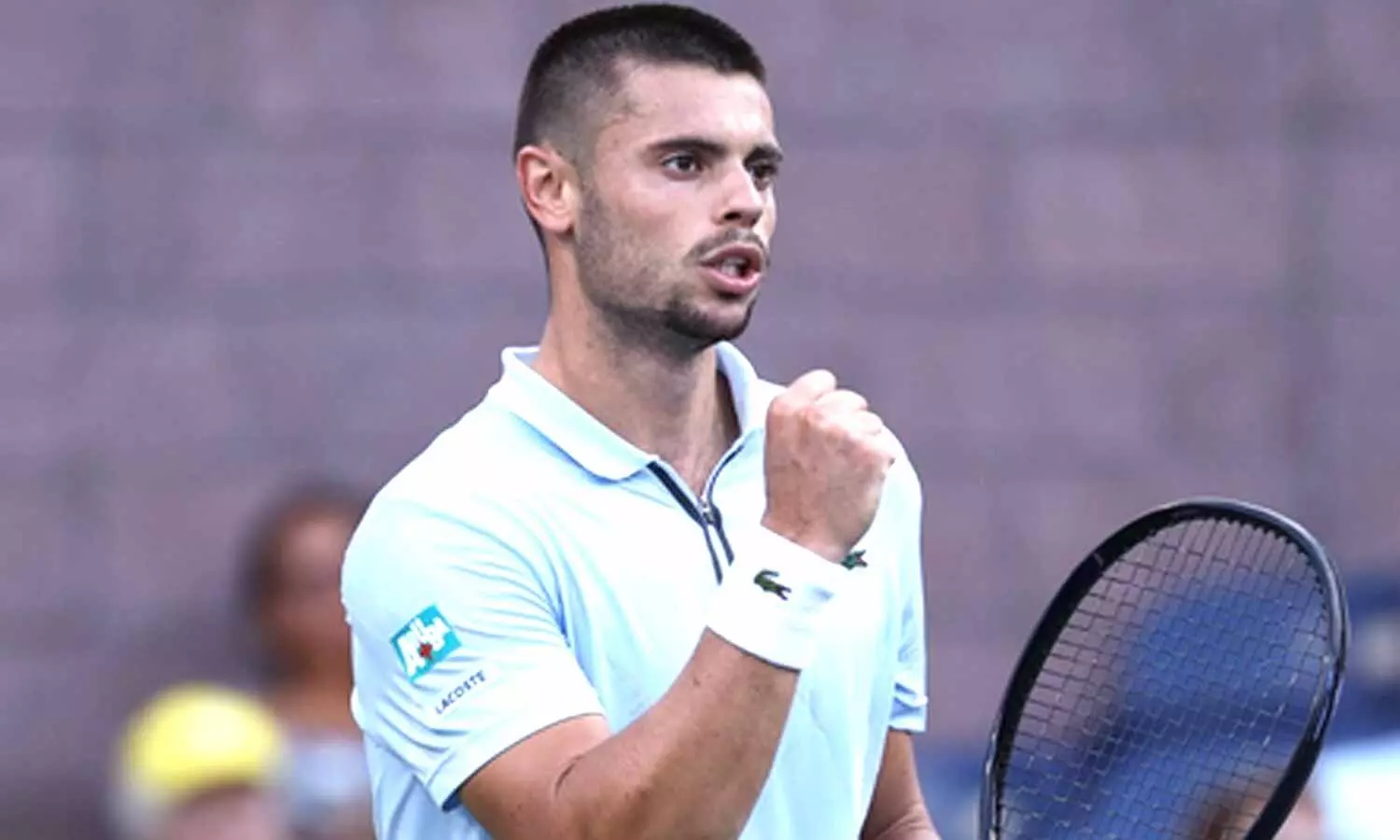
US Open: Lucky loser Gea eyes QF after remarkable New York turnaround
New York: Arthur Gea’s US Open campaign has gone from an early qualifying exit to the brink of a maiden Grand Slam quarter-final, with the 21-year-old Frenchman now set to face Botic van de Zandschulp in the fourth round at Flushing Meadows on Monday.
Gea had appeared to be out of the tournament before the main draw had even begun. He lost to Nishesh Basavareddy in the final round of qualifying, winning just four games, but Casper Ruud’s subsequent withdrawal opened the door for the Frenchman to enter the field as a lucky loser.
“When I lost, it was obviously really hard. [I lost] against a really good player, actually, someone that I know for a long time,” Gea told ATPTour.com. “I was just training and waiting to get in, but nothing was really sure. When it was, I was super happy, and I was ready to play.
He has since made the most of that second chance. A year ago, Gea arrived at the US Open ranked No. 247 in the world with only one tour-level appearance to his name. Twelve months on, he is up to No. 63 in the PIF ATP Live Rankings and has moved into the tournament’s second week.
A victory over van de Zandschulp would take Gea into his first Grand Slam quarter-final and cap an extraordinary rise that has gathered pace throughout the season.
The Frenchman’s breakthrough did not begin in New York. He won his maiden ATP Tour title in Los Cabos before entering US Open qualifying as the world No. 86. Yet even after that breakthrough, his place in the main draw was far from assured.
Now, after turning a near-certain exit into a deep run, Gea is enjoying a stage he once only watched from afar.
“It was really nice, actually. Incredible. First time that far in a Grand Slam, especially here in New York,” Gea said. “It's amazing.”
His ability to stay in matches has been a defining feature of the run. Michael Zheng, whom Gea defeated in the third round, pointed to the Frenchman’s competitiveness as one of the biggest challenges he posed.
“He’s always competing well and tracking down balls,” Zheng said. “I knew it was going to be a tough match and in some of the bigger moments I feel like he was a little more aggressive, capitalising a little bit more in the end.”
That competitive streak has been part of Gea’s make-up since he first picked up a racket at seven in Velleron, a small French town where tennis was initially introduced to him as a way of simply getting involved in sport.
“It’s a really small one. Even in France, nobody knows it,” Gea said, cracking a laugh.
His parents, Christophe and Cecile, were not tennis players. His father had played football, and Arthur himself had been involved in football before his parents enrolled him in tennis during the summer. What kept him coming back was the individual nature of competition.
“Just winning, actually, from when I was young. When I started at seven, I started also tournaments at eight, just small tournaments, and I was playing really good already,” Gea said. “[I liked] just the feeling that you win alone. [It is] not like in football when you win with the team and you can lose because of the team. This I really liked so much. So I just enjoyed winning.”
That hunger to compete was later accompanied by an admiration for Rafael Nadal. During Roland Garros, Gea would return from school, play table tennis by himself and watch the Spaniard on television.
“I was just playing ping-pong alone and watching Rafa on the TV at the same time,” Gea said. “He's one of my idols of course.”
Gea had already shown considerable promise as a junior, reaching No. 8 in the world rankings and making the US Open boys’ singles semi-finals in 2023. Learner Tien stopped him there in three sets.
His development since then has taken him through the ATP Challenger circuit, including a stint in China last year while the established stars competed at Flushing Meadows. This year, Gea has crossed that divide himself.
He now returns to the US Open fourth round not as the player who barely made the tournament, but as one of its unexpected contenders. Another win would complete an even more striking chapter in a New York story that looked finished before it had properly begun.


