




- J&K Assembly erupts over power tariff, NHM employees' issues; NC and BJP trade slogans
- GST rate cuts neutralised by inflation, says Jairam Ramesh
- UP CM Yogi holds Janta Darshan, instructs officials for prompt action on people's problems
- Nani’s Paradise Completes Censor Formalities With A Certificate
- HM Shah to inaugurate 3rd National ANTF Conference in Delhi, focus on drug-free India
- Special session commences in Karnataka: BJP-JD (S) MLAs defy state order, sing full Vande Mataram in House
- HBD Kareena Kapoor: Take A Look At Bebo’s Career, Net Worth And Movies
- Megastar Chiranjeevi’s Vishwambhara Gets A New Release Date
Apple iPhone Users $250 Million Siri Settlement: How to Claim, Check Eligibility
In Short
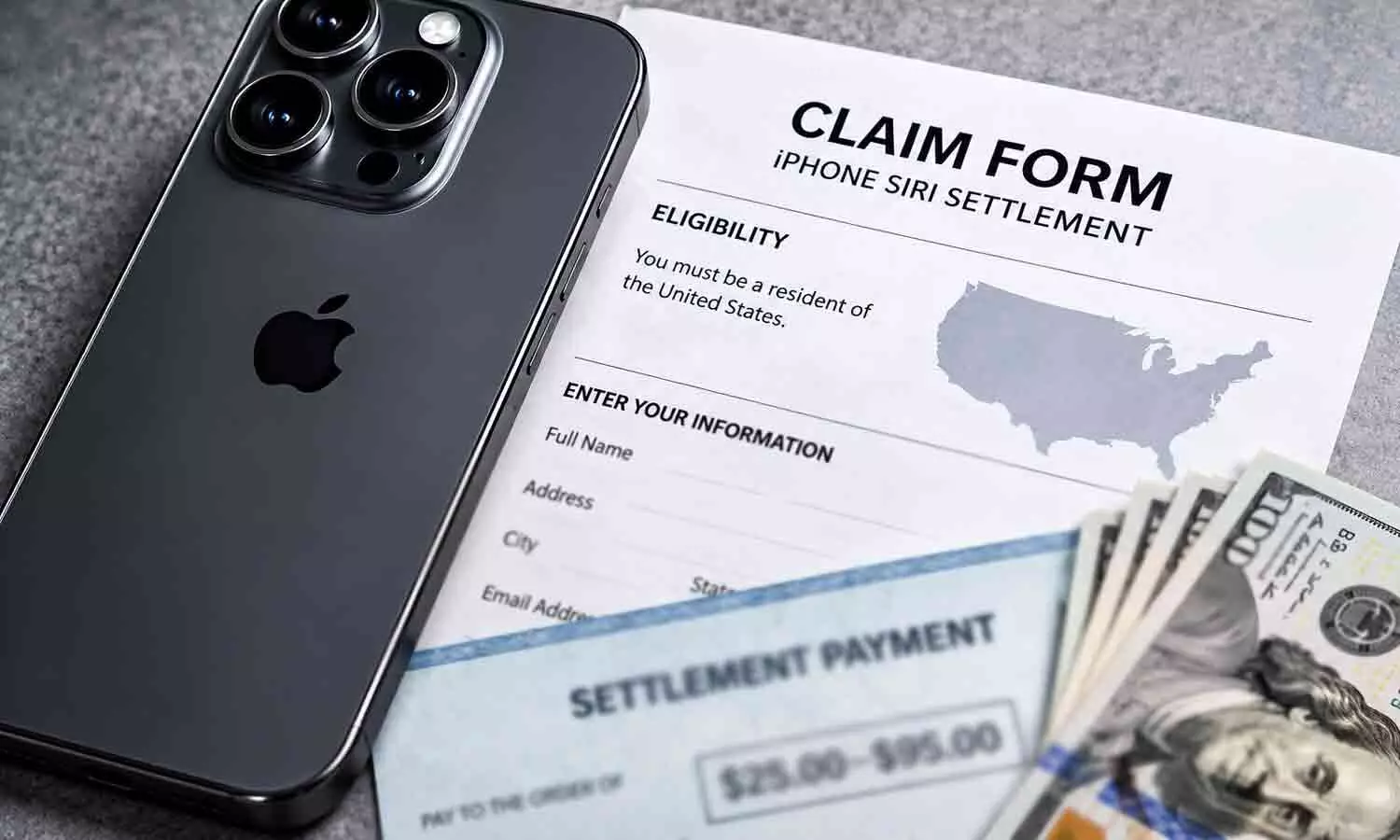
If you bought an iPhone in the past couple of years, you might have some money coming your way. Apple has agreed to pay out $250 million to settle a class-action lawsuit tied to its Siri AI rollout, and the official claims portal has now gone live for anyone who thinks they qualify.

Share :
Representational Image
The payout comes from a lawsuit that says Apple promised much about Siri’s AI before it really delivered. Under the settlement terms owners of qualifying iPhone can expect a payout of $25 (about Rs 2,400) for each device. The final payout may change if more or fewer valid claims are filed. Apple limits the payout to $95 (about Rs 9,100) per person.
Check Eligibility - Models Covered
Not every iPhone owner is covered here. The settlement is limited to people who bought an iPhone in the US between June 10, 2024, and March 29, 2025. The specific models included are the iPhone 15 Pro, iPhone 15 Pro Max, iPhone 16, iPhone 16e, iPhone 16 Plus, iPhone 16 Pro, and iPhone 16 Pro Max.
Eligible buyers should be receiving an email soon containing a claim ID and PIN. Alternatively, anyone who believes they qualify can head straight to smartphoneaisettlement.com and submit a claim directly. The online form asks for basic personal information along with the serial number of the qualifying device - and if that's on hand, applicants will also need to provide the email and phone number tied to their Apple Account.
How did this lawsuit start?
The case traces back to 2024, when Peter Landsheft filed suit in a California federal court. The complaint centered on Apple's WWDC 2024 keynote, where the company showcased upcoming Siri features built on Apple Intelligence - things like understanding personal context, reading what's on screen, and offering deeper control within individual apps. Apple even demonstrated scenarios like Siri pulling details about a user's mother's flight or lunch plans directly from the Mail and Messages apps.
The lawsuit argued that these demonstrations, combined with Apple's marketing, set "clear and reasonable consumer expectations" among buyers. But when the iPhone 16 lineup actually launched later that year, the suit claimed Apple delivered a version of Apple Intelligence that was either heavily scaled back or missing key pieces entirely - amounting to misleading advertising.
Things escalated in March 2025 when Apple pushed back the launch of its personalized Siri experience, which became a central piece of the false-advertising claims. Apple countered by pointing to other Apple Intelligence features it had already shipped, such as Visual Intelligence, Live Translation, Writing Tools, Genmoji, and Clean Up.
Throughout the case, Apple denied any wrongdoing, saying it chose to settle to sidestep the expense and uncertainty of going to trial. Apple added that resolving the matter allowed it to "stay focused" on "delivering the most innovative products and services to our users."
Apple eventually unveiled the AI-powered Siri at WWDC 2026 this past June. It's now available on iPhone 15 Pro and later models running iOS 27, which rolled out last week - though the feature remains labelled as beta even as iOS 27 itself has exited beta status.
A final court hearing to approve the settlement is set for February 24, 2027, meaning actual payments likely won't start until sometime next year. More details, including how to opt out, are available on the settlement website.

J&K Assembly erupts over power tariff, NHM employees' issues; NC and BJP trade slogans
Kanhaiya Kumar, internal politics responsible for NSUI’s poll defeat: DUSU V-P Deepanshu Shokeen
GST rate cuts neutralised by inflation, says Jairam Ramesh
UP CM Yogi holds Janta Darshan, instructs officials for prompt action on people's problems
Imran Khan’s Sisters Arrested in Pakistan
Vande Mataram Row Again in Karnataka Assembly
'Rs 370 biryani' remark: SC issues notice on comedian Pranit More's plea seeking clubbing of FIRs
UP Parties in Poll Mode, Step Up Alliance Talks Ahead of 2027
IIT Bombay Apologises Over Sahil Wakode Statement, Deletes Professor Post; Director Shireesh Kedare Stays
Sahil Wakode Suicide: Copying or Caste Abuse


