




- Interference with authority: Govt objects to HC choosing officers for SIT probe into KPSC case
- 'I am consulting legally to shut down KPSC, thieves are stationed there': Karnataka CM Shivakumar
- 'In politics, 1+1 is not 2 but 11': Udit Raj on SP-Congress alliance
- 'Theft of democracy': BJP slams Congress over Sonia Gandhi's voter roll entry in 1980
- India, OPEC agree to further strengthen energy ties
- Only T20I: Japan captain Kendel Kadowaki proud despite narrow defeat to India
- Python used for dance during Ganesh immersion in Hyderabad rescued
- Rani Mukerji's mother Krishna Mukerji passes away at 75, family requests privacy
Government Bans Low-Quality Screen Protectors, Issues New Guidelines
In Short
The government will require all smartphone screen protectors to be registered with the BIS (Bureau of Indian Standards) starting in April 2027. Under the rules manufacturers must meet specific quality and testing standards before marketing smartphone screen protectors in India.

Share :
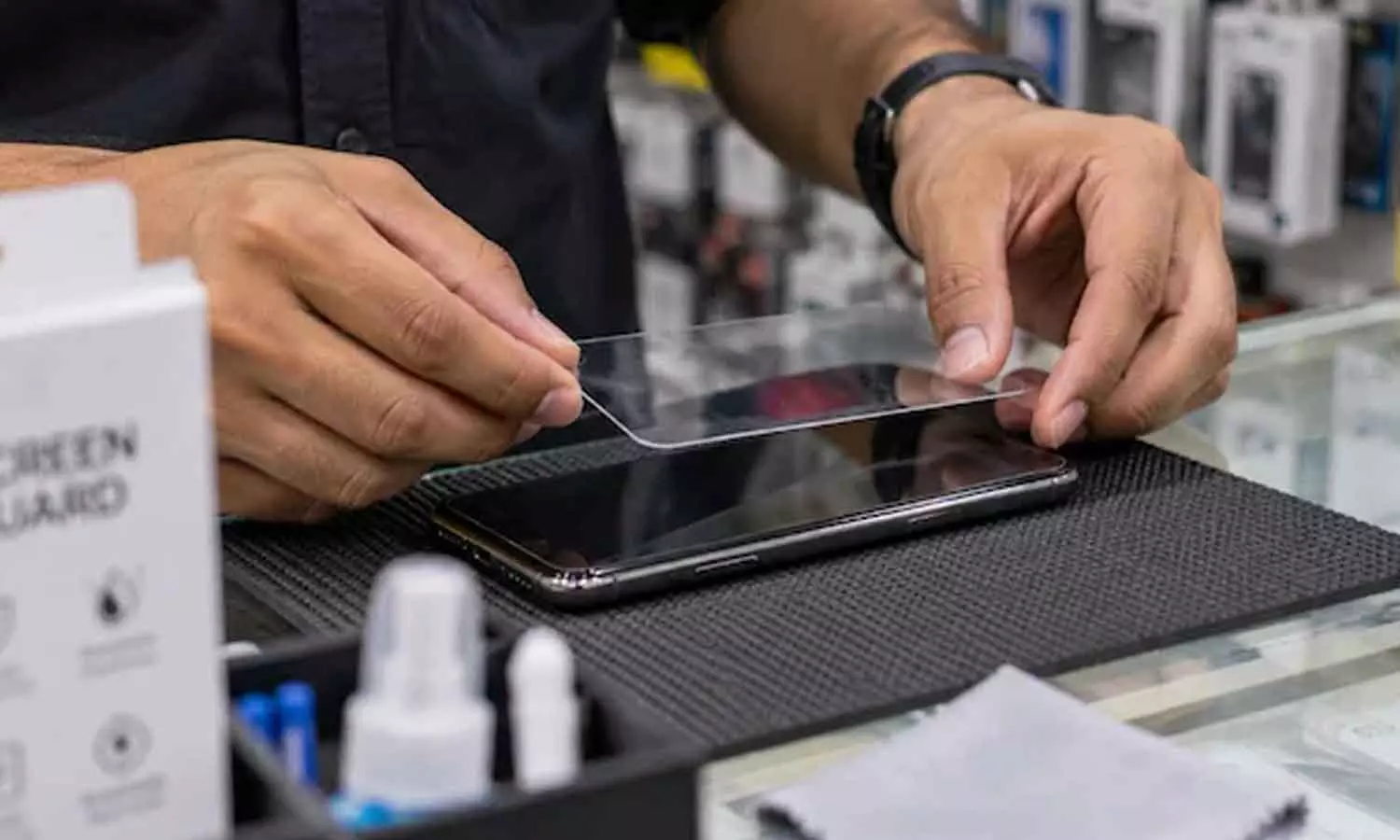
Representational Image
The government will ban the sale of low-quality smartphone screen protectors that do not meet established quality standards. Under the rules these products need to follow an Indian standard beginning in April 2027. The Ministry of Electronics and Information Technology has added smartphone screen protectors to the Bureau of Indian Standards registration system. The Ministry of Electronics and Information Technology has added smartphone screen protectors to the Bureau of Indian Standards registration system.
On September 21 the Central Government issued a notice that smartphone screen protectors are now included in the list of products that must be registered. From 1 April 2027 every company that makes or imports smartphone screen protectors to India must ensure that each smartphone screen protector meets the BIS standard IS 19348:2025 before it can be sold in the country.
This new rule means that smartphone screen protectors sold in the market must meet the Indian standard as part of the mandatory registration system. The notification does not ban screen protectors away. Instead, it gives manufacturers and importers more than six months to prepare. The new requirement will start on April 1 2027.
What are the new guidelines for screen protectors?
The new standard, IS 19348:2025, establishes quality and testing requirements for glass screen protectors. Key guidelines cover:
Glass quality: Requirements regarding size, glass strength, and surface quality.
Clarity: Requirements concerning light transmission and visible defects.
Additional features: Includes adhesive, safety film (anti-shatter), oleophobic coating, anti-glare properties, blue light filtering, and privacy films.
Packaging: Mandates that key details—such as the manufacturer, batch number, and thickness—be indicated on the packaging.
Under the guidelines manufacturers must meet these quality requirements and ensure that screen protectors undergo appropriate testing before screen protectors can be sold in India. Manufacturers must also provide product details on the packaging, including the manufacturer, batch number and thickness.
What does the new standard mean for buyers?
For consumers, the new standards could lead to higher-quality smartphone screen protectors entering the market.
The market is full of screen protectors and tempered glass films. They come in prices. There are known brands and cheaper ones that might not have a name. With the rules the people who make or bring these products into the country must make sure they follow strict quality rules.
Will screen protector prices increase?
The official notification itself does not indicate that screen protector prices will rise or that specific products will be withdrawn from the market. However, compliance requirements could impact the operations of some manufacturers and importers, particularly if products require additional testing and certification.
Therefore, the government has not banned all smartphone screen protectors. Instead, it has subjected this category to a mandatory registration regime and made compliance with the IS 19348:2025 standard mandatory effective April 1, 2027.
It should be noted that the notification is issued under the powers conferred by the Bureau of Indian Standards Act, 2016, and amends the existing mandatory registration order of 2021.


