




- ‘From being doubtful to leading from front, couldn’t be happier’: Neeru’s coach Peter Wilson
- TRE-4, Group D aspirants stage protest in Patna over recruitment demands
- From Prabhas To Amitabh Bachchan: Indian Stars Celebrating Birthdays In October
- Two killed as speeding SUV hits e-scooter in UP's Moradabad, driver flees
- BJP expresses grief over demise of ex-Himachal Minister Major Mankotia
- World Heart Day 2026: Risks, Warning Signs, Awareness And Prevention
- Assam Rifles NCO killed, four personnel injured in militant ambush in Arunachal Pradesh
- Governor Yadav urges youth to help build self-reliant Nagaland
Nvidia CEO says AI is making kids forget math, but it doesn’t matter
In Short
Nvidia CEO Jensen Huang says it’s okay if your child forgets basic math because of AI tools. Why? The Nvidia CEO maintains that AI will simply give rise to new intellectual skills that could prove more beneficial to them.

Share :
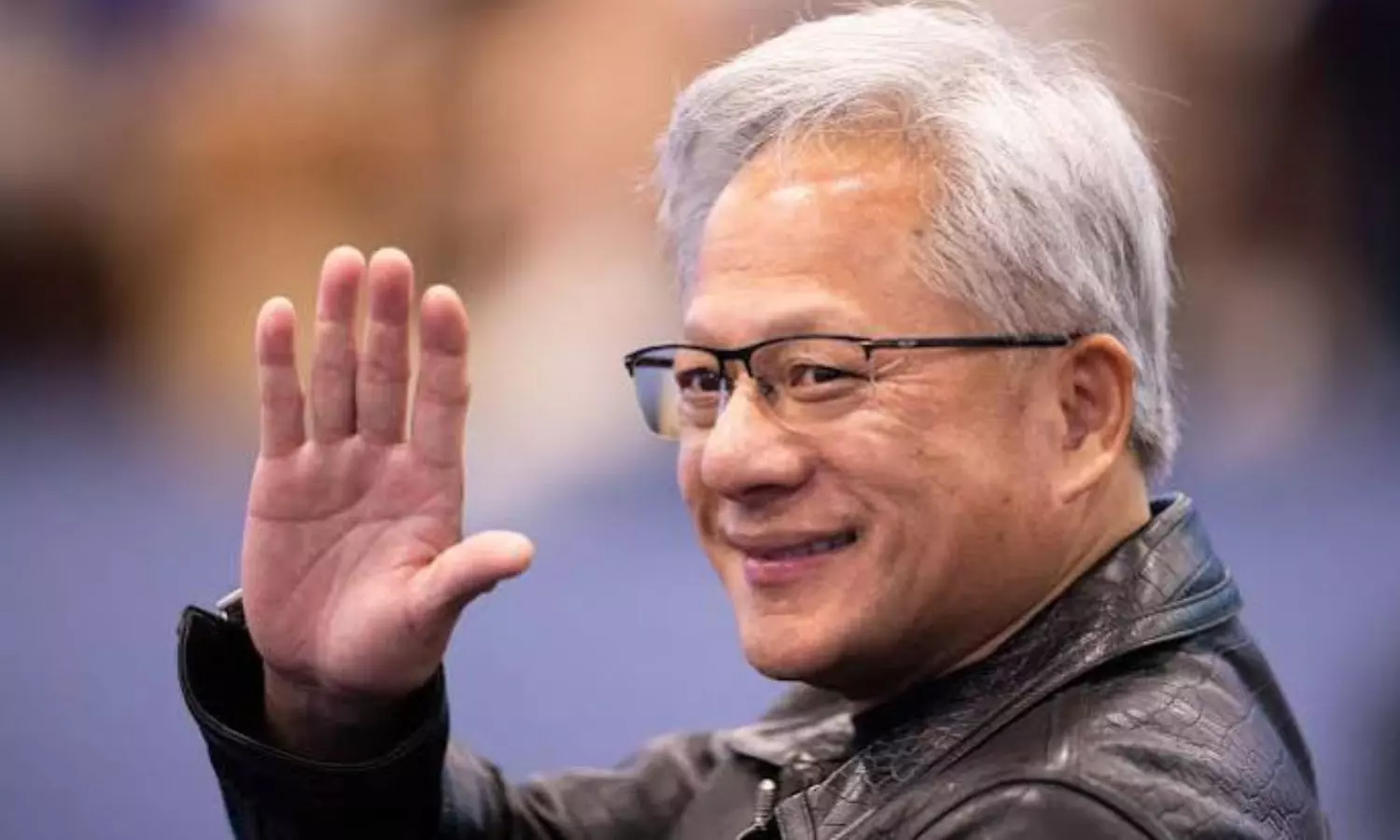
Nvidia CEO says AI is making kids forget math, but it doesn’t matter
Using AI tools can make life easier, but that convenience may come at a price. However, according to Nvidia CEO Jensen Huang, that cost might be worth it, even if it comes at the expense of children's math skills today.
During a conversation on ‘The Esra Klein Show’, Jensen Huang was asked about the impact AI was having on students. A study involving 26,000 students in China revealed that while children could complete homework faster using AI, their exam scores dropped by as much as 20 percent over a six-month period.
Jensen Huang acknowledged that children were beginning to rely less on their own abilities. "Try getting a kid to do long division right now. They’re starting to forget their multiplication tables," he said. "Calculating square roots... oh boy. They’re forgetting basic math."
But Huang insisted that even if today's children were starting to forget basic math, it wouldn't really be a problem in an AI-dominated world. "Does it matter?... I don't think it matters." The Nvidia CEO was then asked if there were any skills that would remain important. Huang stated that while that might be the case, math skills like long division likely wouldn't be important anymore. "Oh, yes. But maybe not those. We’re going to discover new ones. They just might not be those," he explained.
Jensen Huang doesn't know the direction things are taking
In fact, Jensen Huang made an interesting confession. He stated that, in reality, he did not know his home address. "There are many skills that don't matter. My first confession: I actually don't know my address," Huang said. The show's host, Esra Klein, was surprised to hear this from the CEO of one of the world's most valuable companies. He replied, "I really don't think that's true."
But Jensen Huang insisted that it was indeed the case. He said his personal assistant, Janine Paul, and his wife, Lori Huang, could confirm it. "One day I had to get gas—this was a few years ago. They asked for the sip code, and I panicked," Huang added. "I didn't know the sip code."
The Nvidia boss went further, stating that not only did he not know his address, but he didn't even know his phone number. "I don't know my phone number. I forget these things. I can live with that," he said.
However, Jensen Huang noted that while younger generations might lose certain skills, they could also acquire new ones that prove more useful. "I think we will lose some fine intellectual dexterity, but we will become better systems thinkers," he added. According to Huang, these systems thinkers would be able to visualise large systems or computer networks, rather than having to deal with routine tasks that previously required memorisation.
Nevertheless, online public opinion did not seem particularly convinced by Huang's vision regarding today's children. One user levelled a scathing criticism at the Nvidia CEO for failing to remember his own address. "The guy who literally can't find his house without his chauffeur says, 'Well, I don't know, I think your kids can get by without knowing math and stuff like that,'" the user wrote on X.
On a more serious note, some pointed out that if children did not focus on basic math, they would become more dependent on artificial intelligence tools. "These people want an ignorant population that relies on their products to function," one person commented. Another user added: "They want you to be totally dependent on their products; it's that simple."
Others have expressed similar views regarding the impact of AI on reasoning abilities. OpenAI CEO Sam Altman previously stated that his company aims for a future where people "buy" intelligence as a utility, much like how we use electricity today. Meanwhile, Cat Wu, head of product for Claude Code and Claude Cowork at Anthropic, stated in May that Claude could eventually do our thinking for us in the near future.
Further studies on the impact of AI tools have also emerged. Research suggests that using AI chatbots-even for just 10 or 15 minutes-can diminish independent thinking skills. Another study indicates that AI could also subtly alter our opinions.


