




- Rahul Gandhi challenges PM Modi again for debate on ‘Dimagi Naxals’, anti-national charges
- BJP targets Akhilesh Yadav over planned Ayodhya visit, calls it election-driven political move
- HM Shah inaugurates, lays foundation for 30 projects worth Rs 1,024 Cr in Ahmedabad
- 6 Smart Air Purifiers for Bedrooms Under Rs 12,000
- Who Is Alice Huang? Chinese Businesswoman At Centre Of Nvidia Spy Scandal
- Tickner, Ferguson ruled out of 3rd and 4th India ODIs as NZ’s injury woes deepen
- Six burn to death after car crashes into pole on highway in UP's Muzaffarnagar
- ‘Uttarakhand reaching new heights of development in every field’: PM Modi extends Foundation Day greetings
Sridhar Vembu Warns Of Worsening Global Jobs Crisis
In Short
Zoho founder Sridhar Vembu warns that AI and automation could deepen unemployment, urging India to promote entrepreneurship and self-employment.

Share :
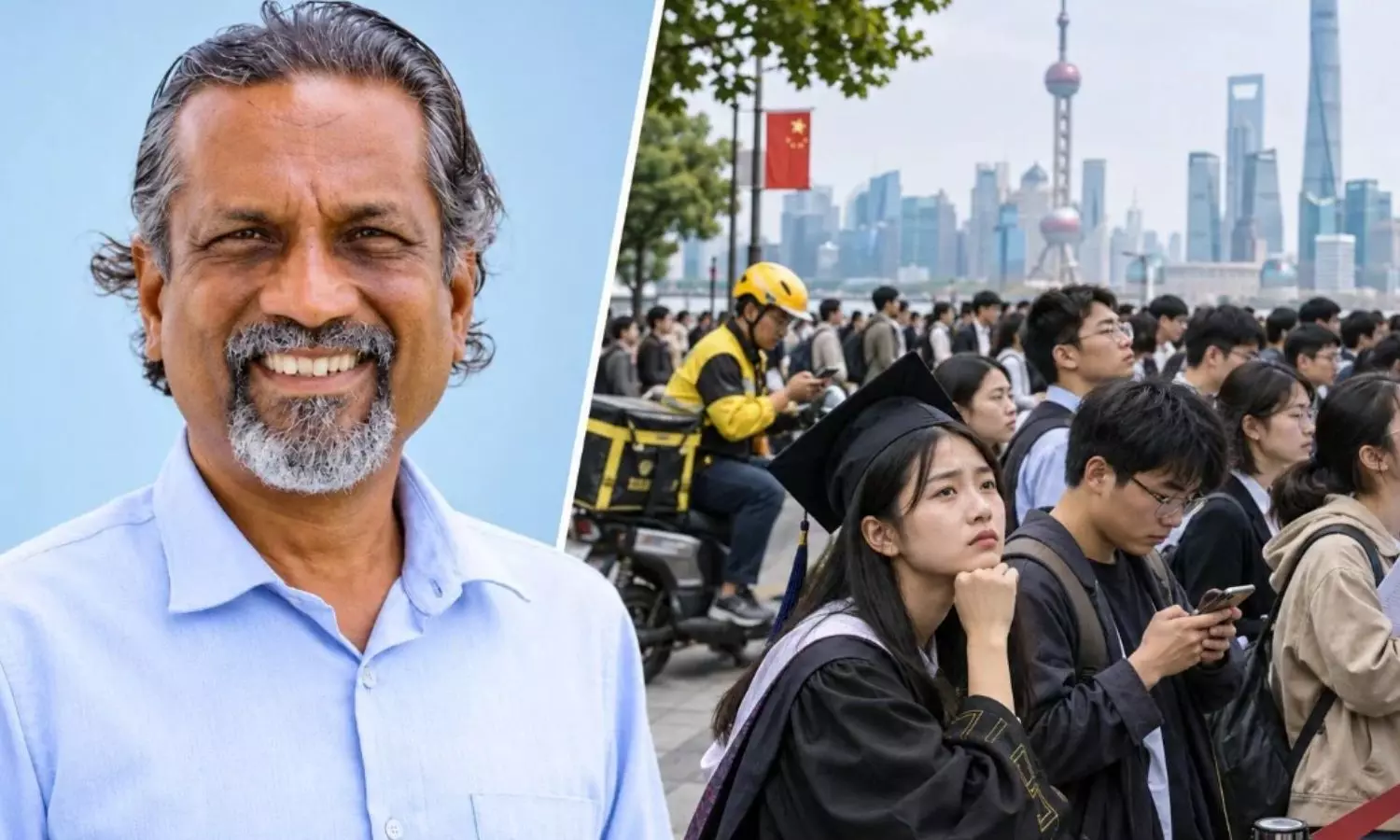
Sridhar Vembu
Sridhar Vembu, the founder and chief scientist of Zoho has issued a warning about the growing adoption of intelligence and automation. He says these technologies could create challenges for the global job market. Vembu believes that the old idea-that higher education automatically leads to a well-paying job-is slowly becoming outdated. This is especially true, for people who are just starting their careers today. The world is changing fast. The old rules no longer apply.
Vembu recently shared these worries in a post on X, which used to be called Twitter. He was replying to talks about growing joblessness among people, in China. He asked government officials to look carefully at what is happening in the nearby country. He said that similar job problems might come up in places as technology keeps changing the way businesses work.
The social media discussion highlighted China’s worsening youth employment situation. I see the figures cited in the post show that unemployment among people aged 16‑24 has reached 18 per cent and for people aged 25‑29 the rate is 7.4 per cent. China is also preparing to welcome a record 12.7 million college graduates into the job market this year which adds pressure, on employment opportunities.
China's economic strength fails to guarantee enough jobs
Vembu said that China is still a factory, for the world. It has high-tech skills in areas. The country also has a trade advantage. It has a $1.2 trillion trade surplus.
However, despite China’s economy China still struggles to create enough jobs, for its well‑educated people. He pointed out that seventy percent of unemployed people aged twenty to twenty‑four hold university degrees.
This according to Vembu shows a widening gap, between what educational institutions prepare students for and what the modern job market can actually offer.
AI and automation add to employment concerns
Zoho founder says this is not a China problem but a challenge for economies worldwide. Traditional schools have mostly pushed students toward paid jobs that promise stability. Those chances are not growing as fast, as before.
"Our modern educational and economic system around the world trains young people for 'steady paycheck' jobs and those jobs are not just not growing, they are under serious challenge due to automation and AI," Vembu wrote.
He further cautioned that the situation could become more difficult in the coming years, as businesses increasingly adopt AI-powered tools and automated systems.
Vembu calls for greater entrepreneurship
Instead of depending entirely on conventional salaried employment, Vembu believes countries should encourage entrepreneurship and self-employment.
He pointed to America's economic history, arguing that small businesses and independent work played an important role in building prosperity before large corporations and industrial employment became dominant.
"The rise of the big industrial and corporate 'steady paycheck' job is a relatively recent phenomenon. We have to move away from that model," he said.
Vembu ended his speech by saying that Indian policymakers must take these changes seriously. They need to start getting ready for the kind of job market that is coming. The way people work is changing and leaders, in India should not ignore it. It is important to plan not wait until it is too late.
His warning brings up a question for governments and schools: how can young people get ready, for an economy where the old kind of jobs might not provide the same chances anymore?

Citizens must adopt ‘Vikram Samvat’ calendar: Gujarat Dy CM
Shivakumar meets Siddaramaiah amid sting operation row, discusses party affairs
K’taka to host first standalone Commonwealth Women Parliamentarians conference
Gujarat must be drug-free by 2028, a year ahead of national target: HM Amit Shah
People voted for Congress but got no houses: HM Amit Shah invokes ‘Ramapir no Tekro’ association
K’taka: PM Modi to inaugurate Rs 115-crore planetarium in Mysuru on Nov 13


