Lives at Risk in Bingidoddi: Residents Demand Action Over Dangling Power Lines and Official Negligence

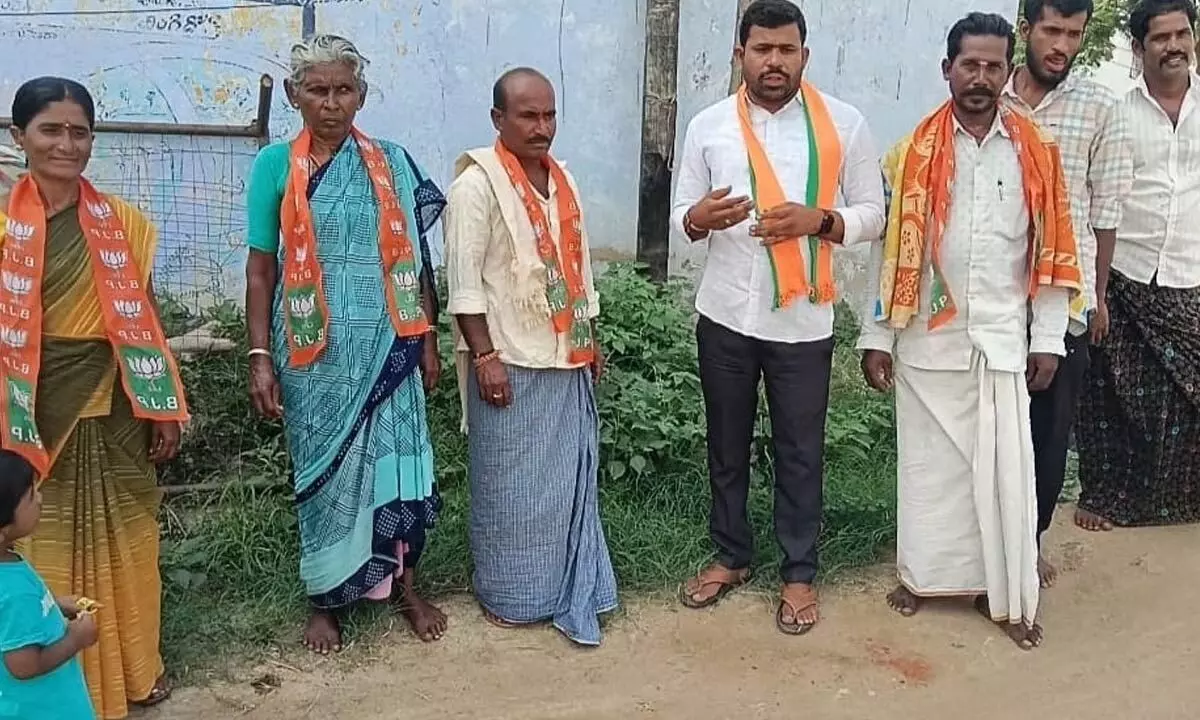
Gadwal: Residents of Ward No. 12 in Bingidoddi village, Aija Mandal, Jogulamba Gadwal district, are living under a life-threatening situation due to the absence of proper electricity poles, resulting in dangerous electric wires hanging directly over residential homes. Locals, along with BJP Mandal President Gopalakrishna, raised serious concerns and demanded immediate intervention from the authorities.
“It has been over 25 years since this colony came into existence with over 200 houses, yet not a single concrete road or electricity pole has been installed,” said Gopalakrishna while addressing the villagers.
Due to the lack of official infrastructure, residents are reportedly using wooden poles as makeshift electricity supports, a practice that has already led to shocks and close calls. In a recent incident, a homeowner had to personally replace a wire support after experiencing a shock from a low-hanging live wire.
The colony, locals say, is completely neglected while sarpanches and officials have ensured road construction only around their own houses. In contrast, this area lacks even basic amenities like CC roads, proper drainage, or soil roads.
“If something happens to any of these families, who will take responsibility?” Gopalakrishna questioned. “Despite informing the Assistant Engineer (AE) of the electricity department, no action has been taken so far.”
He warned that if the situation is not rectified, the Bharatiya Janata Party (BJP) will organize a massive protest and dharna in the coming weeks.
The event saw the participation of other community leaders like Anjaneyulu, Narasimhulu, and a large number of concerned villagers.
What the Law Says: Legal Consequences for Government Negligence Endangering Public Life
Legal experts have highlighted that negligence by government officials—especially when it threatens public safety—can lead to serious criminal and civil liabilities under Indian law, including the new Bharatiya Nyaya Sanhita (BNS), 2023, which replaced the Indian Penal Code (IPC) in July 2024.
Criminal Provisions:
Section 106(1) BNS (formerly IPC 304A):
If negligence causes death, the official may face up to 5 years of imprisonment, fine, or both.
Section 123 BNS (formerly IPC 336-338):
Any act endangering life or causing harm due to carelessness can result in 2 years’ imprisonment or fine.
Section 108 BNS (formerly IPC 166):
If a public servant intentionally disobeys the law, they can be punished with up to 1 year imprisonment, fine, or both.
Civil and Administrative Action:
Negligent officers can also face:
Departmental inquiries, suspension, or dismissal
Loss of pension or seniority
Civil lawsuits for damages
Public Interest Litigations (PILs) filed by affected citizens or NGOs
“If a life is lost or seriously harmed due to an official’s inaction, they could face both criminal prosecution and departmental removal,” said a senior retired IAS officer on condition of anonymity.
What Citizens Can Do:
Residents of Bingidoddi and similar villages can:
File a formal complaint to the District Collector or Electricity Department
Submit an RTI to trace accountability
Approach the State Human Rights Commission or Lokayukta
File a PIL in the High Court if officials continue to ignore their duty.
Public Voice Growing Louder
With the state government, led by the Congress party, promising people-centric development, locals expressed disappointment that these promises remain "only in words". The incident in Bingidoddi serves as a grim reminder of the gap between policy and implementation.
As the public pressure mounts and legal frameworks back citizens' rights, authorities are now under intense scrutiny to take immediate corrective measures before a preventable tragedy occurs.