




Owaisi’s ‘Abdul’ Pitch Irks Akhilesh Yadav. Puts SP on the Defensive
In Short
Asaduddin Owaisi’s criticism of Akhilesh Yadav over Muslim political representation has sparked a fresh clash between AIMIM and the Samajwadi Party ahead of the 2027 Uttar Pradesh Assembly elections.

Share :
Owaisi’s ‘Abdul’ Pitch Irks Akhilesh Yadav. Puts SP on the Defensive
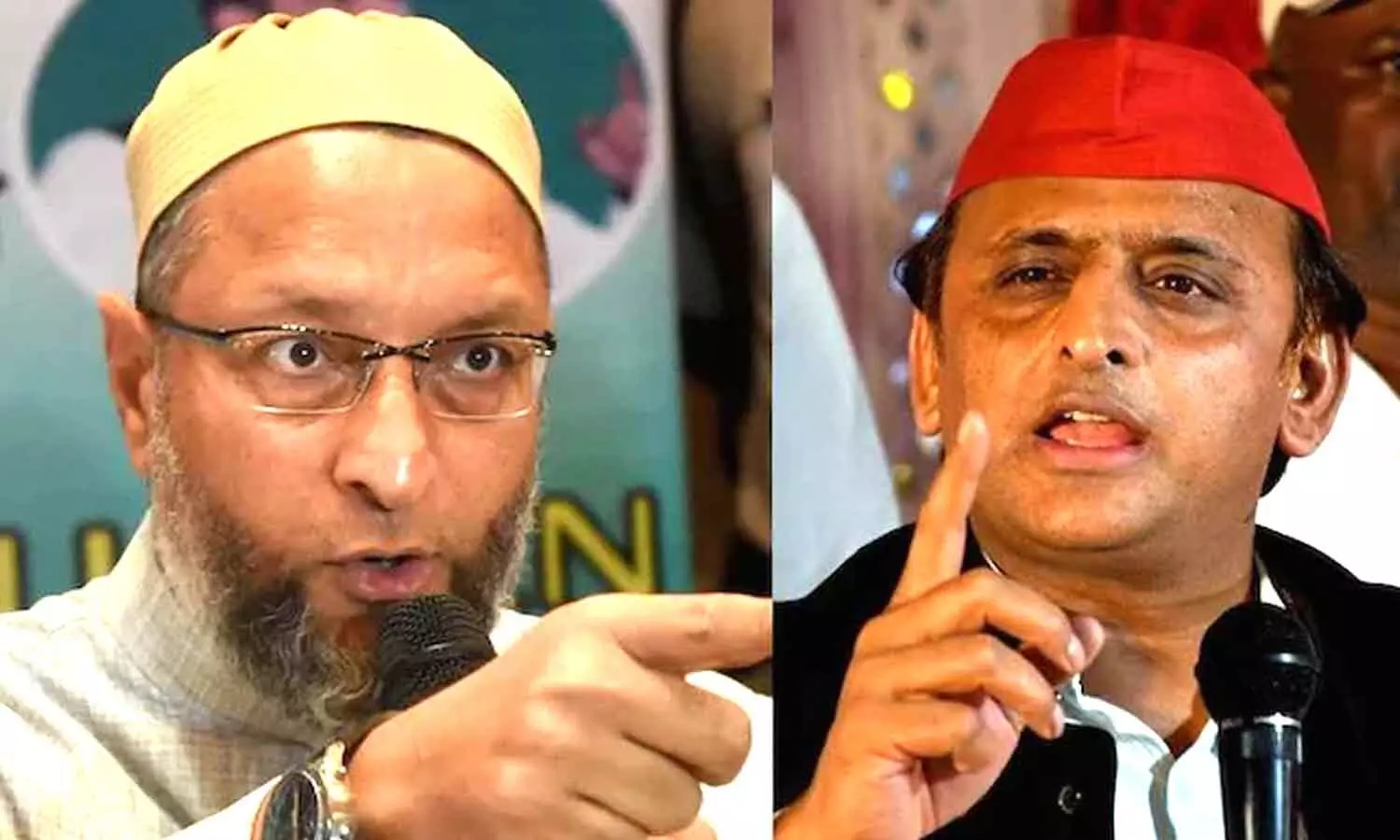
Is AIMIM the ‘B’ team of the BJP? This is what the Samajwadi Party (SP), the principal opposition party in Uttar Pradesh, believes. The party is peeved that AIMIM chief Asaduddin Owaisi has been attacking the SP and its president, Akhilesh Yadav, accusing him of being anti-Muslim and promoting ‘Parivarvad’ (dynastic politics).
During his whirlwind tour of Uttar Pradesh, Owaisi has repeatedly referred to ‘Abdul’, a colloquial reference to a Muslim, arguing that Akhilesh Yadav and his family members have deprived Muslims of political representation in constituencies where they have a sizeable population. His message is that Muslims should become MLAs and MPs in their own right rather than depend on parties led by the Nehru-Gandhi or Yadav families.
At his October 25 rally, Owaisi suggested that the SP should change its name to “Samajwadi Yadav Parivar”. He alleged that the party had failed to provide adequate political representation to Muslims and criticised Akhilesh Yadav over the 2013 Muzaffarnagar riots.
On October 19, addressing a rally in Rampur, Owaisi said Muslim youth had the talent to become MLAs and MPs, but parties promoting dynastic politics were denying them adequate opportunities and using them as vote banks. He pointed out that the Muslim community had many educated young people, including doctors and lawyers, who could emerge as effective political leaders. Yet, he alleged, even in constituencies such as Azamgarh and Firozabad, members of Akhilesh Yadav’s family had cornered political opportunities.
It may be mentioned that Muslims constitute a substantial share of the electorate in around 120 to 130 Assembly constituencies in Uttar Pradesh, where their votes can influence electoral outcomes. It remains to be seen how far Owaisi and his ‘Abdul’ pitch will make an impact in the 2027 Assembly elections.
Owaisi has long maintained that neither the SP nor the Congress can defeat the BJP on its own. Initially, he appeared to believe that a workable seat-sharing arrangement between AIMIM and these parties could mount a strong challenge to the ruling party. However, with the SP showing little inclination towards an understanding with AIMIM, Owaisi has decided to contest independently and sharpened his criticism of the SP and its governance record.
The crucial question is whether Owaisi can persuade Muslim voters to back AIMIM candidates instead of continuing to support the SP or the Congress. Even in constituencies where Muslims account for a substantial share of the electorate, electoral success depends on candidate selection, voter turnout, support from non-Muslim voters, local issues and the division of votes among rival parties. A sizeable Muslim electorate does not automatically translate into an AIMIM victory.
Several Assembly constituencies could be relevant to AIMIM’s strategy. In the Rohilkhand region, these include Rampur, Suar, Chamraua, Kundarki, Sambhal, Moradabad Nagar, Moradabad Rural, Thakurdwara and Bilari. In western Uttar Pradesh, the key seats include Kairana, Shamli, Behat, Saharanpur, Deoband, Muzaffarnagar, Budhana, Meerut and Kithore.
In the Bijnor-Amroha belt, Nagina, Dhampur, Noorpur, Bijnor, Chandpur, Amroha and Naugawan Sadat could be relevant. Other constituencies to watch include Baheri, Bhojipura, Nawabganj and Bareilly in the Bareilly region, as well as Lucknow West, Lucknow Central, Tanda, Mau, Ghosi and Azamgarh in other parts of the state. These constituencies differ in their demographic composition, and their relevance to AIMIM will depend on its candidate choices and local political equations.
The 2022 Assembly election offers an indication of the SP’s position in constituencies with substantial Muslim electorates. Of the 57 seats identified as having a high concentration of Muslim voters, the SP won 34, while its then ally, the Rashtriya Lok Dal (RLD), secured another two. The BJP won 20.
Reacting to Owaisi’s remarks, SP spokesperson Abbas Haider accused him of functioning as the BJP’s ‘B’ team. He alleged that Owaisi rarely criticised the ruling BJP but instead spread misinformation about the SP. Haider argued that Akhilesh Yadav’s party was raising issues concerning social justice, employment, equality and constitutional rights.
As the 2027 Assembly elections approach, the political sparring between Owaisi and Akhilesh Yadav could become increasingly significant. Whether Owaisi can translate his appeal for independent Muslim political leadership into votes and seats remains an open question. His campaign may challenge the SP’s claim to represent Muslim interests, but its electoral impact will depend on whether voters see AIMIM as a credible alternative and whether its entry changes the contests in key constituencies.


