Novel tech for surface water purification

In view of depletion of most of the ground water resources by 2050, scientists, at the Indian Institute of Chemical Technology (IICT) here, have developed a novel, cost effective Nano filtration (NF) and Ultrafiltration (UF) polymeric membranes with appropriate system design to treat surface water and meet pure water quality standards.
Hyderabad: In view of depletion of most of the ground water resources by 2050, scientists, at the Indian Institute of Chemical Technology (IICT) here, have developed a novel, cost effective Nano filtration (NF) and Ultrafiltration (UF) polymeric membranes with appropriate system design to treat surface water and meet pure water quality standards.
Ultrafiltration (UF), which is a low-pressure process, would be useful for treatment of surface water including Manjeera, Krishna or Godavari river waters at the end-user points and disinfect the water which comes from a long distance through pipelines. Unlike Reverse Osmosis (RO), UF does not separate any dissolved salts from water, but efficiently removes microbial content, turbidity, odour and colour, according to Dr S Sridhar, principal scientist and project leader of Membrane Separations Group, IICT.
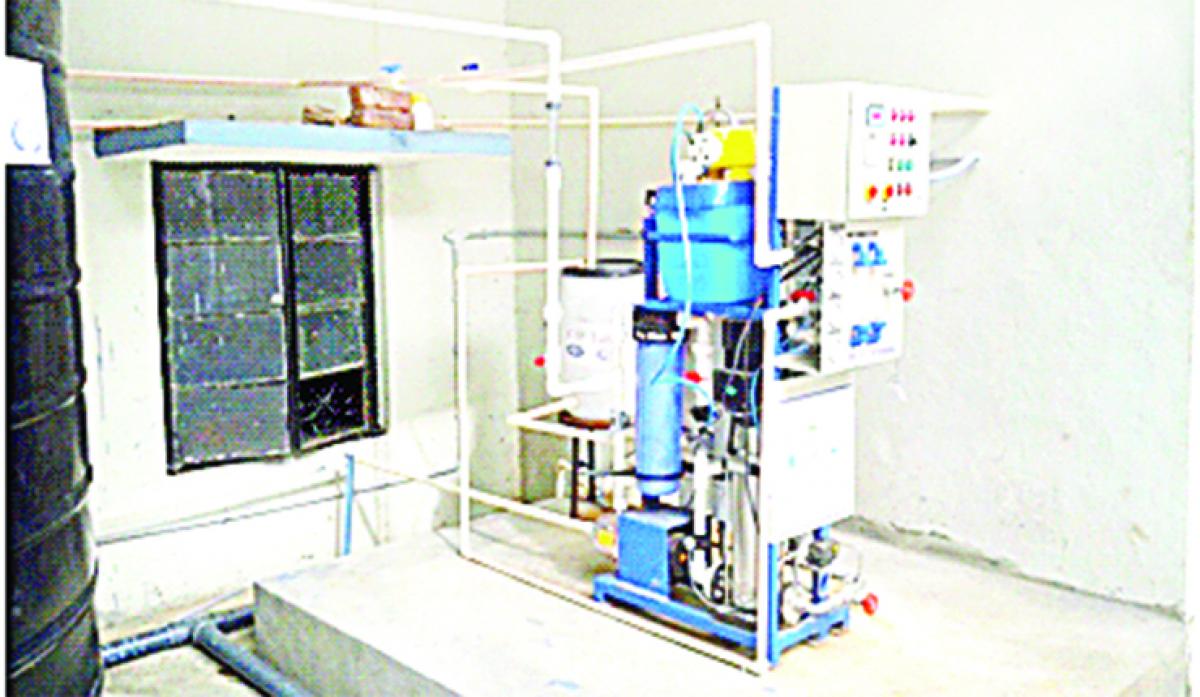
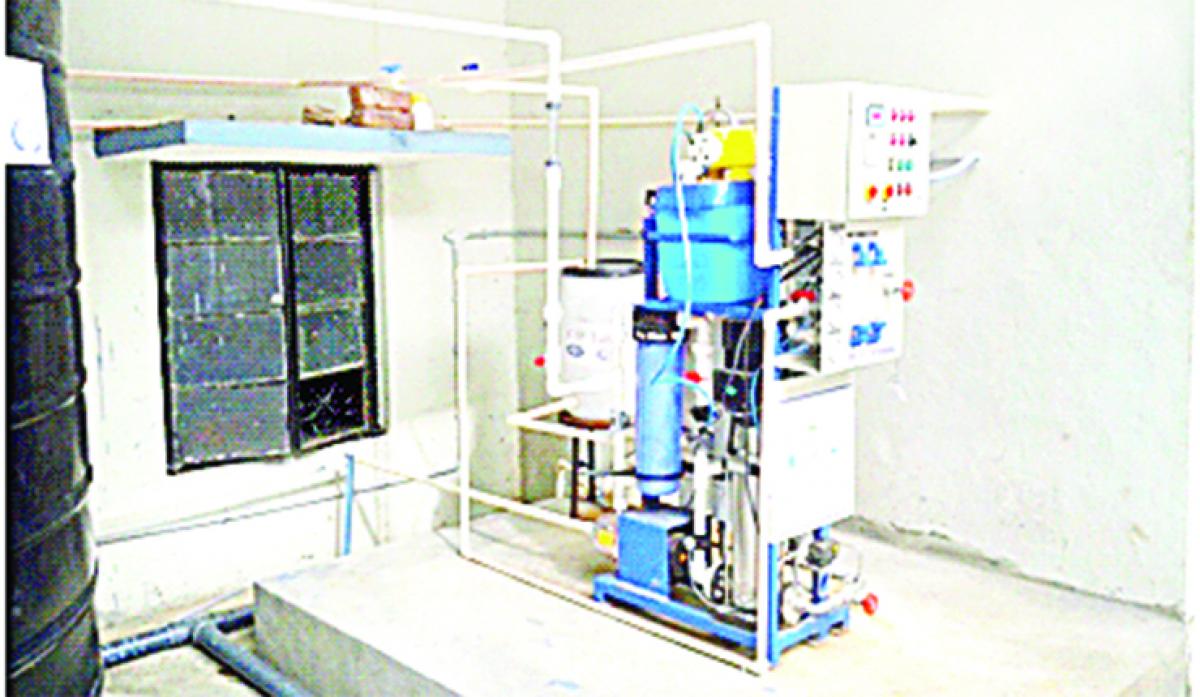
A highly compact skid-mounted Nano filtration (NF) system designed by Dr S Sridhar and his team from the Chemical Engineering Division has been installed in IICT campus and is running successfully for the past one year. The plant costs Rs 3.25 lakh and provides 1200 litre per hour of purified water from any type of contaminated surface water source. This plant removes all impurities in a single step including excess total dissolved solids (TDS), salinity, hardness, turbidity, heavy metals and microbial content.
Surface water contains total dissolved solids (TDS) below the maximum permissible concentration of 500 parts per million (ppm) and hence does not require application of RO technology. However, surface water usually contains impurities such as suspended solids, excessive turbidity, organic matter, bacteria, virus and algae etc., which cause diseases such as gastroenteritis, cholera, typhoid and jaundice besides poor water taste and bad odour.
Elaborating the significance of developing Nano Filtration, Ultra filtration, Dr Sridhar said that the continuous extraction of water from lower ground earth crust levels caused the majority of ground water resources to deteriorate. Excess usage of ground water resources and scanty rainfall were couple of reasons, he said. Referring to the benefits of this technology, the principal scientist said surface water would be treated as it was alternative resource to ground water especially for drinking purposes.
Just as the way the ground water was treated with RO for community-based consumption similar units based on NF/UF can be put up surface water treating with enhanced water quality and minimum rejection. Explaining the importance of Nanofiltration (NF) and Ultrafiltration (UF) Dr Sridhar said these two important low pressure membrane processes were ideal for surface water treatment due to advantages of process simplicity, absence of any external chemical reagents, system compactness with low energy consumption and generation of low reject (wastewater) volumes of less than 10 per cent.
Commercial UF membranes in the form of hollow fibre modules can now be fabricated in India. We can use the technology for rivers, lakes and pond water to provide drinking water to entire community.
By:V Naveen Kumar