




- PM Modi pays tribute to Lal Bahadur Shastri on birth anniversary, recalls ‘Jai Jawan, Jai Kisan’ legacy
- Aqua Industries Must Follow Pollution Control Board Regulations- AP Deputy CM Pawan Kalyan
- UN chief condemns attack on FlyDubai flight
- Why inner wellness is becoming the new beauty essential
- FIEO to organise one-day programme on Customs Schemes for Exporters in Hyderabad
- NALSAR marks UPSC Centenary through Collaborative Book on 100 Landmark
- Farmer welfare is the goal of the Modi government: 2027-28
- Congress a habitual offender in ushering in a divisive agenda to divide people- UM Kishan Reddy
Aqua Industries Must Follow Pollution Control Board Regulations- AP Deputy CM Pawan Kalyan
In Short
- Industries Should Be Responsible for Environmental Protection
- No One Has the Right to Pollute Natural Water Resources
- Directs submission of pollution monitoring reports on Aqua once every 15 days
- Highlights equal priority to environmental protection along with industrial development

Share :
Aqua Industries Must Follow Pollution Control Board Regulations- AP Deputy CM Pawan Kalyan
Vijayawada: Deputy Chief Minister and Minister for Forest and Environment Pawan Kalyan said providing clean drinking water and conserving natural water resources are the government's primary responsibilities, and that no one has the right to pollute water resources.
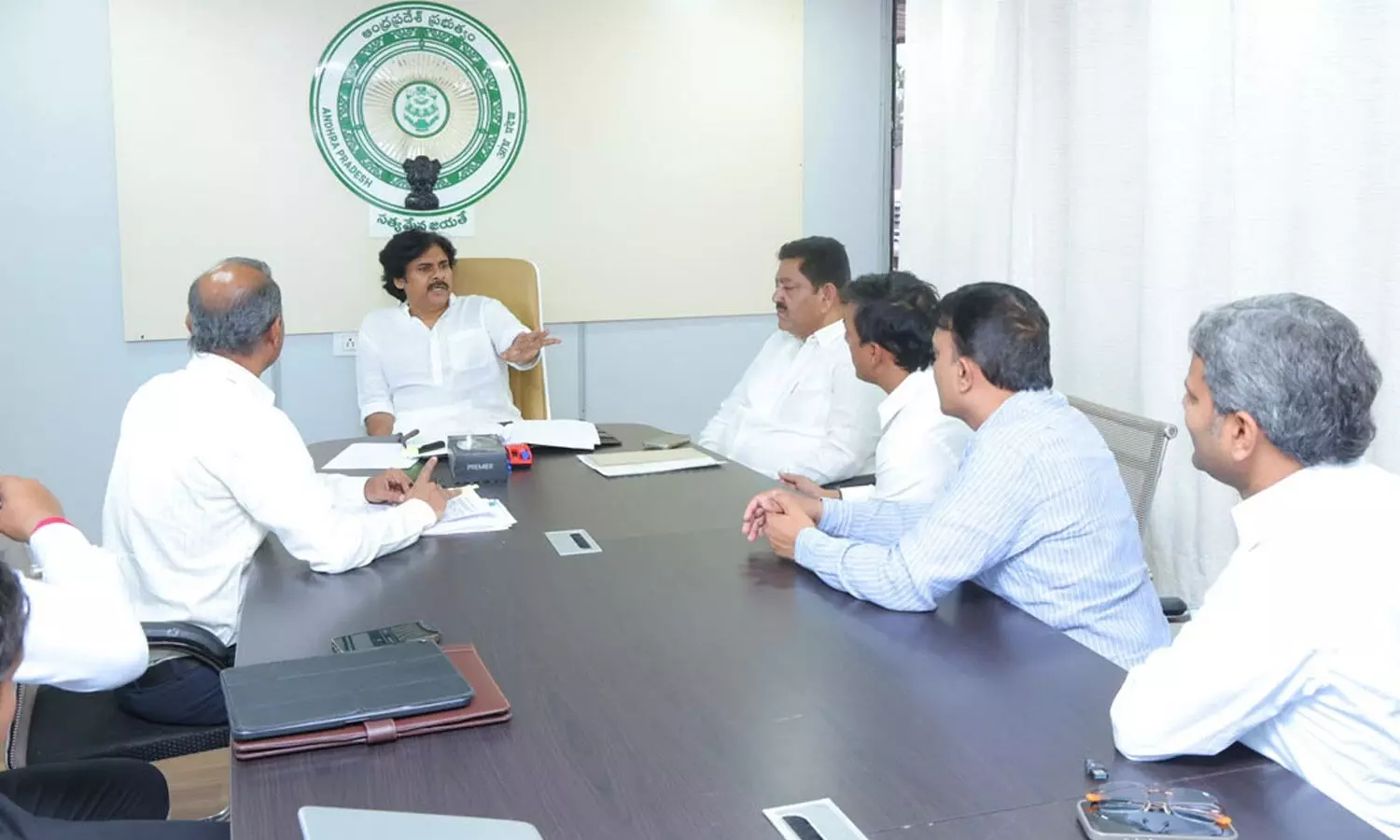
On Thursday, he held a review meeting with the Seafood Exporters Association of India (SEAI) and representatives from the Andhra Pradesh region on the environmental compliance requirements for aqua processing and pre-processing units at the camp office in Mangalagiri.
The Deputy Chief Minister insisted that industries should act with utmost responsibility towards environmental protection. Adding, “It is unacceptable for any industry to arbitrarily violate regulations in ways that harm the environment and society.”
Pawan Kalyan said preventing pollution at the source is the most crucial step. He ordered precautions to prevent aqua waste from polluting natural water resources and groundwater, and said every industry must comply with prescribed standards.
The Member Secretary of the AP Pollution Control Board informed the Deputy Chief Minister, through his report, that the state has 128 aqua processing and pre-processing units, and that samples were collected and tested from 82 units. Of these, 49 units are not complying with the prescribed standards; when officials examined the non-compliant units, they recorded BOD levels of 321 milligrams per litre, compared to 30 milligrams per litre.
The official said about 64 per cent of the units had more than 90 milligrams. TSS levels were also dangerous, with 365 milligrams per litre recorded, while the prescribed standards should not exceed 50 milligrams. He said this would seriously impact water resources.
Responding to the same, Pawan Kalyan said, “Such blatant violation of rules is unacceptable. Preventing pollution at the source is crucial.”
He directed industries to take pr steps to prevent sewage from aqua processing activities from polluting rivers, canals, ponds, sea confluence areas, groundwater and other water sources. These water sources are crucial for people’s livelihood, agriculture, fisheries and ecosystems. Industries should strictly implement the standards prescribed by the Pollution Control Board.
However, Pawan Kalyan clarified that the State government is committed to industrial development and environmental protection equally.
To monitor compliance with the prescribed standards in aqua processing units, he said the department will conduct tests every 15 days. The department will submit reports on observations from time to time.
At the same time, the state government is prepared to consider any technical and management challenges the industry faces in implementing the rules; industry representatives should bring them to the government's attention, and it is ready to take measures to resolve the same, he added.
Fishermen’s representatives said a joint meeting with representatives of aqua processing units is needed to balance implementing environmental norms with the sustainable development of the processing sector.
The review meeting was attended by Seafood Exporters Association of India (SEAI) Andhra Pradesh President K. Anand Kumar, Regional Secretary D. Dilip, Vice Presidents U. Jogi Verma, Thota Jagadish, I. Surya Rao, and others.
DSC 2.0 notification within month
AP High Court nixes 34% BC quota in local polls
Naidu vows to pursue 34% BC quota in SC
Dinesh Kumar appointed 12th Pay Revision Commission chief
‘May Bapu’s timeless message keep guiding us towards better society’: PM Modi on Gandhi Jayanti
Khairatabad bypoll: Vijaya Reddy seeks HC stay on notification


