




- People Want Solutions, Not a Competition in Abuses: Mayawati
- Kolkata stampede: CCTV footage shows devotees ignoring cops' requests
- Loud explosions like tremors cause panic in parts of Hyderabad
- Cyclone Arnab update: Officials announce closure of beaches in Vizag
- Come What May, November 1 Rally Ho Kar Rahega: Congress Claims
- Apple acknowledges iPhone Duo display issue
- Check Out The New Poster From Shah Rukh Khan’s King
- 'Arnab' turns into very severe cyclone; impact begins along Andhra coast
The cash flow vision of Vietnam's largest real estate developer
In Short
Explore the cash flow strategy of Vietnam’s largest real estate developer and how financial planning, project development, and capital management support long-term growth

Share :
The cash flow vision of Vietnam's largest real estate developer
Only a few real estate enterprises in the world have the capacity to create an entire city and accompany it for decades.
Real estate developers often use the term “merchant builder” to refer to those who build properties for immediate sale upon completion, and “investment builder” for developers who retain assets as a long-term investment portfolio. But there is an even rarer category: developers who not only build and sell but also maintain the role of urban operator for decades.
That is the story of Emaar Properties in Dubai, a company that has transformed a strip of desert into Downtown Dubai since 2003. Today, nearly one-third of the company’s EBITDA comes from shopping malls, hotels, and other properties they operate. In West Manhattan, New York, Related Companies and Oxford Properties have also pursued a similar approach with Hudson Yards, the largest private real estate development in U.S. history.
However, not many enterprises possess both the capacity to create urban areas and infrastructure, and the resources to pursue such a decades-long endeavor.
In Southeast Asia, Vinhomes, a subsidiary of Vingroup, Vietnam's largest multi-sector private conglomerate, ranked 340th in TIME's World’s Best Companies 2026 list, is such an enterprise.
With a market capitalization of around $21 billion (as of June 2026), it is the largest listed developer in Vietnam.
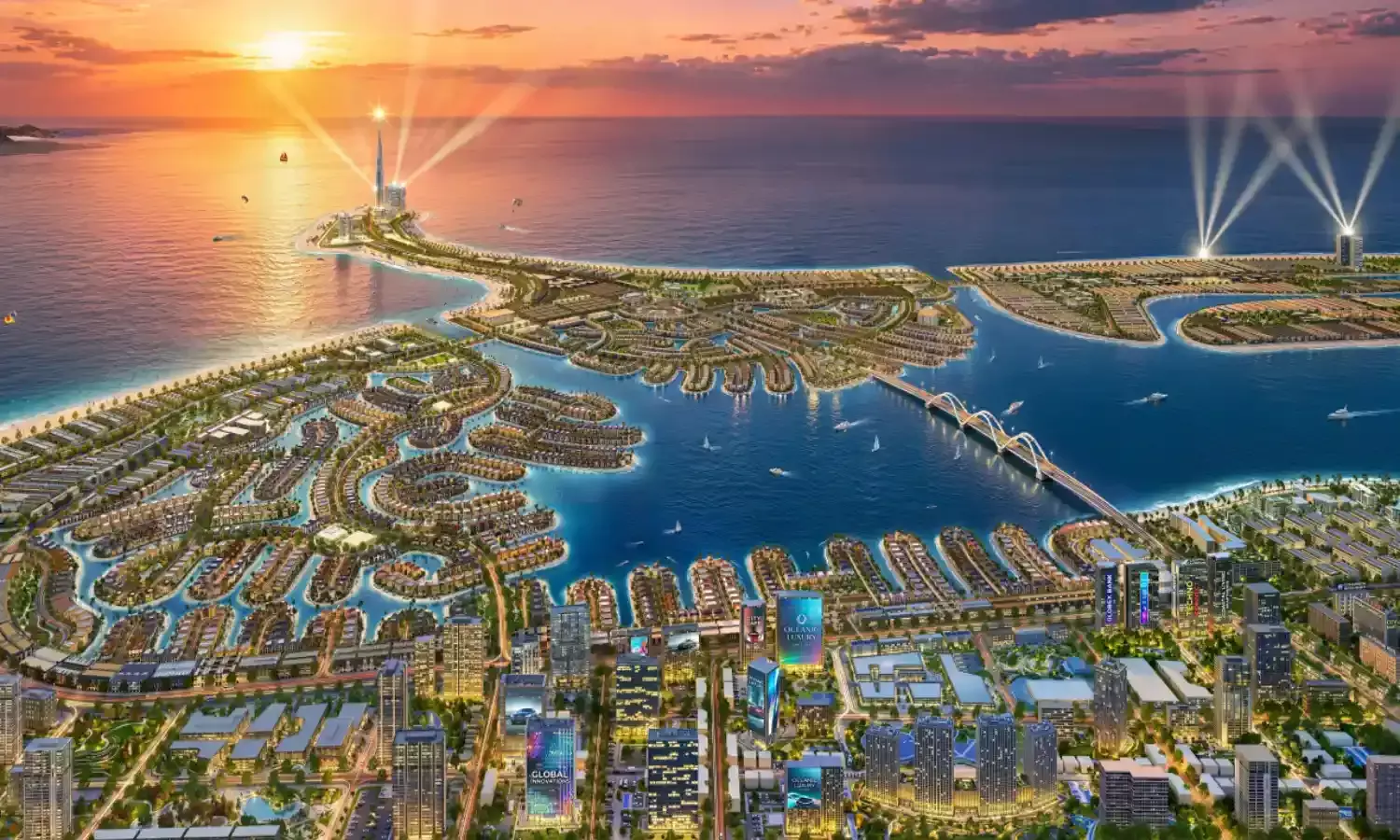
Although the majority of Vinhomes' revenue comes from housing sales, the enterprise remains involved in operation and management after completion. It is currently behind 32 urban areas with 650,000 residents. The enterprise is also developing many new projects, including two megacities spanning thousands of hectares at both ends of the country: Vinhomes Green Paradise (Ho Chi Minh City) and Vinhomes Global Gate Ha Long (Quang Ninh).
While many master developers stop at infrastructure and selling land, Vinhomes builds and sells the homes itself, while also taking charge of property management, consulting, and general contracting. The social infrastructure of these urban areas is also handled by the Vingroup ecosystem, such as Vinmec hospitals and Vinschool. Vinhomes is also partnering with VinSpeed to build two railway lines that will connect directly to its megacities.
Jean-Paul de la Fuente, Director of New7Wonders, the organization behind the "7 Wonders of Future Cities" campaign for which Vinhomes Green Paradise is the first official candidate, stated that after a field survey, he saw very few places that build and hand over megacities with similar scale and synchronization.
"Vingroup does not develop projects for 5 or 10 years, but for multiple generations,” a strategy he believes few conglomerates in the world have enough resources and determination to pursue.
Behind Vinhomes' deployment capacity is a solid financial health foundation built over many years. As of June 30, 2026, the company’s total assets reached VND1,110,736 billion (about $42 billion), with owner's equity at VND274,005 billion. This scale allows Vinhomes to maintain land banks for multiple simultaneous projects while funding connectivity infrastructure. Previously, in 2025, thanks to the handover progress at large-scale projects, Vinhomes recorded converted revenue of VND183,923 billion, and profit after tax was VND42,111 billion. Sales reached VND205,252 billion following the launch of five new projects.
Another key indicator is the sales backlog. Specifically, unhanded-over sales at the end of 2025 were VND186,426 billion, and at the end of Q2 2026, this figure was VND196,813 billion, which exceeded the total revenue recorded in 2025. This figure is seen by analysts as a stepping stone for 2026-2027 profits, regardless of short-term market fluctuations.
From 32 operating urban areas to two emerging megacities, Vinhomes serves as the default benchmark of the Vietnamese real estate market regarding the ability to maintain growth across multiple cycles. The cash flow vision is also the foundation that helps Vinhomes secure a place among the group of real estate developers capable of creating and growing urban areas over the course of decades.
Produce Evidence of ‘Vote Chori’ or Stop False Narrative: TG BJP Chief
Cyclone Arnab: Flash floods alert issued in parts of AP
CM Naidu tweets in Kurnool Solar Plant Is operational, says "we said it, we did it"
PM Modi to inaugurate Emerging Science, Technology, and Innovation Conclave 2026 at Bharat Mandapam today
Shiv Sena(UBT) defends youth activists over peace bonds in 'Saamana'
Eatala Rajender to begin dour-day padayatra on Jawahar Nagar dumping yard relocation


