
The Role of Project Management in Successful Construction Projects

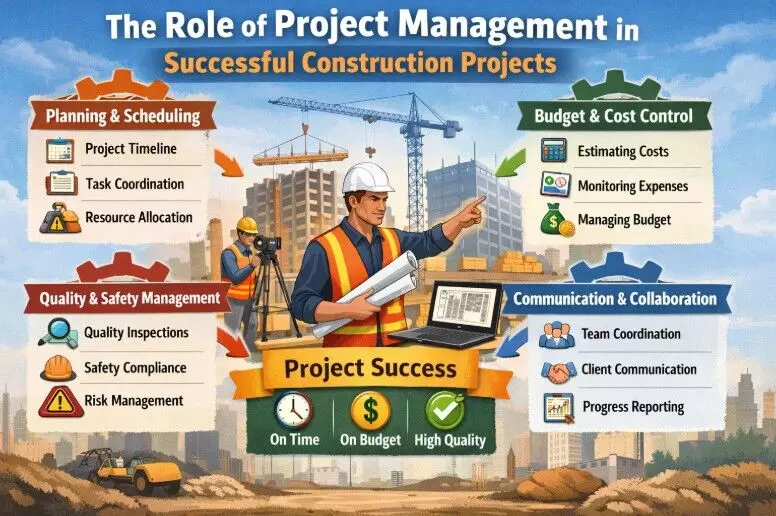
Construction projects are complex and demanding, requiring careful coordination of people, materials, budgets, and timelines. From residential developments to large-scale commercial buildings, success depends on how effectively the project is managed. Project management provides the structure and discipline needed to guide a construction project from initial planning to final completion. Without proper management, even well-designed projects can face delays, rising costs, and quality issues.
Understanding Project Management in Construction
Project management in construction refers to the systematic process of planning, executing, monitoring, and closing a project. It ensures that all activities are aligned with project objectives and completed according to agreed standards. The project manager serves as the central authority, coordinating between clients, designers, contractors, and suppliers. This role is critical because construction involves many moving parts that must work together seamlessly to achieve successful outcomes.
Planning, Scheduling, and Budget Management
Effective planning is the foundation of every successful construction project. During the planning stage, project managers define the scope of work, establish timelines, and set realistic budgets. Accurate scheduling helps ensure that tasks are completed in the correct sequence, avoiding unnecessary delays and downtime. Financial planning is equally important, as cost overruns are one of the most common challenges in construction. To support accurate budgeting and financial control, project managers often rely on construction cost estimating services to develop detailed cost projections and anticipate potential expenses. This approach allows projects to remain financially stable throughout their lifecycle.
Communication and Stakeholder Coordination
Construction projects involve a wide range of stakeholders, each with different responsibilities and expectations. Clear and consistent communication is essential to keep everyone aligned. Project management establishes communication channels such as regular meetings, progress reports, and documentation systems. These tools help ensure that updates, changes, and decisions are shared promptly. When communication is managed effectively, conflicts are minimized, misunderstandings are reduced, and collaboration among teams improves significantly.
Risk Management and Problem Solving
Risk is unavoidable in construction due to factors such as weather conditions, labor shortages, material delays, and design modifications. A key responsibility of project management is identifying potential risks early and developing strategies to address them. This proactive approach helps prevent small issues from escalating into major problems. Project managers continuously monitor progress and respond quickly to unexpected challenges, ensuring that the project stays on track despite uncertainties.
Quality Control and Compliance
Maintaining quality is a critical objective in construction projects. Project management ensures that all work meets design specifications, industry standards, and regulatory requirements. This includes conducting inspections, monitoring workmanship, and verifying materials. Quality control not only enhances the durability and safety of the structure but also reduces costly rework and delays. To support accurate cost and quality planning, many project managers collaborate with a Construction Estimating Company, such as Pro Estimating Services, which provides reliable cost data and supports informed decision-making throughout the project.
Leadership and Team Management
Strong leadership is a vital element of successful project management. Construction teams often work under pressure, dealing with tight schedules and demanding conditions. Project managers are responsible for motivating teams, assigning tasks clearly, and resolving conflicts effectively. Good leadership fosters accountability, teamwork, and productivity on the construction site. When teams are well-managed and supported, they are more likely to meet deadlines and maintain high standards of work.
Conclusion
Project management plays a central role in the success of construction projects by bringing order, clarity, and control to complex processes. Through careful planning, effective communication, risk management, quality control, and strong leadership, project management ensures that construction projects are completed efficiently and successfully. In an industry where challenges are constant and stakes are high, effective project management is essential for delivering projects that meet expectations, stay within budget, and stand the test of time.


